
Sula Pear Drops 42 g
Sula
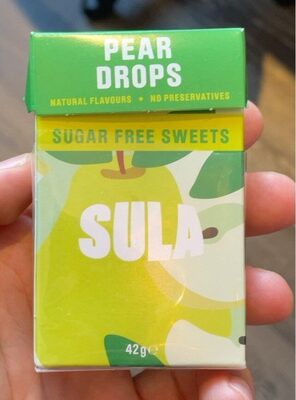
Sula Pear Drops comes in a 42 g pack. It is sold under the Sula brand. On Mamori it sits under Confectionery › Candy, Sweets & Nougat › Other Candies. Its label lists 9 ingredients.
Sula Pear Drops at a glance
Sula Pear Drops fits Vegetarian, Pescatarian, Vegan + Dairy and Vegan + Eggs diets. It also carries the Gluten Free, Crustaceans Free, Egg Free, Fish Free, Peanut Free, Soy Free, Dairy Free, Tree Nut Free, Celery Free, Mustard Free, Sesame Free, Sulfite Free, Lupin Free, Mollusks Free, Barley Free, Beef Free, Citrus Fruit Free, Corn Free, Emulsifier Free, Gelatin Free, Lactose Free, Latex Free, No Added Sugars, Oats Free, Pork Free, Poultry Free, Rice Free, Rye Free, Seed Free and Wheat Free badges. Nutrition-wise, it's Low Saturated Fat, Low Sugars, Low Fiber, Low Protein, High Carbs, Medium in Calories and Medium Salt/Sodium. Worth knowing: it's marked Non-Vegan, Non-Low FODMAP, Contains Additives, Contains Artificial Flavourings and Contains Fructose.
Diet and allergens
Suitable for vegetarian and pescatarian diets.
Not suitable for a vegan diet.
Free from all 14 major allergens: gluten, crustaceans, eggs, fish, peanuts, soy, milk, tree nuts, celery, mustard, sesame, sulphites, lupin and molluscs.
Based on Mamori's check of the ingredients on the label. Recipes change, so always read the pack if you have an allergy or intolerance.
Size: 42 g
Last updated 2 November 2026
Ingredients
Isomalt, Lactic Acid, Natural Flavoring, sodium lactate, pear juice concentrate, colouring foods, carrot juice concentrate, spirulina concentrate, Sucralose
Additives & flavourings
Additives
- E953: Isomalt, Isomaltitol: Generally safe
Isomalt (E953), also called isomaltitol, is a sugar alcohol made from sugar beet sugar. It is a low-calorie sweetener and can also be used as a glazing agent.
It is used to add sweetness, bulk, or a smooth coating, especially in sugar-free sweets, chewing gum, chocolates, baked goods, and dessert products. It is often chosen because it is less sweet than sugar and does not brown easily.
Isomalt is generally considered safe. It is allowed in food in the EU after safety assessment, and the sources checked raise no concern at normal amounts.
- E270: Lactic Acid (Preservative): Generally safe
Lactic acid (E270) is an organic acid found naturally in many foods and also made by fermenting sugars, often using bacteria. It is the same type of acid produced in foods such as yoghurt and fermented vegetables.
In food, it is used mainly as an acidity regulator and preservative, helping control pH and slow the growth of some microbes. It may be found in fermented foods, pickled products, drinks, sauces, confectionery and bakery products.
It is generally considered safe. It is allowed in food in the EU after safety assessment, and the sources checked raise no concern at normal amounts.
- E325: Sodium Lactate: Generally safe
Sodium lactate (E325) is the sodium salt of lactic acid. It is usually made by fermenting sugars to produce lactic acid, then neutralising it with a sodium source. It is an acidity regulator and can also help protect food quality.
In food, it helps control acidity, retain moisture, and slow some spoilage changes. It is often used in processed meat, poultry, seafood, sauces, dressings, and some bakery or confectionery products.
Sodium lactate is generally considered safe at normal food-use levels. It is allowed in food in the EU after safety assessment, and the sources checked raise no specific concern at normal amounts.
- E955: Sucralose (Trichlorogalactosucrose): Generally safe
Sucralose (E955), also called trichlorogalactosucrose, is an artificial high-intensity sweetener. It is made by chemically modifying sugar, which makes it taste very sweet while adding little or no energy in the small amounts used.
It is used to sweeten foods and drinks without using much sugar. You may find it in low-sugar or sugar-free drinks, desserts, yoghurts, chewing gum, tabletop sweeteners, and some special diet foods.
Sucralose is generally considered safe at normal amounts. It is authorised for use in the EU after safety assessment, and the sources checked raise no concern for typical food use.
Flavourings
- Natural Flavoring: Natural flavouring (Regulation (EC) No 1334/2008 on flavourings, Article 16).
Questions and answers
Is Sula Pear Drops vegan?
No. It is not suitable for a vegan diet.
Is Sula Pear Drops vegetarian?
Yes. It is suitable for a vegetarian diet.
Is Sula Pear Drops suitable for a pescatarian diet?
Yes. It is suitable for a pescatarian diet.
Is Sula Pear Drops suitable for a Low FODMAP diet?
No. It is not suitable for a Low FODMAP diet.
Is Sula Pear Drops suitable for a Vegan + Dairy diet?
Yes. It is suitable for a Vegan + Dairy diet.
Is Sula Pear Drops suitable for a Vegan + Eggs diet?
Yes. It is suitable for a Vegan + Eggs diet.
Is Sula Pear Drops gluten-free?
Yes. Its ingredients include no gluten, and its label gives no gluten warning.
Does Sula Pear Drops contain milk?
No. Its ingredients include no milk, and its label gives no milk warning.
Is Sula Pear Drops nut-free?
Yes. Its ingredients include no peanuts or tree nuts, and its label gives no nut warning.
Does Sula Pear Drops contain eggs?
No. Its ingredients include no eggs, and its label gives no egg warning.
More in Other Candies
- Nupo Diet Dessert Chocolate Pudding
- sanotact GmbH Mango Flavoured Mints Sugar Free
- Smart Pearls
- Favorina Mini Marzipan Butter Stollen Confection Classic
- 8713600500826 Paper Funny Money
- Candy Dynamics Toxic Waste Red Drum
- Toxic Waste Sour Candy
- Toxic Waste Purple Drum
- Fini Strawberry pencils
- BrainBlasterz SuperSourHardCandy
- Vidal Party Mix Bags
- Milky Sip Milk Flavouring Straw Caramel