
Nupo Diet Dessert Chocolate Pudding 384 g
Nupo
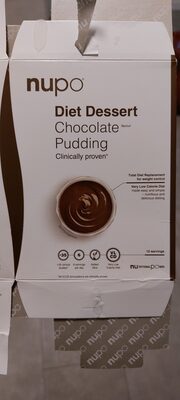
Nupo Diet Dessert Chocolate Pudding comes in a 384 g pack. It is sold under the Nupo brand. On Mamori it sits under Confectionery › Candy, Sweets & Nougat › Other Candies. Its label lists 44 ingredients.
Nupo Diet Dessert Chocolate Pudding at a glance
Nupo Diet Dessert Chocolate Pudding fits Vegetarian, Pescatarian and Vegan + Dairy diets. It also carries the Gluten Free, Crustaceans Free, Egg Free, Fish Free, Peanut Free, Tree Nut Free, Celery Free, Mustard Free, Sesame Free, Lupin Free, Mollusks Free, Barley Free, Beef Free, Citrus Fruit Free, Fructose Free, Gelatin Free, Latex Free, No Added Sugars, Oats Free, Pork Free, Poultry Free and Rye Free badges. Nutrition-wise, it's High Fiber, High Protein, High Salt/Sodium, Medium in Calories, Medium Carbs, Medium Saturated Fat and Medium in Sugars. Worth knowing: it's marked Non-Vegan, Non-Low FODMAP, Non-Vegan + Eggs, Contains Soy, Contains Dairy, Contains Additives, Contains Artificial Flavourings, Contains Corn, Contains Emulsifier, Lactose, Contains Rice, Contains Seed and Contains Wheat.
Diet and allergens
Suitable for vegetarian and pescatarian diets.
Not suitable for a vegan diet.
Contains soy and milk.
Free from gluten, crustaceans, eggs, fish, peanuts, tree nuts, celery, mustard, sesame, lupin and molluscs.
Based on Mamori's check of the ingredients on the label. Recipes change, so always read the pack if you have an allergy or intolerance.
Size: 384 g
Last updated 2 November 2026
Ingredients
SOY protein, MILK powder, fat-reduced cocoa powder, modified starch, polydextrose, vegetable oil, soy oil, rapeseed oil, minerals, potassium citrate, calcium salts of orthophosphoric acid, potassium chloride, magnesium citrate, zinc sulphate, ferric pyrophosphate, manganese sulphate, cupric sulphate, potassium iodide, sodium selenite, sodium molybdate, vitamins, L-ascorbic acid, nicotinamide, DL-alpha-tocopheryl acetate, D-pantothenate calcium, beta-carotene, riboflavin: Vitamin B2, pyridoxine hydrochloride: Vitamin B6, thiamin mononitrate: Vitamin B1, pteroylmonoglutamic acid: Folic Acid, phylloquinone: Vitamin K1, D-biotin: Vitamin B7, ergocalciferol: Vitamin D2, cyanocobalamin: Vitamin B12, flavouring, maltodextrin, thickeners, xanthan gum, cellulose gum, MILK protein, SOY lecithin, psyllium husk powder, choline bitartrate, sweetener: sucralose
Additives & flavourings
Additives
- E1401: Modified Starch ((Acid-Treated Starch) Stabiliser): Generally safe
Acid-treated starch, often labelled E1401 in some systems, is a modified starch. It is made by treating ordinary starch from plants such as maize, potato or wheat with acid to change how it behaves in food.
It helps thicken, stabilise or improve texture, especially where a smooth, consistent result is needed. Modified starches are used in foods such as sauces, soups, desserts, fillings and processed meals.
It is generally considered safe. Under EU law, acid-treated starch is not classed as a food additive; it is treated as a food ingredient instead.
- E1200: Polydextrose: Generally safe
Polydextrose (E1200) is a synthetic carbohydrate made by linking glucose with small amounts of sorbitol and citric acid. It is used as a soluble fibre and low-energy bulking ingredient.
In food, it helps add bulk, improve texture, hold moisture, and replace some sugar or fat. It can be found in products such as baked goods, desserts, sweets, drinks, and reduced-sugar or high-fibre foods.
Polydextrose is generally considered safe. It is allowed in food in the EU after safety assessment, and the sources checked raise no concern at normal amounts.
- E332: Potassium Citrates (I) Monopotassium Citrate (Ii) Potassium Citrate (Tripotassium Citrate): Generally safe
Potassium citrates (E332) are potassium salts of citric acid, a natural acid found in citrus fruits. They include monopotassium citrate and tripotassium citrate, and are used as acidity regulators and antioxidants.
In food, they help control acidity, stabilise flavour, and can slow changes caused by oxidation. They may be used in products such as drinks, jams, confectionery, processed cheese, and other foods where acidity control is needed.
Potassium citrates are generally considered safe at normal food amounts. They are authorised for use in the EU after safety assessment, and the sources checked raise no concern for typical dietary exposure.
- E341: Calcium Phosphates (I) Monocalcium Phosphate (Ii) Dicalcium Phosphate (Iii) Tricalcium Phosphate: Some concerns
Calcium phosphates (E341) are mineral salts of calcium and phosphate. The group includes monocalcium phosphate, dicalcium phosphate and tricalcium phosphate, and they are forms of the same nutrients found naturally in bones and teeth.
They are used to control acidity, help powders flow, support raising agents, and sometimes add calcium. They can be found in foods such as flour mixes, baked goods, powdered drinks, processed cheese, and some supplements or fortified foods.
They are allowed in food, but there are some concerns. EFSA found that people who eat a lot of foods containing phosphate additives can exceed the safe daily amount, and people with kidney disease are often advised to limit phosphate intake.
- E508: Potassium Chloride (Gelling Agent): Some concerns
Potassium chloride (E508) is a potassium salt, similar in structure to table salt but containing potassium instead of sodium. It is used as an acidity regulator, anti-caking agent and firming or gelling aid in some foods.
In food, it can help control acidity, improve texture, prevent powders from clumping, or partly replace ordinary salt. It may be found in processed foods such as seasonings, low-sodium salt products, soups, sauces, and some canned or prepared foods.
It is allowed for use, but some concerns have been raised. EFSA found that people with high intakes of foods containing potassium chloride could exceed the safe daily amount.
- E345: Magnesium Citrate: Generally safe
Magnesium citrate (E345) is a magnesium salt of citric acid, the same acid found naturally in citrus fruits. In EU food additive listings it appears under more specific E345 codes for different magnesium citrate forms.
It is used mainly as an acidity regulator, helping control how acidic or sharp a food tastes, and can also help protect foods from quality changes linked to oxidation. Additives with this function may be used in drinks, confectionery, desserts or processed foods where acidity needs to be adjusted.
It is generally considered safe at normal food-use amounts. It is allowed in food in the EU under its more specific E345 codes, and the sources checked raise no concern for typical dietary exposure.
- E519: Copper(Ii) Sulfate: Not allowed in the EU (Regulation (EC) No 1333/2008, Article 4(1) and Annex II)
Copper(II) sulphate, also called cupric sulphate, is E519. It is an inorganic copper salt, usually seen as blue crystals, made from copper and sulphuric acid.
In food use, it can act as an acidity regulator and anti-caking agent. These functions help control pH or keep powdered ingredients free-flowing, though its food uses are limited compared with many common additives.
E519 is allowed in the EU only within set legal limits. As a copper compound, intake is controlled because copper is an essential mineral but can be harmful in excessive amounts.
- E300: Ascorbic Acid (Vitamin C): Generally safe
Ascorbic acid (E300) is vitamin C, a water-soluble substance found naturally in many fruits and vegetables. As a food additive, it is usually made by controlled industrial production and used in purified form.
It helps prevent oxidation, which can stop foods from browning or developing off-flavours. It can also adjust acidity. It is used in a range of foods, especially fruit products, drinks, bakery products, meat products and foods where colour or freshness needs protecting.
It is generally considered safe at normal food amounts. It is authorised for use in the EU after safety assessment, and EFSA’s re-evaluation did not raise concern for its use as a food additive.
- E160a: Carotenes: Generally safe
Carotenes (E160a) are orange-yellow colourants, including alpha-carotene, beta-carotene and gamma-carotene. They are pigments found naturally in plants such as carrots and leafy greens, and can also be made synthetically or obtained from natural sources. Some forms may be animal derived.
They are used to add or restore yellow to orange colour in foods. They may be found in products such as margarines, dairy products, desserts, sauces, drinks and confectionery.
E160a is allowed in food in the EU after safety assessment. It is generally considered safe at normal food amounts, and the sources checked raise no concern for typical use.
- E415: Xanthan Gum (Thickener): Generally safe
Xanthan gum (E415) is a thickening and stabilising gum made by fermenting sugars with the bacterium Xanthomonas campestris, then purifying and drying the resulting substance.
It helps foods hold water, thicken, and keep ingredients evenly mixed. It is often used in sauces, dressings, desserts, bakery products, gluten-free foods, and drinks where a smooth or stable texture is needed.
Xanthan gum is generally considered safe. It is allowed in food in the EU after EFSA assessment, and the sources checked do not raise concerns at normal amounts used in foods.
- E466: Sodium Carboxy Methyl Cellulose, Cellulose Gum: Generally safe
Sodium carboxy methyl cellulose, also called cellulose gum or E466, is a modified cellulose. Cellulose is a natural fibre found in plant cell walls, and E466 is made by chemically changing it so it dissolves or disperses in water.
It is used as a thickener, stabiliser and emulsifier. It helps give foods a smooth texture, keep ingredients mixed, and control thickness. It can be found in products such as sauces, dressings, desserts, ice cream, baked goods and some reduced-fat foods.
E466 is generally considered safe. It is authorised for use in the EU after safety assessment, and the sources checked raise no concern at normal food amounts.
- E1001: Choline Salts: Not allowed in the EU (Regulation (EC) No 1333/2008, Article 4(1) and Annex II)
Choline salts, E1001, are salts of choline, a vitamin-like nutrient related to the B-vitamin group. They are usually made by combining choline with acids or minerals to form stable compounds.
In food, they may be used to add choline or help with formulation in products where this nutrient is needed, such as some fortified foods, food supplements or foods for special nutritional purposes.
Safety is not rated here. Choline salts are allowed in the EU within set limits, which are intended to keep use at acceptable levels.
- E955: Sucralose (Trichlorogalactosucrose): Generally safe
Sucralose (E955), also called trichlorogalactosucrose, is an artificial high-intensity sweetener. It is made by chemically modifying sugar, which makes it taste very sweet while adding little or no energy in the small amounts used.
It is used to sweeten foods and drinks without using much sugar. You may find it in low-sugar or sugar-free drinks, desserts, yoghurts, chewing gum, tabletop sweeteners, and some special diet foods.
Sucralose is generally considered safe at normal amounts. It is authorised for use in the EU after safety assessment, and the sources checked raise no concern for typical food use.
Flavourings
- flavouring: Flavouring (Regulation (EC) No 1334/2008 on flavourings, Article 16).
Questions and answers
Is Nupo Diet Dessert Chocolate Pudding vegan?
No. It contains milk, so it is not suitable for a vegan diet.
Is Nupo Diet Dessert Chocolate Pudding vegetarian?
Yes. It is suitable for a vegetarian diet.
Is Nupo Diet Dessert Chocolate Pudding suitable for a pescatarian diet?
Yes. It is suitable for a pescatarian diet.
Is Nupo Diet Dessert Chocolate Pudding suitable for a Low FODMAP diet?
No. It is not suitable for a Low FODMAP diet.
Is Nupo Diet Dessert Chocolate Pudding suitable for a Vegan + Dairy diet?
Yes. It is suitable for a Vegan + Dairy diet.
Is Nupo Diet Dessert Chocolate Pudding suitable for a Vegan + Eggs diet?
No. It is not suitable for a Vegan + Eggs diet.
Is Nupo Diet Dessert Chocolate Pudding gluten-free?
Yes. Its ingredients include no gluten, and its label gives no gluten warning.
Does Nupo Diet Dessert Chocolate Pudding contain milk?
Yes. It contains milk.
Is Nupo Diet Dessert Chocolate Pudding nut-free?
Yes. Its ingredients include no peanuts or tree nuts, and its label gives no nut warning.
Does Nupo Diet Dessert Chocolate Pudding contain eggs?
No. Its ingredients include no eggs, and its label gives no egg warning.
Which allergens does Nupo Diet Dessert Chocolate Pudding contain?
It contains soy and milk.
More in Other Candies
- sanotact GmbH Mango Flavoured Mints Sugar Free
- Smart Pearls
- Favorina Mini Marzipan Butter Stollen Confection Classic
- 8713600500826 Paper Funny Money
- Candy Dynamics Toxic Waste Red Drum
- Toxic Waste Sour Candy
- Toxic Waste Purple Drum
- Fini Strawberry pencils
- BrainBlasterz SuperSourHardCandy
- Vidal Party Mix Bags
- Milky Sip Milk Flavouring Straw Caramel
- Johnny Bee Big Burger