
Sma Comfort Colic & Constipation Milk Powder 800 g
Sma
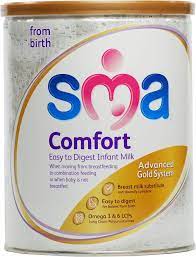
Sma Comfort Colic & Constipation Milk Powder comes in a 800 g pack. It is sold under the Sma brand. On Mamori it sits under Snacks › Kids & Baby Snacks › Infant Formula. Its label lists 48 ingredients.
Sma Comfort Colic & Constipation Milk Powder at a glance
Sma Comfort Colic & Constipation Milk Powder fits Pescatarian and Vegan + Dairy diets. It also carries the Crustaceans Free, Egg Free, Fish Free, Peanut Free, Tree Nut Free, Celery Free, Mustard Free, Sesame Free, Sulfite Free, Lupin Free, Mollusks Free, Artificial Flavourings Free, Barley Free, Beef Free, Citrus Fruit Free, Gelatin Free, Latex Free, Oats Free, Pork Free, Poultry Free, Rice Free and Rye Free badges. Nutrition-wise, it's Low Salt/Sodium, Low Sugars, Low Fiber, Low Protein, Medium in Calories, Medium Carbs and Medium Saturated Fat. Worth knowing: it's marked Non-Vegan, Non-Vegetarian, Non-Low FODMAP, Non-Vegan + Eggs, Contains Dairy, Contains Additives, Contains Corn, Contains Emulsifier, Contains Fructose, Lactose, Contains Added Sugars, Contains Seed and Contains Wheat.
Diet and allergens
Suitable for a pescatarian diet.
Not suitable for vegan or vegetarian diets.
Contains milk.
Free from crustaceans, eggs, fish, peanuts, tree nuts, celery, mustard, sesame, sulphites, lupin and molluscs.
Based on Mamori's check of the ingredients on the label. Recipes change, so always read the pack if you have an allergy or intolerance.
Size: 800 g
Last updated 2 November 2026
Ingredients
Lactose, vegetable oils, Sunflower oil, Rapeseed Oil, potato starch, partially hydrolysed whey protein, GOS, potassium phosphate, calcium citrate, magnesium chloride, choline bitartrate, FOS, AA, DHA, L-arginine, Potassium Chloride, Sodium Chloride, Vitamin C, L-histidine, L-phenylalanine, Taurine, inositol, Ferrous Sulphate, calcium phosphate, l-carnitine, Zinc Sulphate, nucleotides, Cytidine-, Disodium Uridine-, Adenosine-, disodium guanosine-5’- monophosphate, tocopherol-rich extract, Vitamin E, niacin, Pantothenic acid, copper sulphate, Vitamin A, Thiamin, Riboflavin, Vitamin B6, manganese sulphate, Potassium Iodide, Folic Acid, sodium selenate, vitamin K, Vitamin D, Biotin, vitamin B12
Additives
- E340: Potassium Phosphates (I) Monopotassium Phosphate (Ii) Dipotassium Phosphate (Iii) Tripotassium Phosphate: Some concerns
Potassium phosphates (E340) are potassium salts of phosphoric acid. The group includes monopotassium phosphate, dipotassium phosphate and tripotassium phosphate. They are mineral-based phosphates used as acidity regulators and antioxidant-related stabilisers.
In food, E340 helps control acidity, stabilise mixtures, bind water and support texture. It may be used in processed meats, processed cheese, bakery products, powdered drinks, desserts and other processed foods where phosphate salts are useful.
E340 is allowed in food, but some concerns have been raised. EFSA found that people who eat many foods containing added phosphates can exceed the safe daily amount, and phosphate intake is a particular concern for people with kidney disease.
- E333: Calcium Citrates (I) Monocalcium Citrate (Ii) Dicalcium Citrate (Iii) Calcium Citrate (Tricalcium Citrate): Generally safe
Calcium citrates (E333) are calcium salts of citric acid. They include mono-, di- and tricalcium citrate, and are made by combining citric acid with calcium compounds.
They are used as acidity regulators, to help control sourness and pH, and can also support antioxidant effects by binding minerals that speed up spoilage. They may be used in drinks, dairy products, jams, confectionery and other processed foods where acidity control is needed.
Calcium citrates are generally considered safe at normal food amounts. They are authorised for use in the EU after safety assessment, and the sources checked raise no concern for typical dietary exposure.
- E511: Magnesium Chloride: Some concerns
Magnesium chloride (E511) is a mineral salt made from magnesium and chloride. It is a naturally occurring substance and can be obtained from seawater, brines or mineral sources.
In food, it is used as an acidity regulator, firming agent and anti-caking agent. It may be used where manufacturers need to control acidity, improve texture, or help powdered ingredients flow more freely.
It is permitted for use in food, but there are some concerns about exposure. EFSA found that people who eat larger amounts of foods containing magnesium chloride could exceed the safe daily amount, so the risk is mainly linked to high overall intake.
- E1001: Choline Salts: Not allowed in the EU (Regulation (EC) No 1333/2008, Article 4(1) and Annex II)
Choline salts, E1001, are salts of choline, a vitamin-like nutrient related to the B-vitamin group. They are usually made by combining choline with acids or minerals to form stable compounds.
In food, they may be used to add choline or help with formulation in products where this nutrient is needed, such as some fortified foods, food supplements or foods for special nutritional purposes.
Safety is not rated here. Choline salts are allowed in the EU within set limits, which are intended to keep use at acceptable levels.
- E304: Fatty Acid Esters Of Ascorbic Acid (Ascorbyl Palmitate): Generally safe
Fatty acid esters of ascorbic acid (E304) are antioxidants made by combining vitamin C, also called ascorbic acid, with fatty acids such as palmitic or stearic acid. The fatty acids can come from plant or animal sources.
They help protect fats and oils from oxidation, which can cause rancid flavours and colour changes. They are used in foods where fat stability matters, such as oils, fat spreads, snacks, bakery products and some processed foods.
E304 is generally considered safe at normal food amounts. It is authorised for use in the EU after safety assessment, and the sources checked raise no specific concern for typical dietary exposure.
- E508: Potassium Chloride (Gelling Agent): Some concerns
Potassium chloride (E508) is a potassium salt, similar in structure to table salt but containing potassium instead of sodium. It is used as an acidity regulator, anti-caking agent and firming or gelling aid in some foods.
In food, it can help control acidity, improve texture, prevent powders from clumping, or partly replace ordinary salt. It may be found in processed foods such as seasonings, low-sodium salt products, soups, sauces, and some canned or prepared foods.
It is allowed for use, but some concerns have been raised. EFSA found that people with high intakes of foods containing potassium chloride could exceed the safe daily amount.
- E300: Ascorbic Acid (Vitamin C): Generally safe
Ascorbic acid (E300) is vitamin C, a water-soluble substance found naturally in many fruits and vegetables. As a food additive, it is usually made by controlled industrial production and used in purified form.
It helps prevent oxidation, which can stop foods from browning or developing off-flavours. It can also adjust acidity. It is used in a range of foods, especially fruit products, drinks, bakery products, meat products and foods where colour or freshness needs protecting.
It is generally considered safe at normal food amounts. It is authorised for use in the EU after safety assessment, and EFSA’s re-evaluation did not raise concern for its use as a food additive.
- E341: Calcium Phosphates (I) Monocalcium Phosphate (Ii) Dicalcium Phosphate (Iii) Tricalcium Phosphate: Some concerns
Calcium phosphates (E341) are mineral salts of calcium and phosphate. The group includes monocalcium phosphate, dicalcium phosphate and tricalcium phosphate, and they are forms of the same nutrients found naturally in bones and teeth.
They are used to control acidity, help powders flow, support raising agents, and sometimes add calcium. They can be found in foods such as flour mixes, baked goods, powdered drinks, processed cheese, and some supplements or fortified foods.
They are allowed in food, but there are some concerns. EFSA found that people who eat a lot of foods containing phosphate additives can exceed the safe daily amount, and people with kidney disease are often advised to limit phosphate intake.
- E335: Sodium Tartrates (I) Monosodium Tartrate (Ii), Disodium Tartrate: Generally safe
Sodium tartrates (E335) are salts of tartaric acid, a naturally occurring acid found in grapes and some other fruits. E335 includes monosodium tartrate and disodium tartrate, which are mineral salts used in small amounts in food.
They work mainly as acidity regulators and can also help protect foods from unwanted changes linked to oxidation. They may be used where manufacturers need to control acidity, stabilise a recipe, or support the action of other ingredients.
Sodium tartrates are generally considered safe. They are allowed in food in the EU after safety assessment, and the sources checked raise no concern at normal amounts.
- E306: Tocopherol-Rich Extract: Generally safe
Tocopherol-rich extract (E306) is a natural form of vitamin E, made up of mixed tocopherols usually obtained from vegetable oils such as soya, sunflower or rapeseed oil.
It is used as an antioxidant, helping to slow rancidity and protect fats and oils from oxidation. It can be found in foods containing oils or fats, such as margarines, dressings, baked goods, snacks and some processed foods.
E306 is allowed in food in the EU after safety assessment. It is generally considered safe at normal amounts used in food, and the sources checked raise no specific concern.
- E519: Copper(Ii) Sulfate: Not allowed in the EU (Regulation (EC) No 1333/2008, Article 4(1) and Annex II)
Copper(II) sulphate, also called cupric sulphate, is E519. It is an inorganic copper salt, usually seen as blue crystals, made from copper and sulphuric acid.
In food use, it can act as an acidity regulator and anti-caking agent. These functions help control pH or keep powdered ingredients free-flowing, though its food uses are limited compared with many common additives.
E519 is allowed in the EU only within set legal limits. As a copper compound, intake is controlled because copper is an essential mineral but can be harmful in excessive amounts.
Questions and answers
Is Sma Comfort Colic & Constipation Milk Powder vegan?
No. It contains milk, so it is not suitable for a vegan diet.
Is Sma Comfort Colic & Constipation Milk Powder vegetarian?
No. It is not suitable for a vegetarian diet.
Is Sma Comfort Colic & Constipation Milk Powder suitable for a pescatarian diet?
Yes. It is suitable for a pescatarian diet.
Is Sma Comfort Colic & Constipation Milk Powder suitable for a Low FODMAP diet?
No. It is not suitable for a Low FODMAP diet.
Is Sma Comfort Colic & Constipation Milk Powder suitable for a Vegan + Dairy diet?
Yes. It is suitable for a Vegan + Dairy diet.
Is Sma Comfort Colic & Constipation Milk Powder suitable for a Vegan + Eggs diet?
No. It is not suitable for a Vegan + Eggs diet.
Does Sma Comfort Colic & Constipation Milk Powder contain milk?
Yes. It contains milk.
Is Sma Comfort Colic & Constipation Milk Powder nut-free?
Yes. Its ingredients include no peanuts or tree nuts, and its label gives no nut warning.
Does Sma Comfort Colic & Constipation Milk Powder contain eggs?
No. Its ingredients include no eggs, and its label gives no egg warning.
Which allergens does Sma Comfort Colic & Constipation Milk Powder contain?
It contains milk.
More in Infant Formula
- Fruit Funk Peppa Pig Puffs Red Currant
- Fruit Funk Happybag Strawberry Flakes Paw Patrol
- Fruit Funk Fruit Spaghetti Mixed Berries
- Fruit Funk Fruit Spaghetti Mango
- Hipp Combiotic No2 Follow On Milk
- Sma First Infant Milk
- Sma Follow On Milk
- Nestle Nan 1 Tin
- Aptamil Latte 2 Liquid
- Aptamil Latte 4 Liquid Growth
- Bebelac 1
- Bebelac 2