
Hipp Combiotic No2 Follow On Milk 800 g
Hipp
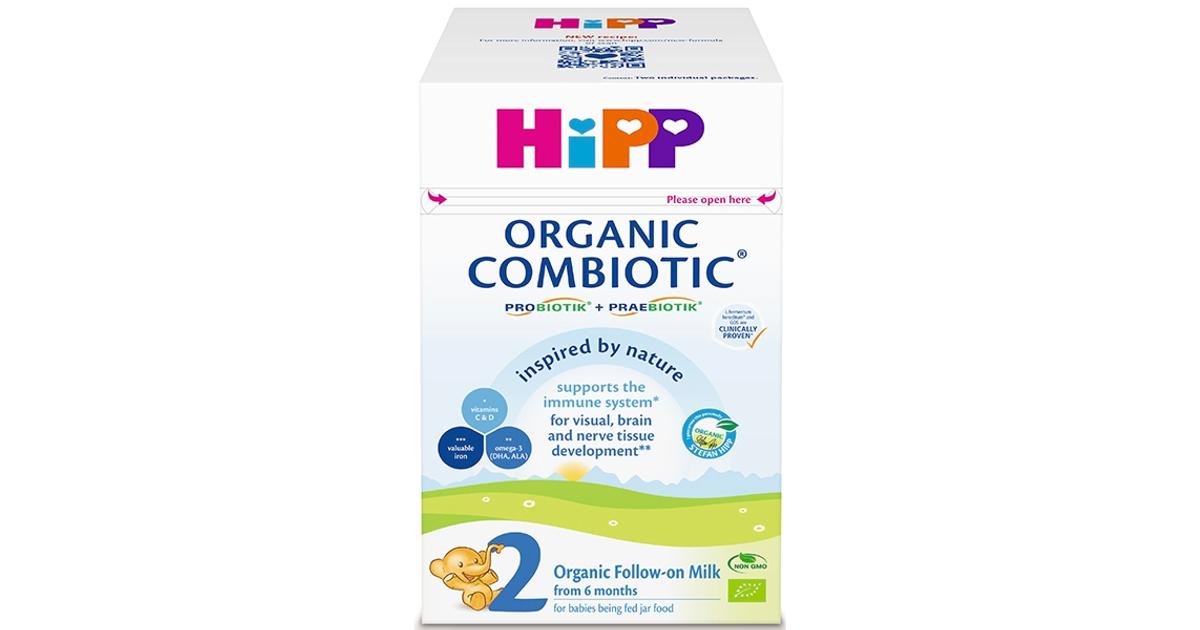
Hipp Combiotic No2 Follow On Milk comes in a 800 g pack. It is sold under the Hipp brand. On Mamori it sits under Snacks › Kids & Baby Snacks › Infant Formula. Its label lists 37 ingredients.
Hipp Combiotic No2 Follow On Milk at a glance
Hipp Combiotic No2 Follow On Milk fits a Pescatarian diet. It also carries the Gluten Free, Crustaceans Free, Egg Free, Peanut Free, Soy Free, Tree Nut Free, Celery Free, Mustard Free, Sesame Free, Sulfite Free, Lupin Free, Mollusks Free, Artificial Flavourings Free, Barley Free, Beef Free, Citrus Fruit Free, Corn Free, Fructose Free, Gelatin Free, Latex Free, Oats Free, Pork Free, Poultry Free, Rice Free, Rye Free and Wheat Free badges. Nutrition-wise, it's Low Salt/Sodium, Low Saturated Fat, Low Sugars, Low Fiber, Low Protein, High Calorie and Medium Carbs. Worth knowing: it's marked Non-Vegan, Non-Vegetarian, Non-Low FODMAP, Non-Vegan + Dairy, Non-Vegan + Eggs, Contains Fish, Contains Dairy, Contains Additives, Contains Emulsifier, Lactose, Contains Added Sugars and Contains Seed.
Diet and allergens
Suitable for a pescatarian diet.
Not suitable for vegan or vegetarian diets.
Contains fish and milk.
Free from gluten, crustaceans, eggs, peanuts, soy, tree nuts, celery, mustard, sesame, sulphites, lupin and molluscs.
Based on Mamori's check of the ingredients on the label. Recipes change, so always read the pack if you have an allergy or intolerance.
Size: 800 g
Last updated 2 November 2026
Ingredients
skimmed milk, lactose, vegetable oils, palm oil, rapeseed oil, sunflower oil, whey product, galactooligosaccharides from lactose, fish oil, calcium chloride, potassium citrate, calcium salts of orthophosphoric acid, calcium carbonate, L-tyrosine, L-tryptophan, sodium citrate, magnesium carbonate, vitamin C, ferrous sulphate, stabiliser lactic acid, L-cystine, niacin, zinc oxide, natural lactic acid culture: Lactobacillus fermentum hereditum, vitamin E, pantothenic acid, cupric sulphate, vitamin A, vitamin B1, vitamin B6, potassium iodate, folic acid, sodium selenate, manganese sulphate, vitamin K, vitamin D, D-biotin
Additives
- E509: Calcium Chloride (Sequestrant): Some concerns
Calcium chloride (E509) is a salt made from calcium and chloride. In food, it is used as an acidity regulator, firming agent, stabiliser, and anti-caking agent.
It can help keep fruit and vegetables firm, support cheese making, improve texture in tofu, and prevent powders or salts from clumping. It may also be used where control of acidity or mineral balance is needed.
It is allowed for use in food, but some concerns have been raised about high intakes. EFSA found that people who consume a lot of foods containing calcium chloride could exceed the safe daily amount.
- E332: Potassium Citrates (I) Monopotassium Citrate (Ii) Potassium Citrate (Tripotassium Citrate): Generally safe
Potassium citrates (E332) are potassium salts of citric acid, a natural acid found in citrus fruits. They include monopotassium citrate and tripotassium citrate, and are used as acidity regulators and antioxidants.
In food, they help control acidity, stabilise flavour, and can slow changes caused by oxidation. They may be used in products such as drinks, jams, confectionery, processed cheese, and other foods where acidity control is needed.
Potassium citrates are generally considered safe at normal food amounts. They are authorised for use in the EU after safety assessment, and the sources checked raise no concern for typical dietary exposure.
- E341: Calcium Phosphates (I) Monocalcium Phosphate (Ii) Dicalcium Phosphate (Iii) Tricalcium Phosphate: Some concerns
Calcium phosphates (E341) are mineral salts of calcium and phosphate. The group includes monocalcium phosphate, dicalcium phosphate and tricalcium phosphate, and they are forms of the same nutrients found naturally in bones and teeth.
They are used to control acidity, help powders flow, support raising agents, and sometimes add calcium. They can be found in foods such as flour mixes, baked goods, powdered drinks, processed cheese, and some supplements or fortified foods.
They are allowed in food, but there are some concerns. EFSA found that people who eat a lot of foods containing phosphate additives can exceed the safe daily amount, and people with kidney disease are often advised to limit phosphate intake.
- E170: Calcium Carbonate, Chalk: Generally safe
Calcium carbonate (E170), also known as chalk, is a naturally occurring mineral made of calcium, carbon and oxygen. For food use it is purified, and it may come from sources such as limestone or shells.
It is mainly used as a white colourant, but it can also help with acidity control, anti-caking, or as a calcium source in some foods. It may be found in confectionery, chewing gum, bakery products, decorations and some supplements or fortified foods.
It is generally considered safe at normal food amounts. It is authorised for use in the EU after safety assessment, and the sources checked raise no concern for typical dietary exposure.
- E331: Sodium Citrates (I) Monosodium Citrate (Ii) Disodium Citrate (Iii) Sodium Citrate (Trisodium Citrate): Generally safe
Sodium citrates (E331) are sodium salts of citric acid. They include monosodium, disodium and trisodium citrate, and are usually made by neutralising citric acid with a sodium compound.
They are used mainly as acidity regulators, helping control sourness and pH, and can also support antioxidant effects by binding metals. They are found in a wide range of foods, such as soft drinks, dairy products, processed cheese, desserts, jams and some meat products.
Sodium citrates are generally considered safe. They are authorised for use in food in the EU after EFSA safety assessment, and no concern is raised at normal amounts used in foods.
- E504: Magnesium Carbonates: (I) Magnesium Carbonate (Ii) Magnesium Bicarbonate Magnesium Hydrogen Carbonate: Generally safe
Magnesium carbonates (E504) are mineral salts of magnesium and carbonate. This group includes magnesium carbonate and magnesium bicarbonate, also called magnesium hydrogen carbonate.
In food, they are used mainly as acidity regulators and anti-caking agents. They help control acidity and keep powdered foods free-flowing, so they may be used in products such as powdered mixes, salts, and other dry foods where clumping is a concern.
E504 is generally considered safe. It is allowed in food in the EU after safety assessment, and the sources checked raise no concern at normal amounts used in food.
- E300: Ascorbic Acid (Vitamin C): Generally safe
Ascorbic acid (E300) is vitamin C, a water-soluble substance found naturally in many fruits and vegetables. As a food additive, it is usually made by controlled industrial production and used in purified form.
It helps prevent oxidation, which can stop foods from browning or developing off-flavours. It can also adjust acidity. It is used in a range of foods, especially fruit products, drinks, bakery products, meat products and foods where colour or freshness needs protecting.
It is generally considered safe at normal food amounts. It is authorised for use in the EU after safety assessment, and EFSA’s re-evaluation did not raise concern for its use as a food additive.
- E270: Lactic Acid (Preservative): Generally safe
Lactic acid (E270) is an organic acid found naturally in many foods and also made by fermenting sugars, often using bacteria. It is the same type of acid produced in foods such as yoghurt and fermented vegetables.
In food, it is used mainly as an acidity regulator and preservative, helping control pH and slow the growth of some microbes. It may be found in fermented foods, pickled products, drinks, sauces, confectionery and bakery products.
It is generally considered safe. It is allowed in food in the EU after safety assessment, and the sources checked raise no concern at normal amounts.
- E921: L-Cystine: Not allowed in the EU (Regulation (EC) No 1333/2008, Article 4(1) and Annex II)
L-cystine (E921) is an amino acid, made of two linked cysteine molecules. It can occur naturally in proteins, and for food use it may be produced from protein materials or by fermentation.
In food, it is mainly used as a flour treatment agent to help improve dough handling and baking performance. It may be found in some bread, bakery mixes and flour-based products, depending on local rules and manufacturer use.
Its safety has not been rated here. L-cystine is allowed in the EU within set limits, meaning it can be used only in permitted amounts and food categories.
- E306: Tocopherol-Rich Extract: Generally safe
Tocopherol-rich extract (E306) is a natural form of vitamin E, made up of mixed tocopherols usually obtained from vegetable oils such as soya, sunflower or rapeseed oil.
It is used as an antioxidant, helping to slow rancidity and protect fats and oils from oxidation. It can be found in foods containing oils or fats, such as margarines, dressings, baked goods, snacks and some processed foods.
E306 is allowed in food in the EU after safety assessment. It is generally considered safe at normal amounts used in food, and the sources checked raise no specific concern.
- E519: Copper(Ii) Sulfate: Not allowed in the EU (Regulation (EC) No 1333/2008, Article 4(1) and Annex II)
Copper(II) sulphate, also called cupric sulphate, is E519. It is an inorganic copper salt, usually seen as blue crystals, made from copper and sulphuric acid.
In food use, it can act as an acidity regulator and anti-caking agent. These functions help control pH or keep powdered ingredients free-flowing, though its food uses are limited compared with many common additives.
E519 is allowed in the EU only within set legal limits. As a copper compound, intake is controlled because copper is an essential mineral but can be harmful in excessive amounts.
- E917: Potassium Iodate: Generally safe
Potassium iodate, sometimes listed as E917, is an iodine-containing mineral salt. It is not treated as a food additive under EU law, but as a permitted source of iodine that may be added to foods.
It can be used to add iodine for nutritional purposes, for example in fortified foods or iodised salt, rather than to glaze, sweeten or preserve food.
It is generally considered safe when used as an approved iodine source in foods. Its EU status reflects that it is regulated as a nutrient source, not as a food additive.
Questions and answers
Is Hipp Combiotic No2 Follow On Milk vegan?
No. It contains fish and milk, so it is not suitable for a vegan diet.
Is Hipp Combiotic No2 Follow On Milk vegetarian?
No. It is not suitable for a vegetarian diet.
Is Hipp Combiotic No2 Follow On Milk suitable for a pescatarian diet?
Yes. It is suitable for a pescatarian diet.
Is Hipp Combiotic No2 Follow On Milk suitable for a Low FODMAP diet?
No. It is not suitable for a Low FODMAP diet.
Is Hipp Combiotic No2 Follow On Milk suitable for a Vegan + Dairy diet?
No. It is not suitable for a Vegan + Dairy diet.
Is Hipp Combiotic No2 Follow On Milk suitable for a Vegan + Eggs diet?
No. It is not suitable for a Vegan + Eggs diet.
Is Hipp Combiotic No2 Follow On Milk gluten-free?
Yes. Its ingredients include no gluten, and its label gives no gluten warning.
Does Hipp Combiotic No2 Follow On Milk contain milk?
Yes. It contains milk.
Is Hipp Combiotic No2 Follow On Milk nut-free?
Yes. Its ingredients include no peanuts or tree nuts, and its label gives no nut warning.
Does Hipp Combiotic No2 Follow On Milk contain eggs?
No. Its ingredients include no eggs, and its label gives no egg warning.
Which allergens does Hipp Combiotic No2 Follow On Milk contain?
It contains fish and milk.
More in Infant Formula
- Fruit Funk Peppa Pig Puffs Red Currant
- Fruit Funk Happybag Strawberry Flakes Paw Patrol
- Fruit Funk Fruit Spaghetti Mixed Berries
- Fruit Funk Fruit Spaghetti Mango
- Sma First Infant Milk
- Sma Follow On Milk
- Nestle Nan 1 Tin
- Aptamil Latte 2 Liquid
- Aptamil Latte 4 Liquid Growth
- Bebelac 1
- Bebelac 2
- Aptamil Pronutra Advance Stage 1