
Optimum nutrition Amino Energy Fruit Fusion 270 g
Optimum nutrition
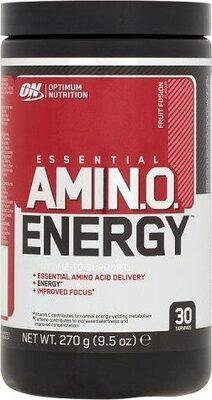
Optimum nutrition Amino Energy Fruit Fusion comes in a 270 g pack. It is sold under the Optimum nutrition brand. On Mamori it sits under Additives › Nutrient Additives › Nutritive. Its label lists 35 ingredients.
Optimum nutrition Amino Energy Fruit Fusion at a glance
Optimum nutrition Amino Energy Fruit Fusion carries the Lupin Free, Citrus Fruit Free and Latex Free badges. Nutrition-wise, it's High Protein, Low Calorie, Low Carbs, Low Salt/Sodium, Low Saturated Fat, Low Sugars and Low Fiber. Worth knowing: it's marked Non-Vegan, Non-Vegetarian, Non-Pescatarian, Non-Low FODMAP, Non-Vegan + Dairy, Non-Vegan + Eggs, Contains Additives, Contains Artificial Flavourings, Contains Barley, Contains Beef, Contains Corn, Contains Emulsifier, Contains Fructose, Contains Gelatin, Lactose, Contains Added Sugars, Contains Oats, Contains Pork, Contains Poultry, Contains Rice, Contains Rye, Contains Seed and Contains Wheat.
Diet and allergens
Not suitable for vegan, vegetarian or pescatarian diets.
Free from lupin.
Based on Mamori's check of the ingredients on the label. Recipes change, so always read the pack if you have an allergy or intolerance.
Size: 270 g
Last updated 2 November 2026
Ingredients
Amino Acid Blend, Micronized Taurine, Micronized L-Glutamine, Micronized L-Arginine, Micronized L-Leucine, CarnoSyn, Beta-Alanine, Micronized Citrulline, Micronized L-Isoleucine, Micronized L-Valine, Micronized L-Tyrosine, Micronized L-Histidine, Micronized L-Lysine, Micronized L-Phenylalanine, Micronized L-Threonine, Micronized L-Methionine, Energy Blend, Caffeine: from Green Tea, Green Tea Extract: Camellia sinensis, green coffee extract, Citric Acid, malic acid, Natural & Artificial Flavours, inulin, Beet Colour, tartaric acid, silicon dioxide, calcium silicate, Gum Blend, cellulose gum, Xanthan Gum, Carrageenan, Sucralose, Lecithin, FD&C Yellow no.5&6
Additives & flavourings
Additives
- E585: Ferrous Lactate: Generally safe
Ferrous lactate (E585) is an iron salt of lactic acid. It is a mineral-based additive, usually used because it provides iron and can also affect acidity in foods.
In food, it is mainly used to stabilise colour, regulate acidity, or add iron. It may be found in some fortified foods and in certain preserved or processed products where these functions are needed.
It is generally considered safe at normal food amounts. Ferrous lactate is allowed for use in food in the EU following safety assessment, and the sources checked raise no specific concern for typical dietary exposure.
- E505: Ferrous Carbonate: Generally safe
Ferrous carbonate, sometimes referred to as E505, is an iron salt made from iron and carbonate. It is not treated as a food additive under EU law, but it is listed as a permitted form of iron that may be added to foods.
It can be used to add iron to fortified foods. Iron compounds may also help with processing roles such as acidity control or reducing clumping, but in the EU this substance is regulated as a nutrient source rather than as an additive.
It is generally considered safe when used as an approved source of iron in foods. The main regulatory point is that EU law permits it as a form of iron, not as a food additive.
- E641: L-Leucine: Generally safe
L-leucine (E641) is an essential amino acid, one of the building blocks of protein. It occurs naturally in many protein-rich foods and can also be made for use as a food additive.
In food, it is used as a nutrient and protein-related additive, and may be added to foods where amino acids are used to adjust nutritional content or formulation. Its use is more about nutrition than flavour, colour, or preservation.
It is generally considered safe at normal food amounts. E641 is allowed in food in the EU after safety assessment, and the checked sources raise no concern for typical use.
- E122: Carmoisine (Azorubine): Some concerns
Azorubine, also called carmoisine or E122, is a synthetic red azo dye used as a food colour. It is not made from food ingredients, but manufactured as a colourant.
It gives foods and drinks a red to burgundy colour. It may be used in products such as sweets, desserts, soft drinks, jams, sauces, and other processed foods where a strong red shade is wanted.
It is allowed for use in the EU, and EFSA found no risk of eating too much in its 2009 review. However, foods containing E122 must carry a warning that it may have an adverse effect on activity and attention in children.
- E469: Enzymatically Hydrolysed Carboxy Methyl Cellulose: Generally safe
Enzymatically hydrolysed carboxy methyl cellulose, or E469, is a modified cellulose gum. It is made from cellulose, the main structural fibre in plants, which is chemically changed and then broken down further using enzymes.
It is used as a thickener, stabiliser and emulsifier. This means it can help give foods a smooth texture, keep ingredients evenly mixed, and improve consistency in processed foods such as sauces, desserts, fillings and other prepared products.
E469 is generally considered safe at normal amounts used in food. It is authorised for use in the EU after safety assessment, and the sources checked raise no specific concern for typical dietary exposure.
- E918: Nitrogen Oxides: Not allowed in the EU (Regulation (EC) No 1333/2008, Article 4(1) and Annex II)
Nitrogen oxides (E918) are gases made of nitrogen and oxygen. In food additives, this name refers to gases used in controlled food processing rather than a nutrient or flavouring.
E918 is listed as a glazing agent and processing gas. Such additives may be used to help treat or modify the surface of foods, or to create a controlled atmosphere during production, although it is not commonly seen on everyday ingredient lists.
Its safety has not been rated here. It is allowed in the EU within set limits, so its use is regulated, but it should not be assumed to be either especially risky or especially beneficial.
- E330: Citric Acid: Generally safe
Citric acid (E330) is a natural organic acid found in citrus fruits and many other plants. The citric acid used in food is usually made by fermentation of sugars using micro-organisms.
It is used as an acidity regulator and antioxidant. It helps give a sharp, sour taste, control pH, and slow colour or flavour changes. It is common in soft drinks, sweets, jams, sauces, canned foods, and many processed foods.
Citric acid is generally considered safe at normal food levels. It is allowed in food in the EU after safety assessment, and the sources checked raise no concern for typical dietary amounts.
- E296: Malic Acid (Acid): Generally safe
Malic acid (E296) is an acid naturally found in many fruits, especially apples. For food use, it is usually made by industrial fermentation or chemical production and is used as a food acid.
It adds a sharp, fruity sour taste and helps control acidity in foods and drinks. It may be found in sweets, soft drinks, jams, fruit products, desserts and some processed foods where a tart flavour or acidity control is needed.
It is generally considered safe at normal food amounts. It is allowed in the EU after safety assessment, and the sources checked raise no concern for typical use.
- E334: Tartaric Acid: Generally safe
Tartaric acid (L(+)-) (E334) is a naturally occurring organic acid. It is found in grapes and some other fruits, and the food additive is the same type of acid used to adjust acidity in foods.
It helps give foods a sharper taste, controls acidity, and can support antioxidant effects. It may be used in products such as sweets, jams, soft drinks, bakery mixes, and wine-related products.
It is generally considered safe at normal food amounts. It is authorised for use in the EU after safety assessment, and the sources checked raise no concern for typical dietary exposure.
- E551: Silicon Dioxide (Silica): Generally safe
Silicon dioxide (E551), also called silica, is a naturally occurring mineral substance made of silicon and oxygen. It is found in rocks, sand and many plants, and the food additive form is a fine, inert powder.
In food, it is mainly used as an anti-caking agent to help powders and granules flow freely. It may be found in products such as powdered seasonings, salt substitutes, dried soups, instant drinks and food supplement powders.
It is generally considered safe at normal food-use levels. It is authorised for use in the EU after safety assessment, and the sources checked raise no concern at typical amounts.
- E552: Calcium Silicate: Generally safe
Calcium silicate (E552) is a mineral-based additive made from calcium, silicon and oxygen. It is an inorganic compound used in very small amounts in food.
It mainly works as an anti-caking agent, helping powders stay free-flowing and reducing clumping. It may be used in powdered foods such as salts, seasoning mixes, baking ingredients and other dry food mixes where moisture control is useful.
It is generally considered safe at the levels used in food. It is authorised for use in the EU after safety assessment, and the sources checked raise no concern at normal amounts.
- E466: Sodium Carboxy Methyl Cellulose, Cellulose Gum: Generally safe
Sodium carboxy methyl cellulose, also called cellulose gum or E466, is a modified cellulose. Cellulose is a natural fibre found in plant cell walls, and E466 is made by chemically changing it so it dissolves or disperses in water.
It is used as a thickener, stabiliser and emulsifier. It helps give foods a smooth texture, keep ingredients mixed, and control thickness. It can be found in products such as sauces, dressings, desserts, ice cream, baked goods and some reduced-fat foods.
E466 is generally considered safe. It is authorised for use in the EU after safety assessment, and the sources checked raise no concern at normal food amounts.
- E415: Xanthan Gum (Thickener): Generally safe
Xanthan gum (E415) is a thickening and stabilising gum made by fermenting sugars with the bacterium Xanthomonas campestris, then purifying and drying the resulting substance.
It helps foods hold water, thicken, and keep ingredients evenly mixed. It is often used in sauces, dressings, desserts, bakery products, gluten-free foods, and drinks where a smooth or stable texture is needed.
Xanthan gum is generally considered safe. It is allowed in food in the EU after EFSA assessment, and the sources checked do not raise concerns at normal amounts used in foods.
- E407: Carrageenan (Thickener) (Stabiliser) (Gelling Agent): Some concerns
Carrageenan, or E407, is a thickening and gelling additive made from red seaweed. It is a large carbohydrate substance used to change the texture of foods.
It helps foods become thicker, creamier or more stable, and can also help gels form. It is often used in dairy desserts, flavoured milks, ice cream, plant-based drinks, sauces and processed meats.
It is allowed in food, but some concerns have been raised. EFSA found that people who eat a lot of foods containing carrageenan could go over the safe daily amount, so high intake is the main issue.
- E955: Sucralose (Trichlorogalactosucrose): Generally safe
Sucralose (E955), also called trichlorogalactosucrose, is an artificial high-intensity sweetener. It is made by chemically modifying sugar, which makes it taste very sweet while adding little or no energy in the small amounts used.
It is used to sweeten foods and drinks without using much sugar. You may find it in low-sugar or sugar-free drinks, desserts, yoghurts, chewing gum, tabletop sweeteners, and some special diet foods.
Sucralose is generally considered safe at normal amounts. It is authorised for use in the EU after safety assessment, and the sources checked raise no concern for typical food use.
- E322: Lecithins: Generally safe
Lecithins (E322) are a group of natural fatty substances found in plants and animals. Food-grade lecithin is usually made from soya, sunflower, rapeseed or egg, and in some cases may be animal derived.
They are mainly used as emulsifiers, helping oil and water mix and keeping textures smooth. They are found in foods such as chocolate, spreads, baked goods, sauces, margarines and instant powders.
Lecithins are generally considered safe at normal food amounts and are allowed in the EU after safety assessment. People with relevant allergies should note the source, especially soya or egg.
- E110: Sunset Yellow Fcf (Orange Yellow S, Fd&C Yellow 6): Some concerns
Sunset Yellow FCF, also called Orange Yellow S or E110, is a synthetic azo dye. It is a water-soluble orange-yellow colourant used to give foods and drinks a bright yellow to orange shade.
It is used in products such as soft drinks, sweets, desserts, sauces, snacks and bakery decorations, especially where a strong, stable colour is wanted.
It is allowed in the EU, but some concerns have been raised. Foods containing E110 must carry a warning that it “may have an adverse effect on activity and attention in children”.
Flavourings
- Natural & Artificial Flavours: Flavouring (Regulation (EC) No 1334/2008 on flavourings, Article 16).
Questions and answers
Is Optimum nutrition Amino Energy Fruit Fusion vegan?
No. It is not suitable for a vegan diet.
Is Optimum nutrition Amino Energy Fruit Fusion vegetarian?
No. It is not suitable for a vegetarian diet.
Is Optimum nutrition Amino Energy Fruit Fusion suitable for a pescatarian diet?
No. It is not suitable for a pescatarian diet.
Is Optimum nutrition Amino Energy Fruit Fusion suitable for a Low FODMAP diet?
No. It is not suitable for a Low FODMAP diet.
Is Optimum nutrition Amino Energy Fruit Fusion suitable for a Vegan + Dairy diet?
No. It is not suitable for a Vegan + Dairy diet.
Is Optimum nutrition Amino Energy Fruit Fusion suitable for a Vegan + Eggs diet?
No. It is not suitable for a Vegan + Eggs diet.
More in Nutritive
- Namedsport Magnesium Liquid
- Usn Bcaa Power Punch Watermelon
- Qnt Creatine Monohydrate
- Powerbar Orange Isotonic Sports Drink
- Optimum Nutrition 330 g
- Optimum nutrition Emino Energy Pineapple Flavour
- Optimum nutrition Bcaa Apple&pear
- Optimum nutrition Amino Energy Lemon & Lime
- Optimum Nutrition Creatine Unflavored
- Olimp Iso Plus + L Carnitine Lemon Flavour
- Naturya Organic Chlorella Powder
- Diet-food Pure Collagen