
Oishi Kirei 45 g
Oishi
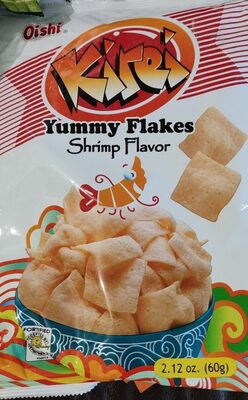
Oishi Kirei comes in a 45 g pack. It is sold under the Oishi brand. On Mamori it sits under Snacks › Snacks & Crisps › Rice Snacks. Its label lists 17 ingredients.
Oishi Kirei at a glance
Oishi Kirei carries the Soy Free, Dairy Free, Celery Free, Mustard Free, Sesame Free, Lupin Free, Mollusks Free, Barley Free, Beef Free, Citrus Fruit Free, Gelatin Free, Lactose Free, Latex Free, Oats Free, Pork Free, Poultry Free and Rye Free badges. Nutrition-wise, it's High Calorie, High Carbs, High Salt/Sodium, High Saturated Fat, Medium in Fiber, Medium in Protein and Medium in Sugars. Worth knowing: it's marked Non-Vegan, Non-Vegetarian, Non-Pescatarian, Non-Low FODMAP, Non-Vegan + Dairy, Non-Vegan + Eggs, Contains Gluten, Contains Crustaceans, Contains Additives, Contains Artificial Flavourings, Contains Corn, Contains Emulsifier, Contains Fructose, Contains Added Sugars, Contains Rice, Contains Seed and Contains Wheat.
Diet and allergens
Not suitable for vegan, vegetarian or pescatarian diets.
Contains gluten and crustaceans.
Free from soy, milk, celery, mustard, sesame, lupin and molluscs.
May contain: EGG, FISH, PEANUTS, NUTS.
Based on Mamori's check of the ingredients on the label. Recipes change, so always read the pack if you have an allergy or intolerance.
Size: 45 g
Last updated 26 October 2026
Ingredients
WHEAT flour, vegetable fat, palm oil, coconut oil, WHEAT starch, sugar, corn starch, salt, maltodextrin, flavour enhancer: E621, flavour, SHRIMP: CRUSTACEAN, emulsifier: E471, antioxidant: E319, coloring agents, E102, E129
Additives & flavourings
Additives
- E621: monosodium glutamate: Some concerns
Monosodium glutamate, or MSG (E621), is the sodium salt of glutamic acid, an amino acid found naturally in many foods. It is made as a purified flavour enhancer.
It boosts savoury “umami” taste and is used in foods such as soups, sauces, seasonings, savoury snacks, ready meals and processed meat or vegetable dishes.
It is allowed in food, but some concerns have been raised. EFSA found that people who eat a lot of foods containing glutamates can go over the safe daily amount, so exposure may be high for frequent consumers.
- E471: Mono- And Diglycerides Of Fatty Acids (Glyceryl Monostearate, Glyceryl Distearate): Generally safe
Mono- and diglycerides of fatty acids, or E471, are emulsifiers made from glycerol and fatty acids. The fatty acids can come from vegetable oils or animal fats, so the source is not always clear unless stated by the producer.
They help oil and water mix, improve texture, and keep foods stable. They are often used in baked goods, spreads, desserts, ice cream, sauces, and processed foods where a smooth or consistent texture is needed.
E471 is generally considered safe. It is allowed in food in the EU after safety assessment, and the sources we check raise no concern at normal amounts.
- E319: Tertiary-Butyl Hydroquinone (TBHQ): Generally safe
Tertiary-butyl hydroquinone, or TBHQ (E319), is a synthetic antioxidant. It is related to hydroquinone and is made for use in very small amounts to help protect fats and oils.
It slows rancidity and helps preserve flavour, colour and shelf life in fatty foods. It may be used in products such as vegetable oils, frying fats, snacks, dried mixes and other foods where oxidation of fats is a concern.
TBHQ is generally considered safe at permitted levels. It is allowed in food in the EU after EFSA safety assessment, and the reviewed sources raise no concern at normal amounts.
- E102: Tartrazine (Fd&C Yellow 5): Some concerns
Tartrazine (E102), also called FD&C Yellow 5, is a synthetic yellow azo dye. It is a man-made colourant used to give foods and drinks a bright yellow to orange shade.
It is found in some soft drinks, sweets, desserts, sauces, snacks, and other processed foods where a strong yellow colour is wanted.
It is permitted for use in food, but some concerns have been raised. In the EU, foods containing tartrazine must carry a warning that it “may have an adverse effect on activity and attention in children”.
- E129: Allura Red Ac (Fd&C Red 40): Some concerns
Allura Red AC (E129), also known as FD&C Red 40, is a synthetic red azo dye. It is a water-soluble colourant made for use in foods and drinks.
It gives a bright red to orange-red colour and is used in some sweets, soft drinks, desserts, ice lollies, bakery decorations and snack foods.
It is allowed for use, and EFSA’s 2015 assessment did not find a risk of eating too much at typical exposure levels. However, in the EU, foods containing it must carry a warning that it may have an adverse effect on activity and attention in children.
Flavourings
- flavour: Flavouring (Regulation (EC) No 1334/2008 on flavourings, Article 16).
Questions and answers
Is Oishi Kirei vegan?
No. It contains crustaceans, so it is not suitable for a vegan diet.
Is Oishi Kirei vegetarian?
No. It is not suitable for a vegetarian diet.
Is Oishi Kirei suitable for a pescatarian diet?
No. It is not suitable for a pescatarian diet.
Is Oishi Kirei suitable for a Low FODMAP diet?
No. It is not suitable for a Low FODMAP diet.
Is Oishi Kirei suitable for a Vegan + Dairy diet?
No. It is not suitable for a Vegan + Dairy diet.
Is Oishi Kirei suitable for a Vegan + Eggs diet?
No. It is not suitable for a Vegan + Eggs diet.
Is Oishi Kirei gluten-free?
No. It contains gluten.
Does Oishi Kirei contain milk?
No. Its ingredients include no milk, and its label gives no milk warning.
Which allergens does Oishi Kirei contain?
It contains gluten and crustaceans. Its label also says it may contain: EGG, FISH, PEANUTS, NUTS.
More in Rice Snacks
- Supervalu Unsalted Rice Cakes
- Bibigo Seasoned seaweed
- Conad Gallette di Mais Biologiche
- Snackajack Snack A Jacks Rice & Corn Cakes
- Riso Scotti Venere Snack Curcuma e Pepe
- Kelkin Mini rice cakes
- Galbusera Laughter upon laughter
- Supervalu Mixed berry yoghurt rice cakes
- Fantastic Cheese rice crackers
- Despar Rice cakes
- Snack a Jacks Minis Rice & Corn Cakes Zingy Salt & Vinegar
- Benlian Milk Chocolate Puffed Rice Bar