
Fantastic Cheese rice crackers 100 g
Fantastic
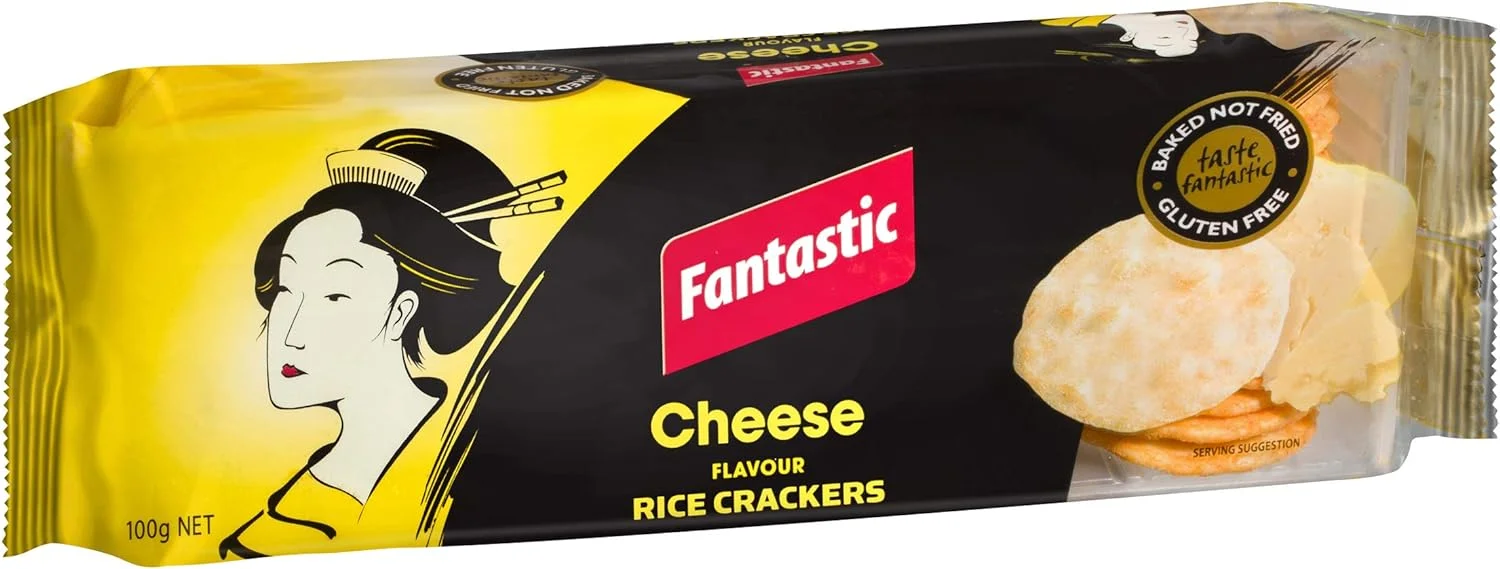
Fantastic Cheese rice crackers comes in a 100 g pack. It is sold under the Fantastic brand. On Mamori it sits under Snacks › Snacks & Crisps › Rice Snacks. Its label lists 28 ingredients.
Fantastic Cheese rice crackers at a glance
Fantastic Cheese rice crackers carries the Crustaceans Free, Peanut Free, Tree Nut Free, Celery Free, Mustard Free, Sulfite Free, Lupin Free, Mollusks Free, Fructose Free, Gelatin Free, Latex Free, No Added Sugars, Oats Free and Rye Free badges. Nutrition-wise, it's Low Sugars, Low Fiber, High Calorie, High Carbs, High Salt/Sodium, Medium in Protein and Medium Saturated Fat. Worth knowing: it's marked Non-Vegan, Non-Vegetarian, Non-Pescatarian, Non-Low FODMAP, Non-Vegan + Dairy, Non-Vegan + Eggs, Contains Dairy, Contains Additives, Contains Artificial Flavourings, Contains Barley, Contains Beef, Contains Citrus Fruit, Contains Corn, Contains Emulsifier, Lactose, Contains Pork, Contains Poultry, Contains Rice, Contains Seed and Contains Wheat.
Diet and allergens
Not suitable for vegan, vegetarian or pescatarian diets.
Contains milk.
Free from crustaceans, peanuts, tree nuts, celery, mustard, sulphites, lupin and molluscs.
May contain: soy, sesame, egg.
Based on Mamori's check of the ingredients on the label. Recipes change, so always read the pack if you have an allergy or intolerance.
Size: 100 g
Last updated 2 November 2026
Ingredients
rice flour, vegetable oil: antioxidant 307b, cheese powder, cheese solids, milk, salt, starter culture, enzymes, milk solids, mineral salts, 339, 331, acidity regulator: 270, hydrolysed vegetable protein, yeast extract, colour: 160c, anticaking agent: 551, maltodextrin, salt, flavour enhancers, 621, 627, 631, tomato powder, onion powder, garlic powder, yeast extract, colour: 160c
Additives
- E307: Alpha-Tocopherol (Synthetic): Generally safe
Alpha-tocopherol (E307) is a form of vitamin E used as a food additive. It can be made synthetically or obtained from vegetable oils, and belongs to a group of fat-soluble antioxidant substances called tocopherols.
It helps protect fats and oils from oxidation, which can cause rancid flavours and loss of quality. It may be used in foods containing oils or fats, such as spreads, dressings, snacks, baked goods and some processed foods.
E307 is generally considered safe at normal amounts used in food. It is authorised for use in the EU after EFSA safety assessment, and the sources checked raise no concern for typical dietary exposure.
- E339: Sodium Phosphates (I) Monosodium Phosphate (Ii) Disodium Phosphate (Iii) Trisodium Phosphate: Some concerns
Sodium phosphates (E339) are salts of phosphoric acid and sodium. They include monosodium, disodium and trisodium phosphate, and are used as acidity regulators and antioxidants.
They help control acidity, keep mixtures stable, improve texture, and support moisture retention. They can be found in processed cheese, meat products, baked goods, powdered mixes and some drinks.
They are allowed in food, but some concerns have been raised. EFSA found that people who eat a lot of foods containing phosphate additives can exceed the safe daily amount, and people with kidney disease are usually advised to limit phosphate intake.
- E331: Sodium Citrates (I) Monosodium Citrate (Ii) Disodium Citrate (Iii) Sodium Citrate (Trisodium Citrate): Generally safe
Sodium citrates (E331) are sodium salts of citric acid. They include monosodium, disodium and trisodium citrate, and are usually made by neutralising citric acid with a sodium compound.
They are used mainly as acidity regulators, helping control sourness and pH, and can also support antioxidant effects by binding metals. They are found in a wide range of foods, such as soft drinks, dairy products, processed cheese, desserts, jams and some meat products.
Sodium citrates are generally considered safe. They are authorised for use in food in the EU after EFSA safety assessment, and no concern is raised at normal amounts used in foods.
- E270: Lactic Acid (Preservative): Generally safe
Lactic acid (E270) is an organic acid found naturally in many foods and also made by fermenting sugars, often using bacteria. It is the same type of acid produced in foods such as yoghurt and fermented vegetables.
In food, it is used mainly as an acidity regulator and preservative, helping control pH and slow the growth of some microbes. It may be found in fermented foods, pickled products, drinks, sauces, confectionery and bakery products.
It is generally considered safe. It is allowed in food in the EU after safety assessment, and the sources checked raise no concern at normal amounts.
- E160c: Paprika Extract, Capsanthin, Capsorubin: Generally safe
Paprika extract, capsanthin and capsorubin (E160c) is a natural red-orange food colouring made from paprika peppers. The main colouring substances are carotenoids, especially capsanthin and capsorubin.
It is used to give or strengthen orange, red or reddish-brown colour in foods. It may be found in items such as cheeses, sauces, soups, snacks, meat products and seasonings.
It is generally considered safe at normal food-use amounts. It is authorised for use in the EU after EFSA safety assessment, and the sources checked raise no concern at typical levels of consumption.
- E551: Silicon Dioxide (Silica): Generally safe
Silicon dioxide (E551), also called silica, is a naturally occurring mineral substance made of silicon and oxygen. It is found in rocks, sand and many plants, and the food additive form is a fine, inert powder.
In food, it is mainly used as an anti-caking agent to help powders and granules flow freely. It may be found in products such as powdered seasonings, salt substitutes, dried soups, instant drinks and food supplement powders.
It is generally considered safe at normal food-use levels. It is authorised for use in the EU after safety assessment, and the sources checked raise no concern at typical amounts.
- E627: Disodium Guanylate: Generally safe
Disodium guanylate (E627) is a flavour enhancer made from guanylic acid, a substance related to natural nucleotides found in living cells. It can be produced by fermentation or extracted from natural sources, and may sometimes be animal derived.
It is used to boost savoury, meaty or “umami” flavours, often together with monosodium glutamate (MSG). It may be found in foods such as soups, sauces, seasonings, savoury snacks, instant noodles and processed meat products.
E627 is generally considered safe at normal amounts used in food. It is authorised for use in the EU after safety assessment, and the sources checked raise no concern for typical dietary exposure.
- E631: Disodium Inosinate: Generally safe
Disodium inosinate, or E631, is a flavour enhancer. It is the sodium salt of inosinic acid, a substance related to naturally occurring compounds found in some foods. It can be made from animal or microbial sources, so it may not always be suitable for vegetarian or vegan diets.
It is used to boost savoury, “umami” flavours, often together with glutamates such as MSG. It may be found in snack foods, seasoning mixes, instant noodles, soups, sauces and processed savoury foods.
It is allowed in food in the EU after safety assessment, and is generally considered safe at normal amounts used in foods. The sources checked raise no specific concern for typical dietary exposure.
Questions and answers
Is Fantastic Cheese rice crackers vegan?
No. It contains milk, so it is not suitable for a vegan diet.
Is Fantastic Cheese rice crackers vegetarian?
No. It is not suitable for a vegetarian diet.
Is Fantastic Cheese rice crackers suitable for a pescatarian diet?
No. It is not suitable for a pescatarian diet.
Is Fantastic Cheese rice crackers suitable for a Low FODMAP diet?
No. It is not suitable for a Low FODMAP diet.
Is Fantastic Cheese rice crackers suitable for a Vegan + Dairy diet?
No. It is not suitable for a Vegan + Dairy diet.
Is Fantastic Cheese rice crackers suitable for a Vegan + Eggs diet?
No. It is not suitable for a Vegan + Eggs diet.
Does Fantastic Cheese rice crackers contain milk?
Yes. It contains milk.
Is Fantastic Cheese rice crackers nut-free?
Yes. Its ingredients include no peanuts or tree nuts, and its label gives no nut warning.
Which allergens does Fantastic Cheese rice crackers contain?
It contains milk. Its label also says it may contain: soy, sesame, egg.
More in Rice Snacks
- Supervalu Unsalted Rice Cakes
- Bibigo Seasoned seaweed
- Oishi Kirei
- Conad Gallette di Mais Biologiche
- Snackajack Snack A Jacks Rice & Corn Cakes
- Riso Scotti Venere Snack Curcuma e Pepe
- Kelkin Mini rice cakes
- Galbusera Laughter upon laughter
- Supervalu Mixed berry yoghurt rice cakes
- Despar Rice cakes
- Snack a Jacks Minis Rice & Corn Cakes Zingy Salt & Vinegar
- Benlian Milk Chocolate Puffed Rice Bar