
Nutrend Protein Snack Cookies 40 g
Nutrend
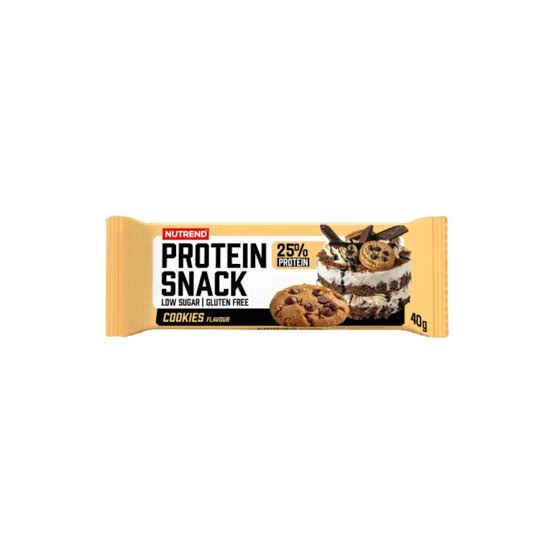
Nutrend Protein Snack Cookies comes in a 40 g pack. It is sold under the Nutrend brand. On Mamori it sits under Confectionery › Biscuits, Wafers & Cookies › Cookies. Its label lists 36 ingredients.
Nutrend Protein Snack Cookies at a glance
Nutrend Protein Snack Cookies fits Vegetarian, Pescatarian and Vegan + Dairy diets. It also carries the Gluten Free, Crustaceans Free, Egg Free, Fish Free, Celery Free, Mustard Free, Lupin Free, Mollusks Free, Barley Free, Beef Free, Citrus Fruit Free, Corn Free, Gelatin Free, Latex Free, No Added Sugars, Oats Free, Pork Free, Poultry Free, Rice Free, Rye Free and Wheat Free badges. Nutrition-wise, it's High Protein, High Saturated Fat, Medium in Fiber, Medium in Calories, Medium Carbs, Medium Salt/Sodium and Medium in Sugars. Worth knowing: it's marked Non-Vegan, Non-Low FODMAP, Non-Vegan + Eggs, Contains Soy, Contains Dairy, Contains Sulfite, Contains Additives, Contains Artificial Flavourings, Contains Emulsifier, Contains Fructose, Lactose and Contains Seed.
Diet and allergens
Suitable for vegetarian and pescatarian diets.
Not suitable for a vegan diet.
Contains soy, milk and sulphites.
Free from gluten, crustaceans, eggs, fish, celery, mustard, lupin and molluscs.
May contain: Nuts, Peanuts, Sesame Seeds.
Based on Mamori's check of the ingredients on the label. Recipes change, so always read the pack if you have an allergy or intolerance.
Size: 40 g
Last updated 2 November 2026
Ingredients
Protein Mixture, Soy Protein Isolate, Whey Protein Concentrate, Soy Flakes, Extrudate: Milk Protein Isolate, Oligofructose Syrup, Milk Chocolate, Sweetener Maltitol, Cocoa Butter, Cocoa Mass, Dried Whole Milk, Cocoa, Emulsifier Sunflower Lecithin, Polydextrose, Humectant Glycerine, Vegetable Fat, Palm Kernel Oil, Palm Oil, Shea Oil, Vanilla Flavoured Cream, Sweetener Maltitol, Palm Oil and Shea Kernel Oil, Dried Whey, Dried Skimmed Milk, Emulsifier Sunflower Lecithin, Flavouring, Colour E 160c, Coconut, Coconut, Antioxidant Sulphur Dioxide, Cocoa Nibs, Acacia Gum, Emulsifier Rapeseed Lecithin, Flavouring, Antioxidant Mixture of Natural Tocopherols, Sweetener Sucralose
Additives & flavourings
Additives
- E965: Maltitol (I) Maltitol (Ii) Maltitol Syrup (Sweetener) (Stabiliser): Generally safe
Maltitols (E965) are sugar alcohol sweeteners. They include maltitol and maltitol syrup, made from starch sugars such as maltose, usually from maize or wheat starch.
They are used to sweeten foods with less sugar, add bulk, help keep moisture, and sometimes give a smooth texture or glossy coating. They are common in sugar-free sweets, chewing gum, chocolate, desserts, baked goods and low-sugar products.
Maltitols are generally considered safe at normal amounts and are authorised for use in the EU after safety assessment. Like other sugar alcohols, larger amounts can cause bloating or a laxative effect in some people.
- E1200: Polydextrose: Generally safe
Polydextrose (E1200) is a synthetic carbohydrate made by linking glucose with small amounts of sorbitol and citric acid. It is used as a soluble fibre and low-energy bulking ingredient.
In food, it helps add bulk, improve texture, hold moisture, and replace some sugar or fat. It can be found in products such as baked goods, desserts, sweets, drinks, and reduced-sugar or high-fibre foods.
Polydextrose is generally considered safe. It is allowed in food in the EU after safety assessment, and the sources checked raise no concern at normal amounts.
- E422: Glycerol (Emulsifier): Generally safe
Glycerol, or E422, is a clear, sweet-tasting liquid also known as glycerine. It is a type of sugar alcohol and can be made from vegetable oils, animal fats, or produced synthetically.
In food, it helps keep moisture in, thickens texture, stabilises mixtures, and can help emulsions stay smooth. It is used in a range of foods where softness, moisture retention, or smooth texture is needed, such as confectionery, baked goods, icings, and some drinks.
Glycerol is generally considered safe at normal food amounts. It is allowed in food in the EU after safety assessment, and the sources checked raise no concern for typical use.
- E160c: Paprika Extract, Capsanthin, Capsorubin: Generally safe
Paprika extract, capsanthin and capsorubin (E160c) is a natural red-orange food colouring made from paprika peppers. The main colouring substances are carotenoids, especially capsanthin and capsorubin.
It is used to give or strengthen orange, red or reddish-brown colour in foods. It may be found in items such as cheeses, sauces, soups, snacks, meat products and seasonings.
It is generally considered safe at normal food-use amounts. It is authorised for use in the EU after EFSA safety assessment, and the sources checked raise no concern at typical levels of consumption.
- E220: Sulphur Dioxide: Some concerns
Sulphur dioxide (E220) is a sulphite preservative. It is a gas that dissolves in water and is used in food for its antimicrobial and antioxidant effects.
It helps slow spoilage, prevents browning, and protects colour and flavour. It is commonly found in dried fruit, wine and other drinks, some pickled or processed vegetables, and potato products.
It is allowed in food, but some concerns have been raised. EFSA found that people who eat a lot of foods containing sulphites can go over the safe daily amount, and sulphites can also trigger reactions in some sensitive people.
- E414: Gum Arabic (Acacia Gum): Generally safe
Gum arabic, or acacia gum, is E414. It is a natural gum obtained from the dried sap of acacia trees. It is a soluble dietary fibre made mainly of complex carbohydrates.
In food, it is used as a thickener, stabiliser and emulsifier. It helps keep mixtures even, improves texture, and can help hold flavours or colours in place. It may be found in sweets, soft drinks, icings, baked goods and flavourings.
It is generally considered safe at normal food amounts. It is authorised for use in the EU after safety assessment, and the sources checked raise no concern for typical use.
- E306: Tocopherol-Rich Extract: Generally safe
Tocopherol-rich extract (E306) is a natural form of vitamin E, made up of mixed tocopherols usually obtained from vegetable oils such as soya, sunflower or rapeseed oil.
It is used as an antioxidant, helping to slow rancidity and protect fats and oils from oxidation. It can be found in foods containing oils or fats, such as margarines, dressings, baked goods, snacks and some processed foods.
E306 is allowed in food in the EU after safety assessment. It is generally considered safe at normal amounts used in food, and the sources checked raise no specific concern.
- E955: Sucralose (Trichlorogalactosucrose): Generally safe
Sucralose (E955), also called trichlorogalactosucrose, is an artificial high-intensity sweetener. It is made by chemically modifying sugar, which makes it taste very sweet while adding little or no energy in the small amounts used.
It is used to sweeten foods and drinks without using much sugar. You may find it in low-sugar or sugar-free drinks, desserts, yoghurts, chewing gum, tabletop sweeteners, and some special diet foods.
Sucralose is generally considered safe at normal amounts. It is authorised for use in the EU after safety assessment, and the sources checked raise no concern for typical food use.
Flavourings
- Flavouring: Flavouring (Regulation (EC) No 1334/2008 on flavourings, Article 16).
- Flavouring: Flavouring.
Questions and answers
Is Nutrend Protein Snack Cookies vegan?
No. It contains milk, so it is not suitable for a vegan diet.
Is Nutrend Protein Snack Cookies vegetarian?
Yes. It is suitable for a vegetarian diet.
Is Nutrend Protein Snack Cookies suitable for a pescatarian diet?
Yes. It is suitable for a pescatarian diet.
Is Nutrend Protein Snack Cookies suitable for a Low FODMAP diet?
No. It is not suitable for a Low FODMAP diet.
Is Nutrend Protein Snack Cookies suitable for a Vegan + Dairy diet?
Yes. It is suitable for a Vegan + Dairy diet.
Is Nutrend Protein Snack Cookies suitable for a Vegan + Eggs diet?
No. It is not suitable for a Vegan + Eggs diet.
Is Nutrend Protein Snack Cookies gluten-free?
Yes. Its ingredients include no gluten, and its label gives no gluten warning.
Does Nutrend Protein Snack Cookies contain milk?
Yes. It contains milk.
Does Nutrend Protein Snack Cookies contain eggs?
No. Its ingredients include no eggs, and its label gives no egg warning.
Which allergens does Nutrend Protein Snack Cookies contain?
It contains soy, milk and sulphites. Its label also says it may contain: Nuts, Peanuts, Sesame Seeds.
More in Cookies
- Despar Frollini con gocce di cioccolato
- Mulino Cookies with Dark and Milk Chocolate
- Belbake Gocce Cioccolato Fondente
- David's Cookies
- Belbake Christmas cookies
- Lidl Milk chocolate macadamia cookies
- Mulino Di Floriano Cookies with dark chocolate
- Brunkagehjerter Heart-shaped cookies
- Bulk Vegan Protein Brownie Chocolate Peanut Butter
- Sondey Protein cookies strawberry & lemon
- Dolciando Whole grain cookies with chocolate