
Belbake Christmas cookies 455 g
Belbake
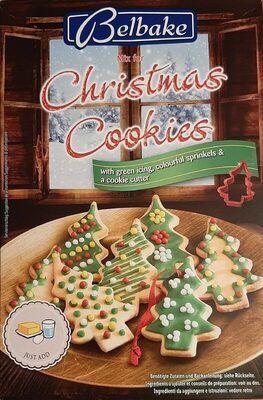
Belbake Christmas cookies comes in a 455 g pack. It is sold under the Belbake brand. On Mamori it sits under Confectionery › Biscuits, Wafers & Cookies › Cookies. Its label lists 21 ingredients.
Belbake Christmas cookies at a glance
Belbake Christmas cookies fits Vegetarian and Pescatarian diets. It also carries the Crustaceans Free, Fish Free, Celery Free, Sesame Free, Mollusks Free, Barley Free, Beef Free, Citrus Fruit Free, Gelatin Free, Latex Free, Oats Free, Pork Free, Poultry Free and Rye Free badges. Nutrition-wise, it's Low Protein, High Calorie, High Carbs, High Saturated Fat, High in Sugars, Medium in Fiber and Medium Salt/Sodium. Worth knowing: it's marked Non-Vegan, Non-Low FODMAP, Non-Vegan + Dairy, Non-Vegan + Eggs, Contains Gluten, Contains Dairy, Contains Additives, Contains Artificial Flavourings, Contains Corn, Contains Emulsifier, Contains Fructose, Lactose, Contains Added Sugars, Contains Rice, Contains Seed and Contains Wheat.
Diet and allergens
Suitable for vegetarian and pescatarian diets.
Not suitable for a vegan diet.
Contains gluten and milk.
Free from crustaceans, fish, celery, sesame and molluscs.
May contain: egg, lupin, mustard, nuts, soy.
Based on Mamori's check of the ingredients on the label. Recipes change, so always read the pack if you have an allergy or intolerance.
Size: 455 g
Last updated 2 November 2026
Ingredients
baking mix, wheat flour, sugar, wheat starch, baking powder: acid: diphosphates; raising agent: sodium carbonates; maize starch, salt, natural flavouring, green icing, sugar, lactose, modified potato starch, colour: copper complexes of chlorophylls and chlorophyllins, colourful sugar-based pearls, sugar, dextrose, rice flour, glucose syrup, paprika extract, beetroot concentrate, flavouring, acidity regulator: citric acid; glazing agent: carnauba wax; colour: curcumin
Additives & flavourings
Additives
- E141: Copper Complexes Of Chlorophylls And Chlorophyllins (I) Copper Complexes Of Chlorophylls (Ii) Copper Complexes Of Chlorophyllins: Generally safe
Copper complexes of chlorophylls and chlorophyllins (E141) are green food colourings made by adding copper to chlorophyll, the natural green pigment in plants, or to chlorophyllin, a water-soluble form of it.
They are used to give or restore green colour in foods. They may be found in products such as confectionery, desserts, sauces, soups, processed vegetables and flavoured drinks, depending on local rules and recipes.
E141 is generally considered safe at normal amounts used in food. It is authorised in the EU after safety assessment, and the sources checked raise no specific concern for typical dietary exposure.
- E160c: Paprika Extract, Capsanthin, Capsorubin: Generally safe
Paprika extract, capsanthin and capsorubin (E160c) is a natural red-orange food colouring made from paprika peppers. The main colouring substances are carotenoids, especially capsanthin and capsorubin.
It is used to give or strengthen orange, red or reddish-brown colour in foods. It may be found in items such as cheeses, sauces, soups, snacks, meat products and seasonings.
It is generally considered safe at normal food-use amounts. It is authorised for use in the EU after EFSA safety assessment, and the sources checked raise no concern at typical levels of consumption.
- E903: Carnauba Wax: Generally safe
Carnauba wax (E903) is a natural plant wax taken from the leaves of the carnauba palm. It is a hard, glossy wax, also used outside food in coatings and polishes.
In food, it is used as a glazing agent to give a shiny surface and help reduce sticking or moisture loss. It can be found on some sweets, chewing gum, chocolate-coated products, and waxed fruit coatings.
Carnauba wax is generally considered safe at normal food amounts. It is authorised for use in the EU after EFSA safety assessment, and the checked sources raise no concern for typical dietary exposure.
Flavourings
- natural flavouring: Natural flavouring (Regulation (EC) No 1334/2008 on flavourings, Article 16).
- flavouring: Flavouring (Regulation (EC) No 1334/2008 on flavourings, Article 16).
Questions and answers
Is Belbake Christmas cookies vegan?
No. It contains milk, so it is not suitable for a vegan diet.
Is Belbake Christmas cookies vegetarian?
Yes. It is suitable for a vegetarian diet.
Is Belbake Christmas cookies suitable for a pescatarian diet?
Yes. It is suitable for a pescatarian diet.
Is Belbake Christmas cookies suitable for a Low FODMAP diet?
No. It is not suitable for a Low FODMAP diet.
Is Belbake Christmas cookies suitable for a Vegan + Dairy diet?
No. It is not suitable for a Vegan + Dairy diet.
Is Belbake Christmas cookies suitable for a Vegan + Eggs diet?
No. It is not suitable for a Vegan + Eggs diet.
Is Belbake Christmas cookies gluten-free?
No. It contains gluten.
Does Belbake Christmas cookies contain milk?
Yes. It contains milk.
Which allergens does Belbake Christmas cookies contain?
It contains gluten and milk. Its label also says it may contain: egg, lupin, mustard, nuts, soy.
More in Cookies
- Mulino Cookies with Dark and Milk Chocolate
- Belbake Gocce Cioccolato Fondente
- David's Cookies
- Lidl Milk chocolate macadamia cookies
- Mulino Di Floriano Cookies with dark chocolate
- Brunkagehjerter Heart-shaped cookies
- Bulk Vegan Protein Brownie Chocolate Peanut Butter
- Sondey Protein cookies strawberry & lemon
- Dolciando Whole grain cookies with chocolate
- Attimo In Forma Protein cookie
- Spar Triple chocolate chip cookies