
Littlemoon Little Moons Salted Caramel Gf 32 g
On the pack: Little Moons Saltd Caramel Gf 10X6X32G
Littlemoon
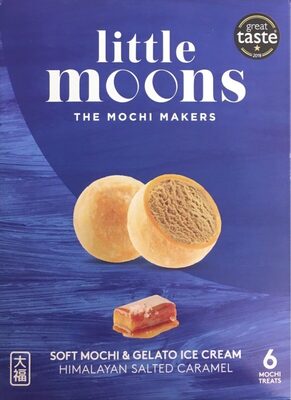
Littlemoon Little Moons Salted Caramel Gf comes in a 32 g pack. It is sold under the Littlemoon brand. On Mamori it sits under Frozen › Ice Cream and Desserts › Frozen Ready Desserts. Its label lists 32 ingredients.
Littlemoon Little Moons Salted Caramel Gf at a glance
Littlemoon Little Moons Salted Caramel Gf fits Vegetarian, Pescatarian and Vegan + Dairy diets. It also carries the Crustaceans Free, Egg Free, Fish Free, Peanut Free, Tree Nut Free, Celery Free, Mustard Free, Sesame Free, Sulfite Free, Lupin Free, Mollusks Free, Artificial Flavourings Free, Barley Free, Beef Free, Citrus Fruit Free, Gelatin Free, Latex Free, Oats Free, Pork Free and Poultry Free badges. Nutrition-wise, it's Low Fiber, Low Protein, High Carbs, Medium in Calories, Medium Salt/Sodium, Medium Saturated Fat and Medium in Sugars. Worth knowing: it's marked Non-Vegan, Non-Low FODMAP, Non-Vegan + Eggs, Contains Soy, Contains Dairy, Contains Additives, Contains Corn, Contains Emulsifier, Contains Fructose, Lactose, Contains Added Sugars, Contains Rice, Contains Rye, Contains Seed and Contains Wheat.
Diet and allergens
Suitable for vegetarian and pescatarian diets.
Not suitable for a vegan diet.
Contains soy and milk.
Free from crustaceans, eggs, fish, peanuts, tree nuts, celery, mustard, sesame, sulphites, lupin and molluscs.
Based on Mamori's check of the ingredients on the label. Recipes change, so always read the pack if you have an allergy or intolerance.
Size: 32 g
Last updated 2 November 2026
Ingredients
Fresh MILK, cream, sugar, Rice flour, Water, brown sugar, trehalose, caramel paste, sugar, Glucose Syrup, Water, colours, Plain Caramel, beta-carotene, Curcumin, thickening agents, Carrageenan, Pectin, antioxidant: ascorbic acid, Glucose Syrup, Skimmed Milk Powder, Himalayan sea salt, tapioca flour, Emulsifier: Mono and Diglycerides of Fatty Acids, stabilisers, Guar Gum, Locust Bean Gum, cellulose gum, Carrageenan, Xanthan Gum, salt, soya
Additives
- E150A: Plain Caramel (E150a): Generally safe
Plain caramel, or E150a, is a brown food colour made by heating sugars under controlled conditions. It is the simplest type of caramel colour and is not the same as caramel flavour or caramel used as a sweet.
It is used to give foods and drinks a brown colour or to make colour more consistent. It can be found in products such as soft drinks, sauces, bakery products, confectionery and some processed foods.
Plain caramel is generally considered safe. It is allowed in food in the EU after safety assessment, and EFSA found no risk of people eating too much from normal dietary exposure.
- E160a: Carotenes: Generally safe
Carotenes (E160a) are orange-yellow colourants, including alpha-carotene, beta-carotene and gamma-carotene. They are pigments found naturally in plants such as carrots and leafy greens, and can also be made synthetically or obtained from natural sources. Some forms may be animal derived.
They are used to add or restore yellow to orange colour in foods. They may be found in products such as margarines, dairy products, desserts, sauces, drinks and confectionery.
E160a is allowed in food in the EU after safety assessment. It is generally considered safe at normal food amounts, and the sources checked raise no concern for typical use.
- E100: Curcumin (From Turmeric): Generally safe
Curcumin (E100) is a yellow-orange food colour made from turmeric, the spice from the root of the Curcuma longa plant. It is the main natural pigment in turmeric and may also be produced as a purified extract for food use.
It is used to give foods a yellow to orange colour. It can be found in products such as sauces, soups, snacks, confectionery, dairy products and processed foods where a warm yellow colour is wanted.
Curcumin is generally considered safe at normal food amounts. It is allowed for use in the EU after EFSA safety assessment, and the sources checked do not raise concerns for typical dietary exposure.
- E407: Carrageenan (Thickener) (Stabiliser) (Gelling Agent): Some concerns
Carrageenan, or E407, is a thickening and gelling additive made from red seaweed. It is a large carbohydrate substance used to change the texture of foods.
It helps foods become thicker, creamier or more stable, and can also help gels form. It is often used in dairy desserts, flavoured milks, ice cream, plant-based drinks, sauces and processed meats.
It is allowed in food, but some concerns have been raised. EFSA found that people who eat a lot of foods containing carrageenan could go over the safe daily amount, so high intake is the main issue.
- E440: Pectins (I) Pectin (Ii) Amidated Pectin: Generally safe
Pectins (E440) are natural gelling fibres found in the cell walls of fruits and vegetables, especially apples and citrus peel. E440 includes ordinary pectin and amidated pectin, a modified form that gels more easily in some foods.
They are used as thickeners, stabilisers and gelling agents. You may find them in jams, jellies, fruit spreads, desserts, confectionery, yoghurts and some drinks or sauces where a thicker texture is needed.
Pectins are generally considered safe. They are authorised for use in food in the EU after safety assessment, and the sources checked raise no concern at normal food amounts.
- E300: Ascorbic Acid (Vitamin C): Generally safe
Ascorbic acid (E300) is vitamin C, a water-soluble substance found naturally in many fruits and vegetables. As a food additive, it is usually made by controlled industrial production and used in purified form.
It helps prevent oxidation, which can stop foods from browning or developing off-flavours. It can also adjust acidity. It is used in a range of foods, especially fruit products, drinks, bakery products, meat products and foods where colour or freshness needs protecting.
It is generally considered safe at normal food amounts. It is authorised for use in the EU after safety assessment, and EFSA’s re-evaluation did not raise concern for its use as a food additive.
- E471: Mono- And Diglycerides Of Fatty Acids (Glyceryl Monostearate, Glyceryl Distearate): Generally safe
Mono- and diglycerides of fatty acids, or E471, are emulsifiers made from glycerol and fatty acids. The fatty acids can come from vegetable oils or animal fats, so the source is not always clear unless stated by the producer.
They help oil and water mix, improve texture, and keep foods stable. They are often used in baked goods, spreads, desserts, ice cream, sauces, and processed foods where a smooth or consistent texture is needed.
E471 is generally considered safe. It is allowed in food in the EU after safety assessment, and the sources we check raise no concern at normal amounts.
- E412: Guar Gum (Thickener): Generally safe
Guar gum (E412) is a thickening fibre made from the seeds of the guar plant, a type of legume. It is a natural polysaccharide, meaning a long-chain carbohydrate that absorbs water easily.
It is used to thicken, stabilise or improve texture in foods such as sauces, dressings, dairy products, ice cream, gluten-free baked goods and processed foods. It can also help stop ingredients from separating.
Guar gum is generally considered safe at normal food amounts. It is allowed in food in the EU after safety assessment, and the sources checked raise no concern for typical use.
- E410: Locust Bean Gum (Carob Gum) (Thickener) (Stabiliser) (Gelling Agent): Generally safe
Locust bean gum, or E410, is a natural gum made from the seeds of the carob tree. It is a type of soluble fibre and is also known as carob gum.
It is used to thicken, stabilise, and help give foods a smooth or gel-like texture. You may find it in products such as ice cream, dairy desserts, sauces, dressings, bakery fillings, and some processed foods.
It is generally considered safe at normal food-use amounts. It is allowed in the EU after EFSA safety assessment, and the sources checked raise no specific concern for typical dietary exposure.
- E466: Sodium Carboxy Methyl Cellulose, Cellulose Gum: Generally safe
Sodium carboxy methyl cellulose, also called cellulose gum or E466, is a modified cellulose. Cellulose is a natural fibre found in plant cell walls, and E466 is made by chemically changing it so it dissolves or disperses in water.
It is used as a thickener, stabiliser and emulsifier. It helps give foods a smooth texture, keep ingredients mixed, and control thickness. It can be found in products such as sauces, dressings, desserts, ice cream, baked goods and some reduced-fat foods.
E466 is generally considered safe. It is authorised for use in the EU after safety assessment, and the sources checked raise no concern at normal food amounts.
- E415: Xanthan Gum (Thickener): Generally safe
Xanthan gum (E415) is a thickening and stabilising gum made by fermenting sugars with the bacterium Xanthomonas campestris, then purifying and drying the resulting substance.
It helps foods hold water, thicken, and keep ingredients evenly mixed. It is often used in sauces, dressings, desserts, bakery products, gluten-free foods, and drinks where a smooth or stable texture is needed.
Xanthan gum is generally considered safe. It is allowed in food in the EU after EFSA assessment, and the sources checked do not raise concerns at normal amounts used in foods.
Questions and answers
Is Littlemoon Little Moons Salted Caramel Gf vegan?
No. It contains milk, so it is not suitable for a vegan diet.
Is Littlemoon Little Moons Salted Caramel Gf vegetarian?
Yes. It is suitable for a vegetarian diet.
Is Littlemoon Little Moons Salted Caramel Gf suitable for a pescatarian diet?
Yes. It is suitable for a pescatarian diet.
Is Littlemoon Little Moons Salted Caramel Gf suitable for a Low FODMAP diet?
No. It is not suitable for a Low FODMAP diet.
Is Littlemoon Little Moons Salted Caramel Gf suitable for a Vegan + Dairy diet?
Yes. It is suitable for a Vegan + Dairy diet.
Is Littlemoon Little Moons Salted Caramel Gf suitable for a Vegan + Eggs diet?
No. It is not suitable for a Vegan + Eggs diet.
Does Littlemoon Little Moons Salted Caramel Gf contain milk?
Yes. It contains milk.
Is Littlemoon Little Moons Salted Caramel Gf nut-free?
Yes. Its ingredients include no peanuts or tree nuts, and its label gives no nut warning.
Does Littlemoon Little Moons Salted Caramel Gf contain eggs?
No. Its ingredients include no eggs, and its label gives no egg warning.
Which allergens does Littlemoon Little Moons Salted Caramel Gf contain?
It contains soy and milk.
More in Frozen Ready Desserts
- Frosty Pocket Slush Freeze
- Dessert Factory Lava Cake Toblerone
- Dessert Factory Cheesecake Oreo
- Dessert Factory Daim Cheesecake
- Conditorei Coppenrath & Weise Conditorei Coppenrath & Wiese Lemon Meringue Pie
- Conditorei Coppenrath & Weise Conditorei Coppenrath & Weiss Chocolate Fudge Cake
- Cameo Cherry Cheesecake Cake
- Cameo Catalan Cream
- Motta Mmp Smarties Fun Cones
- Motta Mount White Lady
- Kidsworld Dess Pirates 2
- Littlemoon Little Moons Mango