
Kikkoman Soy Sauce Less Salt 43% 250 ml
Kikkoman
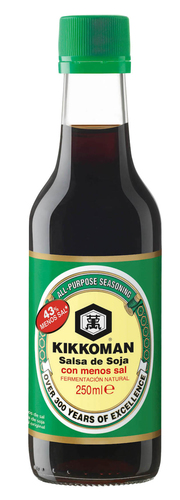
Kikkoman Soy Sauce Less Salt 43% comes in a 250 ml pack. It is sold under the Kikkoman brand. On Mamori it sits under Groceries › Condiments › Soy Sauce. Its label lists 11 ingredients.
Kikkoman Soy Sauce Less Salt 43% at a glance
Kikkoman Soy Sauce Less Salt 43% fits Vegetarian, Pescatarian, Vegan + Dairy and Vegan + Eggs diets. It also carries the Gluten Free, Crustaceans Free, Egg Free, Fish Free, Peanut Free, Soy Free, Dairy Free, Tree Nut Free, Celery Free, Mustard Free, Sesame Free, Sulfite Free, Lupin Free, Mollusks Free, Artificial Flavourings Free, Barley Free, Beef Free, Citrus Fruit Free, Corn Free, Emulsifier Free, Gelatin Free, Lactose Free, Latex Free, Oats Free, Pork Free, Poultry Free, Rice Free, Rye Free, Seed Free and Wheat Free badges. Nutrition-wise, it's High Protein, Low Saturated Fat, Low Fiber, High Salt/Sodium, Medium in Calories, Medium Carbs and Medium in Sugars. Worth knowing: it's marked Non-Vegan, Non-Low FODMAP, Contains Additives, Contains Fructose and Contains Added Sugars.
Diet and allergens
Suitable for vegetarian and pescatarian diets.
Not suitable for a vegan diet.
Free from all 14 major allergens: gluten, crustaceans, eggs, fish, peanuts, soy, milk, tree nuts, celery, mustard, sesame, sulphites, lupin and molluscs.
Based on Mamori's check of the ingredients on the label. Recipes change, so always read the pack if you have an allergy or intolerance.
Size: 250 ml
Last updated 2 November 2026
Ingredients
Aqua: Water, Cetearyl Alcohol, Cetrimonium Chloride, Benzyl Alcohol, Parfum: Fragrance, Hydroxypropyltrimonium Honey, Dehydroacetic Acid, Citric Acid, Mentha Arvensis Leaf Oil:Certified Organic Ingredient, sodium hydroxide, Sorbic acid
Additives
- E1510: Ethanol: Generally safe
Ethanol (E1510) is ordinary alcohol, the same type of alcohol found in alcoholic drinks. It is a small organic solvent made by fermentation of sugars or by industrial processes.
In food production, it can be used to dissolve or extract flavours, colours, aromas or other food ingredients, and may be present in trace amounts after processing. It is used for its solvent role rather than as a sweetener, preservative or colouring.
It is generally considered safe in the uses covered here. Under EU law, ethanol is not treated as a food additive; it is authorised separately as an extraction solvent for making foods and food ingredients.
- E510: Ammonium Chloride, Ammonia Solution (Acidity Regulator): Generally safe
Ammonium chloride, often linked with E510, is a simple ammonium salt made from ammonia and hydrochloric acid. In EU law, ammonium chloride is not classed as a food additive; it is treated as a food ingredient instead.
It can affect acidity and can also help reduce clumping in some dry mixtures. It is best known in food as the salty, sharp-tasting ingredient used in some liquorice and confectionery.
It is generally considered safe when used in normal food amounts. The main regulatory point is that, in the EU, it is not authorised as an additive because it is not legally treated as one.
- E1519: Benzyl Alcohol: Generally safe
Benzyl alcohol (E1519) is an aromatic alcohol that occurs naturally in some plants and fruits, and can also be made industrially. In food additive use, it is a flavouring carrier or solvent rather than a sweetener, colour, or preservative.
It helps dissolve and carry flavouring substances so they can be mixed evenly into foods and drinks. It may be used where flavourings need a suitable carrier, especially in small amounts.
Benzyl alcohol is generally considered safe at normal food-use levels. It is authorised for use in the EU after safety assessment, and the sources checked do not raise concerns for typical dietary amounts.
- E265: Dehydroacetic Acid: Not allowed in the EU (Regulation (EC) No 1333/2008, Article 4(1) and Annex II)
Dehydroacetic acid (E265) is a preservative. It is an organic acid compound, usually made synthetically, and is related to salts such as sodium dehydroacetate.
It helps slow the growth of moulds and yeasts, helping foods keep for longer. Preservatives of this type are used where control of spoilage is needed, though permitted uses can vary by country and food category.
Its safety has not been rated here. In the EU, dehydroacetic acid is allowed only within set legal limits, which are designed to keep intake within acceptable levels.
- E330: Citric Acid: Generally safe
Citric acid (E330) is a natural organic acid found in citrus fruits and many other plants. The citric acid used in food is usually made by fermentation of sugars using micro-organisms.
It is used as an acidity regulator and antioxidant. It helps give a sharp, sour taste, control pH, and slow colour or flavour changes. It is common in soft drinks, sweets, jams, sauces, canned foods, and many processed foods.
Citric acid is generally considered safe at normal food levels. It is allowed in food in the EU after safety assessment, and the sources checked raise no concern for typical dietary amounts.
- E524: Sodium Hydroxide: Generally safe
Sodium hydroxide (E524), also called caustic soda or lye, is a strong alkaline substance. In food, it is used in very small controlled amounts as an acidity regulator or processing aid.
It helps adjust pH and can be used in processes such as treating olives, making some pretzels or bakery products, and cocoa processing. It may also help prevent clumping in some powdered ingredients.
It is generally considered safe at normal food-use levels. It is authorised for use in the EU after safety assessment, and the sources checked do not raise concerns for typical amounts used in food.
- E200: Sorbic Acid: Some concerns
Sorbic acid (E200) is a preservative. It is an organic acid, originally found in rowan berries, but usually made synthetically for food use. It is related to sorbates such as potassium sorbate.
It helps slow the growth of moulds and yeasts, helping foods keep for longer. It is used in a range of foods such as cheese, baked goods, sauces, fruit products, drinks and other foods where mould control is needed.
It is allowed in food, but some concerns have been raised. EFSA found that people who eat a lot of foods containing sorbic acid or sorbates can exceed the safe daily amount.
Questions and answers
Is Kikkoman Soy Sauce Less Salt 43% vegan?
No. It is not suitable for a vegan diet.
Is Kikkoman Soy Sauce Less Salt 43% vegetarian?
Yes. It is suitable for a vegetarian diet.
Is Kikkoman Soy Sauce Less Salt 43% suitable for a pescatarian diet?
Yes. It is suitable for a pescatarian diet.
Is Kikkoman Soy Sauce Less Salt 43% suitable for a Low FODMAP diet?
No. It is not suitable for a Low FODMAP diet.
Is Kikkoman Soy Sauce Less Salt 43% suitable for a Vegan + Dairy diet?
Yes. It is suitable for a Vegan + Dairy diet.
Is Kikkoman Soy Sauce Less Salt 43% suitable for a Vegan + Eggs diet?
Yes. It is suitable for a Vegan + Eggs diet.
Is Kikkoman Soy Sauce Less Salt 43% gluten-free?
Yes. Its ingredients include no gluten, and its label gives no gluten warning.
Does Kikkoman Soy Sauce Less Salt 43% contain milk?
No. Its ingredients include no milk, and its label gives no milk warning.
Is Kikkoman Soy Sauce Less Salt 43% nut-free?
Yes. Its ingredients include no peanuts or tree nuts, and its label gives no nut warning.
Does Kikkoman Soy Sauce Less Salt 43% contain eggs?
No. Its ingredients include no eggs, and its label gives no egg warning.
More in Soy Sauce
- Lee Kum Kee gluten free light soy sauce
- Silver Swan Soy Sauce
- Blue Dragon Dark Soy Sauce
- Amoy Light Soy Sauce
- Bangbang Soy Sauce
- Yutaka Organic Tamari Soy Sauce
- Rabeko Products Teriyaki Zero
- Natur Green Naturgreen Tamari
- Meridian Free From Tamari
- Kikkoman Soy Sauce Catering 1.00 Ltr
- Kikkoman Tamari Gluten Free Soy Sauce
- Kikkoman Ponzu Chili