
Natur Green Naturgreen Tamari 250 g
Natur Green
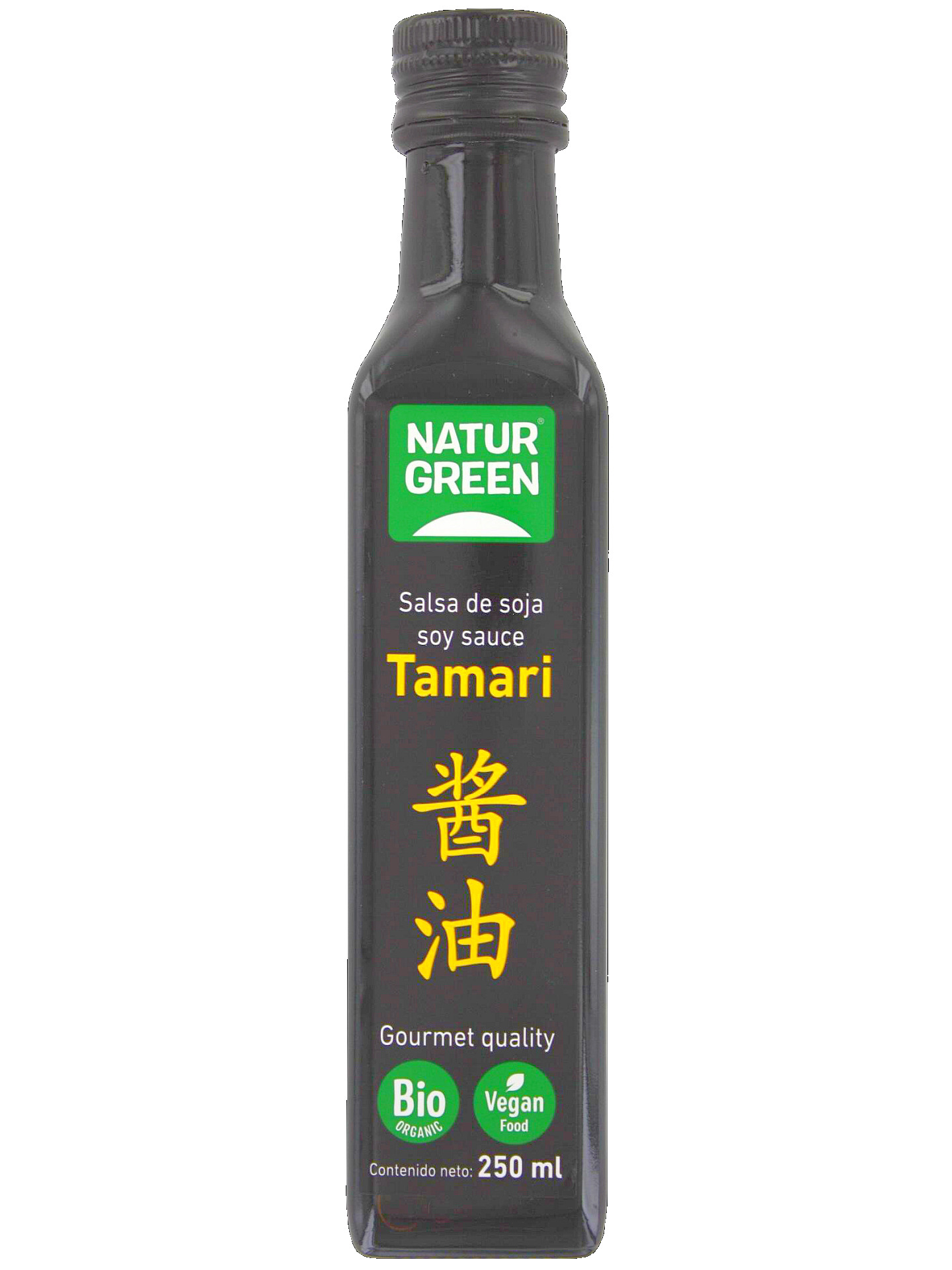
Natur Green Naturgreen Tamari comes in a 250 g pack. It is sold under the Natur Green brand. On Mamori it sits under Groceries › Condiments › Soy Sauce. Its label lists 15 ingredients.
Natur Green Naturgreen Tamari at a glance
Natur Green Naturgreen Tamari fits Vegetarian, Pescatarian and Vegan + Dairy diets. It also carries the Gluten Free, Crustaceans Free, Egg Free, Fish Free, Peanut Free, Soy Free, Tree Nut Free, Celery Free, Mustard Free, Sesame Free, Sulfite Free, Lupin Free, Mollusks Free, Barley Free, Beef Free, Citrus Fruit Free, Gelatin Free, Latex Free, Oats Free, Pork Free, Poultry Free, Rice Free, Rye Free and Wheat Free badges. Nutrition-wise, it's High Protein, Low Carbs, Low Sugars, High Salt/Sodium, High Saturated Fat, Medium in Fiber and Medium in Calories. Worth knowing: it's marked Non-Vegan, Non-Low FODMAP, Non-Vegan + Eggs, Contains Dairy, Contains Additives, Contains Artificial Flavourings, Contains Corn, Contains Emulsifier, Contains Fructose, Lactose, Contains Added Sugars and Contains Seed.
Diet and allergens
Suitable for vegetarian and pescatarian diets.
Not suitable for a vegan diet.
Contains milk.
Free from gluten, crustaceans, eggs, fish, peanuts, soy, tree nuts, celery, mustard, sesame, sulphites, lupin and molluscs.
Based on Mamori's check of the ingredients on the label. Recipes change, so always read the pack if you have an allergy or intolerance.
Size: 250 g
Last updated 26 October 2026
Ingredients
coconut fat, fully hydrogenated coconut fat, Glucose Syrup, Milk protein, Emulsifier: Mono- and Diglycerides of Fatty Acids, cocoa powder, defatted cocoa, acidity regulator: potassium carbonate, Emulsifier: Sunflower Lecithin, calcium salt of β-hydroxybutyrate: Ca, sodium salt of β-hydroxybutyrate: Na, magnesium salt of β-hydroxybutyrate: Mg, Natural Flavor, Anti-Caking Agent: Silicon Dioxide, Himalayan pink salt
Additives & flavourings
Additives
- E471: Mono- And Diglycerides Of Fatty Acids (Glyceryl Monostearate, Glyceryl Distearate): Generally safe
Mono- and diglycerides of fatty acids, or E471, are emulsifiers made from glycerol and fatty acids. The fatty acids can come from vegetable oils or animal fats, so the source is not always clear unless stated by the producer.
They help oil and water mix, improve texture, and keep foods stable. They are often used in baked goods, spreads, desserts, ice cream, sauces, and processed foods where a smooth or consistent texture is needed.
E471 is generally considered safe. It is allowed in food in the EU after safety assessment, and the sources we check raise no concern at normal amounts.
- E501: Potassium Carbonates: (I) Potassium Carbonate (Ii) Potassium Bicarbonate (Potassium Hydrogen Carbonate): Generally safe
Potassium carbonate and potassium bicarbonate are potassium salts, listed as E501. They are alkaline mineral compounds used to adjust acidity in foods.
They help control pH, act as raising agents, and can help prevent powders from clumping. They may be used in baked goods, cocoa and chocolate products, powdered mixes, and other foods where acidity control or anti-caking is needed.
E501 is generally considered safe at normal food-use levels. It is allowed in food in the EU after safety assessment, and the sources checked raise no concern at typical amounts.
- E238: Calcium Formate: Not allowed in the EU (Regulation (EC) No 1333/2008, Article 4(1) and Annex II)
Calcium formate (E238) is the calcium salt of formic acid. It is a simple organic salt, usually made by reacting formic acid with a calcium compound such as calcium hydroxide or calcium carbonate.
It is used as a preservative, mainly to slow the growth of moulds and some bacteria. Preservatives of this type are used where controlling spoilage helps keep foods stable, especially in acidic or moisture-containing products.
Safety is usually managed through legal limits on how much may be used in food. Calcium formate is allowed in the EU within set limits, but this rating is not yet assessed here.
- E281: Sodium Propionate: Generally safe
Sodium propionate (E281) is the sodium salt of propionic acid, a simple organic acid. It belongs to the propionate preservatives, alongside calcium and potassium propionate.
It helps stop mould and some bacteria from growing, especially in bakery foods. It is commonly used in bread, rolls, cakes and other baked goods where it helps extend shelf life.
It is generally considered safe at normal food amounts. It is authorised for use in the EU after EFSA safety assessment, and the sources checked raise no concern for typical dietary exposure.
- E580: Magnesium Gluconate: Generally safe
Magnesium gluconate, sometimes referred to as E580, is a magnesium salt of gluconic acid. It is used as a source of the mineral magnesium rather than being treated as a food additive under EU law.
It may be added to foods to increase their magnesium content, such as fortified foods or products with added minerals. Similar mineral salts can also help with acidity control or powder flow, but its EU role is as a nutrient source.
It is generally considered safe when used as a permitted magnesium source in food. In the EU, it is listed as a form of magnesium that may be added to foods.
- E551: Silicon Dioxide (Silica): Generally safe
Silicon dioxide (E551), also called silica, is a naturally occurring mineral substance made of silicon and oxygen. It is found in rocks, sand and many plants, and the food additive form is a fine, inert powder.
In food, it is mainly used as an anti-caking agent to help powders and granules flow freely. It may be found in products such as powdered seasonings, salt substitutes, dried soups, instant drinks and food supplement powders.
It is generally considered safe at normal food-use levels. It is authorised for use in the EU after safety assessment, and the sources checked raise no concern at typical amounts.
Flavourings
- Natural Flavor: Natural flavouring (Regulation (EC) No 1334/2008 on flavourings, Article 16).
Questions and answers
Is Natur Green Naturgreen Tamari vegan?
No. It contains milk, so it is not suitable for a vegan diet.
Is Natur Green Naturgreen Tamari vegetarian?
Yes. It is suitable for a vegetarian diet.
Is Natur Green Naturgreen Tamari suitable for a pescatarian diet?
Yes. It is suitable for a pescatarian diet.
Is Natur Green Naturgreen Tamari suitable for a Low FODMAP diet?
No. It is not suitable for a Low FODMAP diet.
Is Natur Green Naturgreen Tamari suitable for a Vegan + Dairy diet?
Yes. It is suitable for a Vegan + Dairy diet.
Is Natur Green Naturgreen Tamari suitable for a Vegan + Eggs diet?
No. It is not suitable for a Vegan + Eggs diet.
Is Natur Green Naturgreen Tamari gluten-free?
Yes. Its ingredients include no gluten, and its label gives no gluten warning.
Does Natur Green Naturgreen Tamari contain milk?
Yes. It contains milk.
Is Natur Green Naturgreen Tamari nut-free?
Yes. Its ingredients include no peanuts or tree nuts, and its label gives no nut warning.
Does Natur Green Naturgreen Tamari contain eggs?
No. Its ingredients include no eggs, and its label gives no egg warning.
Which allergens does Natur Green Naturgreen Tamari contain?
It contains milk.
More in Soy Sauce
- Lee Kum Kee gluten free light soy sauce
- Silver Swan Soy Sauce
- Blue Dragon Dark Soy Sauce
- Amoy Light Soy Sauce
- Bangbang Soy Sauce
- Yutaka Organic Tamari Soy Sauce
- Rabeko Products Teriyaki Zero
- Meridian Free From Tamari
- Kikkoman Soy Sauce Catering 1.00 Ltr
- Kikkoman Tamari Gluten Free Soy Sauce
- Kikkoman Ponzu Chili
- Kikkoman Sweet Soy Sauce Dispenser