
Gullon Digestive Orange Oatmeal 425 g
On the pack: Gullon Digestive Avena Naranja 425 g
Gullon
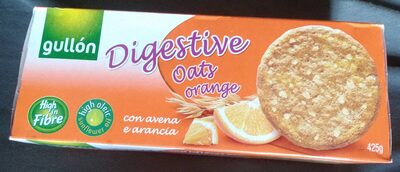
Gullon Digestive Orange Oatmeal comes in a 425 g pack. It is sold under the Gullon brand. On Mamori it sits under Confectionery › Biscuits, Wafers & Cookies › Digestive Biscuits. Its label lists 25 ingredients.
Gullon Digestive Orange Oatmeal at a glance
Gullon Digestive Orange Oatmeal fits Vegan, Vegetarian, Pescatarian and Vegan + Dairy diets. It also carries the Crustaceans Free, Egg Free, Fish Free, Peanut Free, Tree Nut Free, Celery Free, Mustard Free, Sesame Free, Lupin Free, Mollusks Free, Barley Free, Beef Free, Gelatin Free, Latex Free, Pork Free, Poultry Free, Rice Free and Rye Free badges. Nutrition-wise, it's High Fiber, High Calorie, High Carbs, Medium in Protein, Medium Salt/Sodium, Medium Saturated Fat and Medium in Sugars. Worth knowing: it's marked Non-Low FODMAP, Non-Vegan + Eggs, Contains Gluten, Contains Additives, Contains Artificial Flavourings, Contains Citrus Fruit, Contains Corn, Contains Emulsifier, Contains Fructose, Lactose, Contains Added Sugars, Contains Oats, Contains Seed and Contains Wheat.
Diet and allergens
Suitable for vegan, vegetarian and pescatarian diets.
Contains gluten.
Free from crustaceans, eggs, fish, peanuts, tree nuts, celery, mustard, sesame, lupin and molluscs.
May contain: Milk, soy.
Based on Mamori's check of the ingredients on the label. Recipes change, so always read the pack if you have an allergy or intolerance.
Size: 425 g
Last updated 2 November 2026
Ingredients
oat flakes, Whole wheat flour, vegetable oil: high oleic sunflower oil, sugar, Glucose Syrup, fructose syrup, fruit blend, fructose syrup, Glucose Syrup, fruit, Apple puree, orange juice, Glucose Syrup, humectant: glycerol, sugar, Wheat fibre, gelling agent: pectin, Acidity Regulator: Citric Acid, Flavour, Colour: Curcumin, raising agents, Sodium Hydrogen Carbonate, ammonium hydrogen carbonate, salt, orange flavour
Additives & flavourings
Additives
- E422: Glycerol (Emulsifier): Generally safe
Glycerol, or E422, is a clear, sweet-tasting liquid also known as glycerine. It is a type of sugar alcohol and can be made from vegetable oils, animal fats, or produced synthetically.
In food, it helps keep moisture in, thickens texture, stabilises mixtures, and can help emulsions stay smooth. It is used in a range of foods where softness, moisture retention, or smooth texture is needed, such as confectionery, baked goods, icings, and some drinks.
Glycerol is generally considered safe at normal food amounts. It is allowed in food in the EU after safety assessment, and the sources checked raise no concern for typical use.
- E440: Pectins (I) Pectin (Ii) Amidated Pectin: Generally safe
Pectins (E440) are natural gelling fibres found in the cell walls of fruits and vegetables, especially apples and citrus peel. E440 includes ordinary pectin and amidated pectin, a modified form that gels more easily in some foods.
They are used as thickeners, stabilisers and gelling agents. You may find them in jams, jellies, fruit spreads, desserts, confectionery, yoghurts and some drinks or sauces where a thicker texture is needed.
Pectins are generally considered safe. They are authorised for use in food in the EU after safety assessment, and the sources checked raise no concern at normal food amounts.
- E330: Citric Acid: Generally safe
Citric acid (E330) is a natural organic acid found in citrus fruits and many other plants. The citric acid used in food is usually made by fermentation of sugars using micro-organisms.
It is used as an acidity regulator and antioxidant. It helps give a sharp, sour taste, control pH, and slow colour or flavour changes. It is common in soft drinks, sweets, jams, sauces, canned foods, and many processed foods.
Citric acid is generally considered safe at normal food levels. It is allowed in food in the EU after safety assessment, and the sources checked raise no concern for typical dietary amounts.
- E100: Curcumin (From Turmeric): Generally safe
Curcumin (E100) is a yellow-orange food colour made from turmeric, the spice from the root of the Curcuma longa plant. It is the main natural pigment in turmeric and may also be produced as a purified extract for food use.
It is used to give foods a yellow to orange colour. It can be found in products such as sauces, soups, snacks, confectionery, dairy products and processed foods where a warm yellow colour is wanted.
Curcumin is generally considered safe at normal food amounts. It is allowed for use in the EU after EFSA safety assessment, and the sources checked do not raise concerns for typical dietary exposure.
- E500: Sodium Carbonates: (I) Sodium Carbonate (Ii) Sodium Bicarbonate (Sodium Hydrogen Carbonate) (Iii) Sodium Sesquicarbonate (Acidity Regulator): Generally safe
Sodium carbonates (E500) are a group of sodium salts, including sodium carbonate, sodium bicarbonate and sodium sesquicarbonate. The best-known is sodium bicarbonate, also called bicarbonate of soda.
They are used to control acidity, help baked goods rise by releasing carbon dioxide, and reduce clumping in some powdered foods. They can be found in baking powders, biscuits, cakes, self-raising flour, cocoa mixes and other dry food mixes.
E500 is generally considered safe. It is allowed in food in the EU after safety assessment, and the sources checked do not raise concerns at normal food amounts.
- E503: Ammonium Carbonates: (I) Ammonium Carbonate (Ii) Ammonium Bicarbonate (Ammonium Hydrogen Carbonate): Generally safe
Ammonium carbonates (E503) are raising agents made up of ammonium carbonate and ammonium bicarbonate, also called ammonium hydrogen carbonate. They are simple inorganic salts that release gas when heated.
In food, E503 helps doughs and batters rise, especially in baked goods such as biscuits, crackers and some traditional baked products. It can also act as an acidity regulator or anti-caking agent in some uses.
It is generally considered safe at normal food levels. E503 is allowed in food in the EU after safety assessment, and the sources checked raise no concern for typical amounts used in foods.
Flavourings
- Flavour: Flavouring (Regulation (EC) No 1334/2008 on flavourings, Article 16).
- orange flavour: Flavouring (Regulation (EC) No 1334/2008 on flavourings, Article 16).
Questions and answers
Is Gullon Digestive Orange Oatmeal vegan?
Yes. It is suitable for a vegan diet.
Is Gullon Digestive Orange Oatmeal vegetarian?
Yes. It is suitable for a vegetarian diet.
Is Gullon Digestive Orange Oatmeal suitable for a pescatarian diet?
Yes. It is suitable for a pescatarian diet.
Is Gullon Digestive Orange Oatmeal suitable for a Low FODMAP diet?
No. It is not suitable for a Low FODMAP diet.
Is Gullon Digestive Orange Oatmeal suitable for a Vegan + Dairy diet?
Yes. It is suitable for a Vegan + Dairy diet.
Is Gullon Digestive Orange Oatmeal suitable for a Vegan + Eggs diet?
No. It is not suitable for a Vegan + Eggs diet.
Is Gullon Digestive Orange Oatmeal gluten-free?
No. It contains gluten.
Is Gullon Digestive Orange Oatmeal nut-free?
Yes. Its ingredients include no peanuts or tree nuts, and its label gives no nut warning.
Does Gullon Digestive Orange Oatmeal contain eggs?
No. Its ingredients include no eggs, and its label gives no egg warning.
Which allergens does Gullon Digestive Orange Oatmeal contain?
It contains gluten. Its label also says it may contain: Milk, soy.
More in Digestive Biscuits
- McVitie's Digestive - Dark Chocolate
- CASA SANTIVERI S.L. Galletas digestive quinoa choco
- Dolciando i biscotti Digestive
- Lidl Milk Chocolate Digestives
- Santiveri Original Whole Grain Cookies 0% Added Sugars
- Digestive Original
- DEVON Digestive Crumbs
- Doves farm Organic wholemeal digestive biscuits
- Gullón Mini Digestivechoco100g
- Balviten Digestive choco
- McVities Caramel Digestives
- Diablo Digestive