
DEVON Digestive Crumbs
DEVON
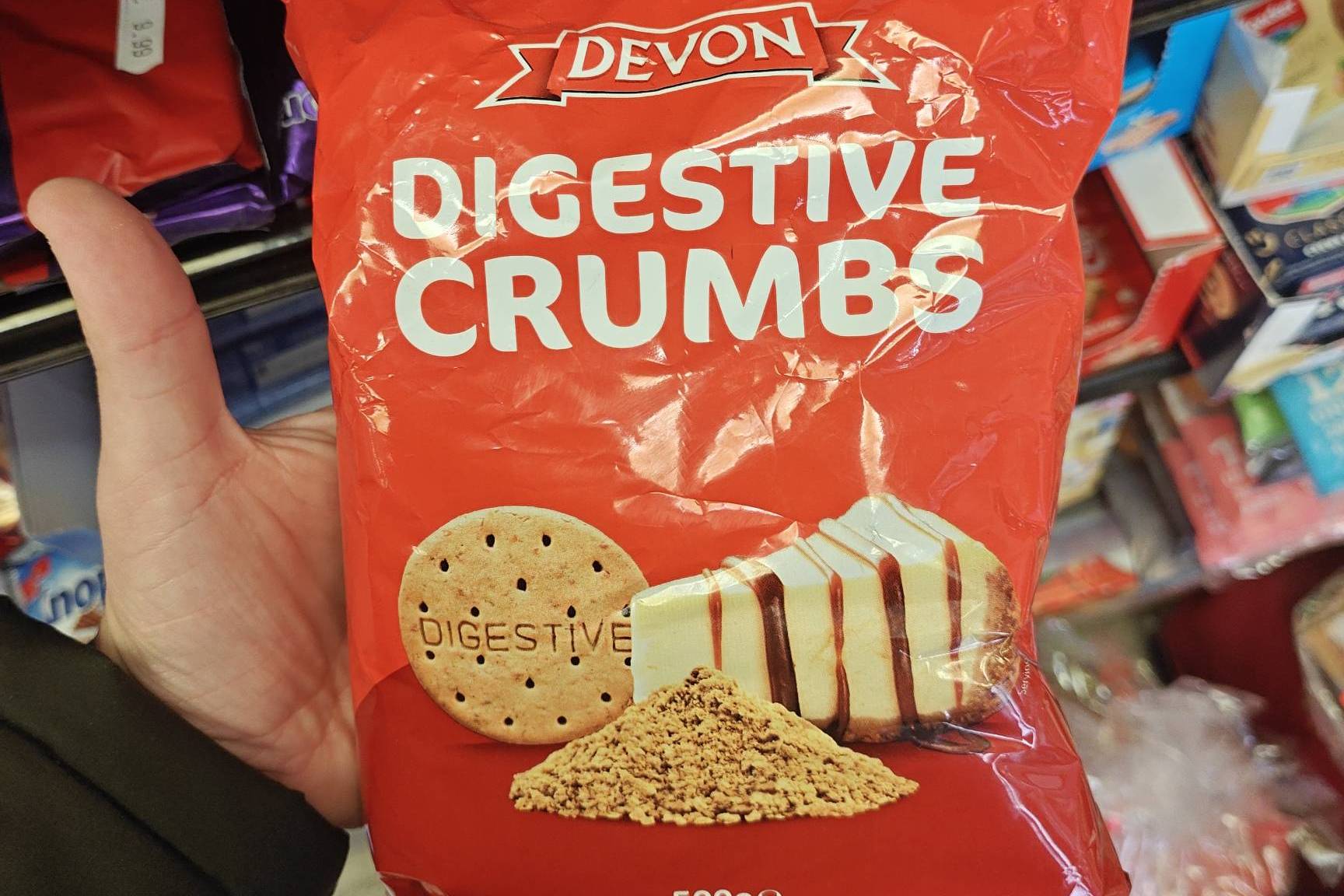
DEVON Digestive Crumbs is listed on Mamori. It is sold under the DEVON brand. On Mamori it sits under Confectionery › Biscuits, Wafers & Cookies › Digestive Biscuits. Its label lists 13 ingredients.
DEVON Digestive Crumbs at a glance
DEVON Digestive Crumbs fits Vegan, Vegetarian and Pescatarian diets. It also carries the Crustaceans Free, Fish Free, Celery Free, Mustard Free, Sesame Free, Lupin Free, Mollusks Free, Artificial Flavourings Free, Barley Free, Beef Free, Citrus Fruit Free, Corn Free, Gelatin Free, Latex Free, Oats Free, Pork Free, Poultry Free, Rice Free and Rye Free badges. Nutrition-wise, it's High Calorie, High Carbs, High Salt/Sodium, High Saturated Fat, Medium in Fiber, Medium in Protein and Medium in Sugars. Worth knowing: it's marked Non-Low FODMAP, Non-Vegan + Dairy, Non-Vegan + Eggs, Contains Gluten, Contains Additives, Contains Emulsifier, Contains Fructose, Lactose, Contains Added Sugars, Contains Seed and Contains Wheat.
Diet and allergens
Suitable for vegan, vegetarian and pescatarian diets.
Contains gluten.
Free from crustaceans, fish, celery, mustard, sesame, lupin and molluscs.
May contain: milk, egg, nuts, soya.
Based on Mamori's check of the ingredients on the label. Recipes change, so always read the pack if you have an allergy or intolerance.
Last updated 26 October 2026
Ingredients
Wheat Flour, Sugar, Palm Fat, Antioxidants E319, E320, E321, Wheat Bran, Partially Inverted Sugar Syrup, Cane Molasses, Salt, Raising Agent: Sodium Bicarbonate, Emulsifier: E472e, Acidity Regulator: Malic Acid
Additives
- E319: Tertiary-Butyl Hydroquinone (TBHQ): Generally safe
Tertiary-butyl hydroquinone, or TBHQ (E319), is a synthetic antioxidant. It is related to hydroquinone and is made for use in very small amounts to help protect fats and oils.
It slows rancidity and helps preserve flavour, colour and shelf life in fatty foods. It may be used in products such as vegetable oils, frying fats, snacks, dried mixes and other foods where oxidation of fats is a concern.
TBHQ is generally considered safe at permitted levels. It is allowed in food in the EU after EFSA safety assessment, and the reviewed sources raise no concern at normal amounts.
- E320: Butylated Hydroxyanisole (Bha): Generally safe
Butylated hydroxyanisole, or BHA (E320), is a synthetic antioxidant. It is a mixture of related organic compounds made for use in foods and other products to slow down oxidation.
In food, it helps stop fats and oils from going rancid and can help protect flavour and colour. It may be used in fat-containing foods such as snacks, cereals, chewing gum, dried mixes, and some processed potato products.
BHA is generally considered safe at normal food-use levels. It is authorised for use in the EU after EFSA safety assessment, and the sources checked raise no concern at typical amounts.
- E321: Butylated Hydroxytoluene (Bht): Generally safe
Butylated hydroxytoluene, or BHT (E321), is a synthetic antioxidant. It is a fat-soluble phenolic compound made to slow the breakdown of fats and oils.
In food, BHT helps prevent fats from going rancid and protects flavour, colour and shelf life. It may be used in fatty foods such as oils, shortenings, snack products, chewing gum and some processed foods where oxidation is a concern.
BHT is generally considered safe at normal food-use levels. It is authorised for use in the EU after EFSA safety assessment, and the sources checked raise no concern at typical amounts.
- E500: Sodium Carbonates: (I) Sodium Carbonate (Ii) Sodium Bicarbonate (Sodium Hydrogen Carbonate) (Iii) Sodium Sesquicarbonate (Acidity Regulator): Generally safe
Sodium carbonates (E500) are a group of sodium salts, including sodium carbonate, sodium bicarbonate and sodium sesquicarbonate. The best-known is sodium bicarbonate, also called bicarbonate of soda.
They are used to control acidity, help baked goods rise by releasing carbon dioxide, and reduce clumping in some powdered foods. They can be found in baking powders, biscuits, cakes, self-raising flour, cocoa mixes and other dry food mixes.
E500 is generally considered safe. It is allowed in food in the EU after safety assessment, and the sources checked do not raise concerns at normal food amounts.
- E472E: Mono- And Diacetyl Tartaric Acid Esters Of Mono- And Diglycerides Of Fatty Acids (E472e): Generally safe
Mono and diacetyl tartaric acid esters of mono- and diglycerides of fatty acids (E472e) are emulsifiers made by reacting fats or oils with tartaric acid and acetic acid. The fatty acids can come from plant or animal sources.
They help oil and water mix, improve dough strength, and stabilise texture. They are commonly used in bread, rolls, pastries, cakes, and other baked goods, especially where a consistent crumb and volume are needed.
E472e is generally considered safe at normal food levels. It is allowed in food in the EU after EFSA safety assessment, and the sources checked raise no concern for usual dietary amounts.
- E296: Malic Acid (Acid): Generally safe
Malic acid (E296) is an acid naturally found in many fruits, especially apples. For food use, it is usually made by industrial fermentation or chemical production and is used as a food acid.
It adds a sharp, fruity sour taste and helps control acidity in foods and drinks. It may be found in sweets, soft drinks, jams, fruit products, desserts and some processed foods where a tart flavour or acidity control is needed.
It is generally considered safe at normal food amounts. It is allowed in the EU after safety assessment, and the sources checked raise no concern for typical use.
Questions and answers
Is DEVON Digestive Crumbs vegan?
Yes. It is suitable for a vegan diet.
Is DEVON Digestive Crumbs vegetarian?
Yes. It is suitable for a vegetarian diet.
Is DEVON Digestive Crumbs suitable for a pescatarian diet?
Yes. It is suitable for a pescatarian diet.
Is DEVON Digestive Crumbs suitable for a Low FODMAP diet?
No. It is not suitable for a Low FODMAP diet.
Is DEVON Digestive Crumbs suitable for a Vegan + Dairy diet?
No. It is not suitable for a Vegan + Dairy diet.
Is DEVON Digestive Crumbs suitable for a Vegan + Eggs diet?
No. It is not suitable for a Vegan + Eggs diet.
Is DEVON Digestive Crumbs gluten-free?
No. It contains gluten.
Which allergens does DEVON Digestive Crumbs contain?
It contains gluten. Its label also says it may contain: milk, egg, nuts, soya.
More in Digestive Biscuits
- McVitie's Digestive - Dark Chocolate
- CASA SANTIVERI S.L. Galletas digestive quinoa choco
- Dolciando i biscotti Digestive
- Lidl Milk Chocolate Digestives
- Santiveri Original Whole Grain Cookies 0% Added Sugars
- Digestive Original
- Doves farm Organic wholemeal digestive biscuits
- Gullón Mini Digestivechoco100g
- Balviten Digestive choco
- McVities Caramel Digestives
- Diablo Digestive
- Gullon Digestive Muesli Case