
Conad Maxi Hamburger Bread 2 pcs
Conad
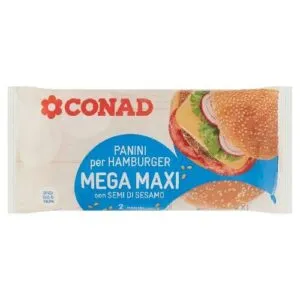
Conad Maxi Hamburger Bread comes in a 2 pcs pack. It is sold under the Conad brand. On Mamori it sits under Bakery › Buns & Rolls › Burger Buns. Its label lists 14 ingredients.
Conad Maxi Hamburger Bread at a glance
Conad Maxi Hamburger Bread fits Vegetarian and Pescatarian diets. It also carries the Crustaceans Free, Fish Free, Peanut Free, Tree Nut Free, Celery Free, Sulfite Free, Mollusks Free, Beef Free, Citrus Fruit Free, Corn Free, Gelatin Free, Latex Free, Oats Free, Pork Free, Poultry Free and Rice Free badges. Nutrition-wise, it's Low Saturated Fat, Low Sugars, High Carbs, Medium in Fiber, Medium in Protein, Medium in Calories and Medium Salt/Sodium. Worth knowing: it's marked Non-Vegan, Non-Low FODMAP, Non-Vegan + Dairy, Non-Vegan + Eggs, Contains Gluten, Contains Sesame, Contains Additives, Contains Artificial Flavourings, Contains Barley, Contains Emulsifier, Contains Fructose, Lactose, Contains Added Sugars, Contains Rye, Contains Seed and Contains Wheat.
Diet and allergens
Suitable for vegetarian and pescatarian diets.
Not suitable for a vegan diet.
Contains gluten and sesame.
Free from crustaceans, fish, peanuts, tree nuts, celery, sulphites and molluscs.
May contain: soy, milk, eggs, lupins, mustard.
Based on Mamori's check of the ingredients on the label. Recipes change, so always read the pack if you have an allergy or intolerance.
Size: 2 pcs
Last updated 26 October 2026
Ingredients
Soft wheat flour type 0, Water, Sucrose, Sesame seeds, Brewer's yeast, Sunflower seed oil, Salt, Emulsifiers, mono- and diglycerides of fatty acids, sodium stearoyl-2-lactylate, Malted barley flour, Acidity regulators: sodium acetates, Natural flavor, Treated with ethyl alcohol
Additives & flavourings
Additives
- E471: Mono- And Diglycerides Of Fatty Acids (Glyceryl Monostearate, Glyceryl Distearate): Generally safe
Mono- and diglycerides of fatty acids, or E471, are emulsifiers made from glycerol and fatty acids. The fatty acids can come from vegetable oils or animal fats, so the source is not always clear unless stated by the producer.
They help oil and water mix, improve texture, and keep foods stable. They are often used in baked goods, spreads, desserts, ice cream, sauces, and processed foods where a smooth or consistent texture is needed.
E471 is generally considered safe. It is allowed in food in the EU after safety assessment, and the sources we check raise no concern at normal amounts.
- E481: Sodium Stearoyl-2-Lactylate: Some concerns
Sodium stearoyl-2-lactylate (E481) is an emulsifier and stabiliser made by combining stearic acid with lactic acid, then forming the sodium salt. The stearic acid can come from vegetable or animal fats.
It helps oil and water mix, strengthens dough, improves texture, and can help foods stay soft for longer. It is used especially in bread and bakery products, and may also be found in some desserts, processed potato products, and emulsified foods.
It is allowed in food, but some concerns have been raised. EFSA found that people who eat a lot of foods containing it could go over the safe daily amount.
- E262: Sodium Acetates (I) Sodium Acetate (Ii) Sodium Diacetate (Sodium Hydrogen Acetate): Generally safe
Sodium acetates (E262) are salts of acetic acid, the acid found in vinegar. This group includes sodium acetate and sodium diacetate, also called sodium hydrogen acetate.
They are used mainly as preservatives and acidity regulators, helping control sourness and slow the growth of some microbes. They may be found in foods such as bread, savoury snacks, sauces, pickles and processed meat products.
Sodium acetates are generally considered safe at normal food amounts. They are allowed in food in the EU after safety assessment, and the sources checked raise no concern for typical use.
- E1510: Ethanol: Generally safe
Ethanol (E1510) is ordinary alcohol, the same type of alcohol found in alcoholic drinks. It is a small organic solvent made by fermentation of sugars or by industrial processes.
In food production, it can be used to dissolve or extract flavours, colours, aromas or other food ingredients, and may be present in trace amounts after processing. It is used for its solvent role rather than as a sweetener, preservative or colouring.
It is generally considered safe in the uses covered here. Under EU law, ethanol is not treated as a food additive; it is authorised separately as an extraction solvent for making foods and food ingredients.
Flavourings
- Natural flavor: Natural flavouring (Regulation (EC) No 1334/2008 on flavourings, Article 16).
Questions and answers
Is Conad Maxi Hamburger Bread vegan?
No. It is not suitable for a vegan diet.
Is Conad Maxi Hamburger Bread vegetarian?
Yes. It is suitable for a vegetarian diet.
Is Conad Maxi Hamburger Bread suitable for a pescatarian diet?
Yes. It is suitable for a pescatarian diet.
Is Conad Maxi Hamburger Bread suitable for a Low FODMAP diet?
No. It is not suitable for a Low FODMAP diet.
Is Conad Maxi Hamburger Bread suitable for a Vegan + Dairy diet?
No. It is not suitable for a Vegan + Dairy diet.
Is Conad Maxi Hamburger Bread suitable for a Vegan + Eggs diet?
No. It is not suitable for a Vegan + Eggs diet.
Is Conad Maxi Hamburger Bread gluten-free?
No. It contains gluten.
Is Conad Maxi Hamburger Bread nut-free?
Yes. Its ingredients include no peanuts or tree nuts, and its label gives no nut warning.
Which allergens does Conad Maxi Hamburger Bread contain?
It contains gluten and sesame. Its label also says it may contain: soy, milk, eggs, lupins, mustard.