
Brain Blasterz Popping Candy 15 g
Brain Blasterz
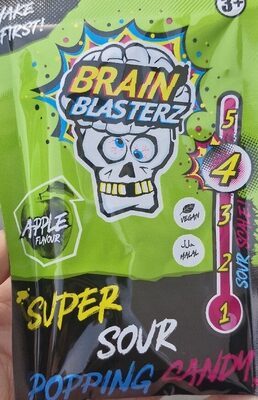
Brain Blasterz Popping Candy comes in a 15 g pack. It is sold under the Brain Blasterz brand. On Mamori it sits under Confectionery › Candy, Sweets & Nougat › Other Candies. Its label lists 30 ingredients.
Brain Blasterz Popping Candy at a glance
Brain Blasterz Popping Candy fits a Pescatarian diet. It also carries the Crustaceans Free, Egg Free, Fish Free, Celery Free, Mustard Free, Sesame Free, Mollusks Free, Barley Free, Beef Free, Citrus Fruit Free, Gelatin Free, Latex Free, Oats Free, Pork Free and Poultry Free badges. Nutrition-wise, it's Low Salt/Sodium, Low Saturated Fat, Low Fiber, Low Protein, High Carbs, High in Sugars and Medium in Calories. Worth knowing: it's marked Non-Vegan, Non-Vegetarian, Non-Low FODMAP, Non-Vegan + Dairy, Non-Vegan + Eggs, Contains Soy, Contains Dairy, Contains Tree Nut, Contains Additives, Contains Artificial Flavourings, Contains Corn, Contains Emulsifier, Contains Fructose, Lactose, Contains Added Sugars, Contains Rice, Contains Rye, Contains Seed and Contains Wheat.
Diet and allergens
Suitable for a pescatarian diet.
Not suitable for vegan or vegetarian diets.
Contains soy, milk and tree nuts.
Free from crustaceans, eggs, fish, celery, mustard, sesame and molluscs.
May contain: nuts, wheat.
Based on Mamori's check of the ingredients on the label. Recipes change, so always read the pack if you have an allergy or intolerance.
Size: 15 g
Last updated 2 November 2026
Ingredients
sugar, cocoa butter, cocoa mass, skimmed milk powder, whey powder, milk fat, glucose syrup, starch, emulsifiers, soy lecithin, sunflower lecithin, hazelnut mass, reduced-fat cocoa powder, glazing agents, gum arabic, shellac, beeswax: white and yellow, carnauba wax, carbon dioxide, lactose, whole milk powder, flavourings, acid: citric acid, food colours, anthocyanins, riboflavins, beetroot red, carotenoids, coconut oil, rapeseed oil
Additives & flavourings
Additives
- E414: Gum Arabic (Acacia Gum): Generally safe
Gum arabic, or acacia gum, is E414. It is a natural gum obtained from the dried sap of acacia trees. It is a soluble dietary fibre made mainly of complex carbohydrates.
In food, it is used as a thickener, stabiliser and emulsifier. It helps keep mixtures even, improves texture, and can help hold flavours or colours in place. It may be found in sweets, soft drinks, icings, baked goods and flavourings.
It is generally considered safe at normal food amounts. It is authorised for use in the EU after safety assessment, and the sources checked raise no concern for typical use.
- E904: Shellac: Generally safe
Shellac (E904) is a natural resin secreted by the lac insect. It is collected, purified, and used as a food-grade glazing agent. Because it comes from insects, it may not be suitable for people avoiding animal-derived ingredients.
In food, shellac gives a shiny protective coating and can help reduce moisture loss. It is typically used on confectionery, chocolate-coated items, nuts, coffee beans, and some fresh fruit coatings.
Shellac is generally considered safe at normal food-use levels. It is authorised for use in the EU after safety assessment, and the sources checked do not raise concerns for typical amounts.
- E901: Beeswax, White And Yellow: Generally safe
Beeswax, white and yellow (E901) is a natural wax made by honeybees. Yellow beeswax is the cleaned natural wax; white beeswax has been further bleached or purified. It may be unsuitable for people avoiding animal-derived ingredients.
In food, it is used mainly as a glazing agent, helping give a shiny protective coating. It can be found on some confectionery, chocolate products, coffee beans, nuts, and fruit coatings. It may also act as a carrier for flavours.
E901 is generally considered safe at normal food amounts. It is allowed in the EU after safety assessment, and the sources checked raise no concern for typical use.
- E903: Carnauba Wax: Generally safe
Carnauba wax (E903) is a natural plant wax taken from the leaves of the carnauba palm. It is a hard, glossy wax, also used outside food in coatings and polishes.
In food, it is used as a glazing agent to give a shiny surface and help reduce sticking or moisture loss. It can be found on some sweets, chewing gum, chocolate-coated products, and waxed fruit coatings.
Carnauba wax is generally considered safe at normal food amounts. It is authorised for use in the EU after EFSA safety assessment, and the checked sources raise no concern for typical dietary exposure.
- E290: Carbon Dioxide: Generally safe
Carbon dioxide (E290) is a colourless gas that occurs naturally in the air and is also produced by fermentation and respiration. For food use, it is the same simple gas substance, used in controlled amounts.
It is best known for adding bubbles to fizzy drinks, but it can also help protect packaged foods by displacing oxygen, which can slow spoilage. It may be used in drinks, modified-atmosphere packaging, and some chilled or packaged foods.
Carbon dioxide is generally considered safe at normal food-use levels. It is allowed in food in the EU after safety assessment, and the sources checked raise no concern at typical amounts.
- E330: Citric Acid: Generally safe
Citric acid (E330) is a natural organic acid found in citrus fruits and many other plants. The citric acid used in food is usually made by fermentation of sugars using micro-organisms.
It is used as an acidity regulator and antioxidant. It helps give a sharp, sour taste, control pH, and slow colour or flavour changes. It is common in soft drinks, sweets, jams, sauces, canned foods, and many processed foods.
Citric acid is generally considered safe at normal food levels. It is allowed in food in the EU after safety assessment, and the sources checked raise no concern for typical dietary amounts.
- E163: Anthocyanins: Generally safe
Anthocyanins (E163) are natural red, purple and blue colourants. They are pigments found in plants, especially in fruits and vegetables such as berries, grapes, red cabbage and black carrots.
In food, E163 is used to add or restore red to purple shades. It can be found in products such as sweets, drinks, desserts, jams and some processed foods where a plant-based colour is needed.
Anthocyanins are generally considered safe at normal food-use levels. They are allowed in food in the EU after EFSA safety assessment, and the sources checked raise no concern at typical amounts.
- E160a: Carotenes: Generally safe
Carotenes (E160a) are orange-yellow colourants, including alpha-carotene, beta-carotene and gamma-carotene. They are pigments found naturally in plants such as carrots and leafy greens, and can also be made synthetically or obtained from natural sources. Some forms may be animal derived.
They are used to add or restore yellow to orange colour in foods. They may be found in products such as margarines, dairy products, desserts, sauces, drinks and confectionery.
E160a is allowed in food in the EU after safety assessment. It is generally considered safe at normal food amounts, and the sources checked raise no concern for typical use.
Flavourings
- flavourings: Flavouring (Regulation (EC) No 1334/2008 on flavourings, Article 16).
Questions and answers
Is Brain Blasterz Popping Candy vegan?
No. It contains milk, so it is not suitable for a vegan diet.
Is Brain Blasterz Popping Candy vegetarian?
No. It is not suitable for a vegetarian diet.
Is Brain Blasterz Popping Candy suitable for a pescatarian diet?
Yes. It is suitable for a pescatarian diet.
Is Brain Blasterz Popping Candy suitable for a Low FODMAP diet?
No. It is not suitable for a Low FODMAP diet.
Is Brain Blasterz Popping Candy suitable for a Vegan + Dairy diet?
No. It is not suitable for a Vegan + Dairy diet.
Is Brain Blasterz Popping Candy suitable for a Vegan + Eggs diet?
No. It is not suitable for a Vegan + Eggs diet.
Does Brain Blasterz Popping Candy contain milk?
Yes. It contains milk.
Is Brain Blasterz Popping Candy nut-free?
No. It contains tree nuts.
Does Brain Blasterz Popping Candy contain eggs?
No. Its ingredients include no eggs, and its label gives no egg warning.
Which allergens does Brain Blasterz Popping Candy contain?
It contains soy, milk and tree nuts. Its label also says it may contain: nuts, wheat.
More in Other Candies
- Nupo Diet Dessert Chocolate Pudding
- sanotact GmbH Mango Flavoured Mints Sugar Free
- Smart Pearls
- Favorina Mini Marzipan Butter Stollen Confection Classic
- 8713600500826 Paper Funny Money
- Candy Dynamics Toxic Waste Red Drum
- Toxic Waste Sour Candy
- Toxic Waste Purple Drum
- Fini Strawberry pencils
- BrainBlasterz SuperSourHardCandy
- Vidal Party Mix Bags
- Milky Sip Milk Flavouring Straw Caramel