
Zlatiborac Poultry Pileca Mini Sausage 320 g
On the pack: Zlatiborac Poultry Pileca Mini Kobasica
Zlatiborac
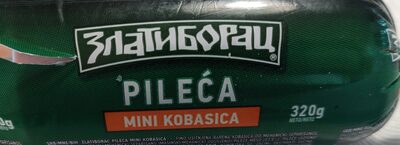
Zlatiborac Poultry Pileca Mini Sausage comes in a 320 g pack. It is sold under the Zlatiborac brand. On Mamori it sits under Chilled › Sausages. Its label lists 25 ingredients.
Zlatiborac Poultry Pileca Mini Sausage at a glance
Zlatiborac Poultry Pileca Mini Sausage carries the Crustaceans Free, Fish Free, Peanut Free, Dairy Free, Tree Nut Free, Celery Free, Mustard Free, Sesame Free, Lupin Free, Mollusks Free, Barley Free, Citrus Fruit Free, Gelatin Free, Latex Free, Oats Free, Rice Free, Rye Free and Wheat Free badges. Nutrition-wise, it's High Protein, Low Carbs, Low Sugars, Low Fiber, High Salt/Sodium, Medium in Calories and Medium Saturated Fat. Worth knowing: it's marked Non-Vegan, Non-Vegetarian, Non-Pescatarian, Non-Low FODMAP, Non-Vegan + Dairy, Non-Vegan + Eggs, Contains Soy, Contains Additives, Contains Artificial Flavourings, Contains Beef, Contains Corn, Contains Emulsifier, Contains Fructose, Lactose, Contains Added Sugars, Contains Pork, Contains Poultry and Contains Seed.
Diet and allergens
Not suitable for vegan, vegetarian or pescatarian diets.
Contains soy.
Free from crustaceans, fish, peanuts, milk, tree nuts, celery, mustard, sesame, lupin and molluscs.
Based on Mamori's check of the ingredients on the label. Recipes change, so always read the pack if you have an allergy or intolerance.
Size: 320 g
Last updated 2 November 2026
Ingredients
mechanically separated chicken meat, chicken connective tissue, water, potato starch, protein products from soy, salt, spices, spices extracts, dextrose, sugar, stabilizers, E407, E407A, E415, E450, E466, thickener: E412, antioxidant: E316, acidity regulators, E262, E451, smoke aroma, aroma enhancer: E621, color: E120, preservative: E250
Additives & flavourings
Additives
- E407: Carrageenan (Thickener) (Stabiliser) (Gelling Agent): Some concerns
Carrageenan, or E407, is a thickening and gelling additive made from red seaweed. It is a large carbohydrate substance used to change the texture of foods.
It helps foods become thicker, creamier or more stable, and can also help gels form. It is often used in dairy desserts, flavoured milks, ice cream, plant-based drinks, sauces and processed meats.
It is allowed in food, but some concerns have been raised. EFSA found that people who eat a lot of foods containing carrageenan could go over the safe daily amount, so high intake is the main issue.
- E407a: Processed Euchema Seaweed: Some concerns
Processed euchema seaweed, or E407a, is a seaweed-derived additive made from certain red seaweeds. It is closely related to carrageenan and is mainly a fibre-like polysaccharide used for its gelling and thickening properties.
It helps foods hold water, thicken, gel, and stay evenly mixed. It may be used in products such as dairy desserts, flavoured milks, ice cream, sauces, processed meat products, and other foods where a stable texture is needed.
It is allowed in food, but some concerns have been raised. EFSA found that people who eat a lot of foods containing E407a can exceed the safe daily amount, so overall exposure is the main issue.
- E415: Xanthan Gum (Thickener): Generally safe
Xanthan gum (E415) is a thickening and stabilising gum made by fermenting sugars with the bacterium Xanthomonas campestris, then purifying and drying the resulting substance.
It helps foods hold water, thicken, and keep ingredients evenly mixed. It is often used in sauces, dressings, desserts, bakery products, gluten-free foods, and drinks where a smooth or stable texture is needed.
Xanthan gum is generally considered safe. It is allowed in food in the EU after EFSA assessment, and the sources checked do not raise concerns at normal amounts used in foods.
- E450: Diphosphates (I) Disodium Diphosphate (Ii) Trisodium Diphosphate (Iii) Tetrasodium Diphosphate (Iv) Dipotassium Diphosphate (V) Tetrapotassium Diphosphate (Vi) Dicalcium Diphosphate (Vii) Calcium Dihydrogen Diphosphate: Some concerns
Diphosphates (E450) are phosphate salts, including sodium, potassium and calcium diphosphates. They are mineral-based food additives used in several forms, such as disodium diphosphate and dicalcium diphosphate.
They help control acidity, improve texture, hold moisture, stabilise mixtures and support raising in baked goods. They may be found in processed meats, bakery products, cheese products, desserts, sauces and some powdered mixes.
They are allowed in food, but some concerns have been raised. EFSA found that people who eat a lot of foods containing phosphates can go over the safe daily amount, so high intake from many processed foods is the main issue.
- E466: Sodium Carboxy Methyl Cellulose, Cellulose Gum: Generally safe
Sodium carboxy methyl cellulose, also called cellulose gum or E466, is a modified cellulose. Cellulose is a natural fibre found in plant cell walls, and E466 is made by chemically changing it so it dissolves or disperses in water.
It is used as a thickener, stabiliser and emulsifier. It helps give foods a smooth texture, keep ingredients mixed, and control thickness. It can be found in products such as sauces, dressings, desserts, ice cream, baked goods and some reduced-fat foods.
E466 is generally considered safe. It is authorised for use in the EU after safety assessment, and the sources checked raise no concern at normal food amounts.
- E412: Guar Gum (Thickener): Generally safe
Guar gum (E412) is a thickening fibre made from the seeds of the guar plant, a type of legume. It is a natural polysaccharide, meaning a long-chain carbohydrate that absorbs water easily.
It is used to thicken, stabilise or improve texture in foods such as sauces, dressings, dairy products, ice cream, gluten-free baked goods and processed foods. It can also help stop ingredients from separating.
Guar gum is generally considered safe at normal food amounts. It is allowed in food in the EU after safety assessment, and the sources checked raise no concern for typical use.
- E316: Sodium Erythorbate: Generally safe
Sodium erythorbate (E316) is the sodium salt of erythorbic acid, a vitamin C-like antioxidant made for use in food. It is related to ascorbic acid, but it is used mainly for its antioxidant effect, not as a vitamin source.
It helps slow oxidation, which can cause colour and flavour changes. It is commonly used in cured and processed meats, and may also be used where antioxidants help protect foods during storage.
It is generally considered safe. It is allowed in food in the EU after safety assessment, and EFSA’s re-evaluation found no concern about eating too much at normal dietary levels.
- E262: Sodium Acetates (I) Sodium Acetate (Ii) Sodium Diacetate (Sodium Hydrogen Acetate): Generally safe
Sodium acetates (E262) are salts of acetic acid, the acid found in vinegar. This group includes sodium acetate and sodium diacetate, also called sodium hydrogen acetate.
They are used mainly as preservatives and acidity regulators, helping control sourness and slow the growth of some microbes. They may be found in foods such as bread, savoury snacks, sauces, pickles and processed meat products.
Sodium acetates are generally considered safe at normal food amounts. They are allowed in food in the EU after safety assessment, and the sources checked raise no concern for typical use.
- E451: Triphosphates (I) Sodium Triphosphate (Pentasodium Triphosphate) (Ii) Pentapotassium Triphosphate: Some concerns
Triphosphates (E451) are phosphate salts, mainly sodium triphosphate and potassium triphosphate. They are made from phosphoric acid compounds and are part of the wider group of phosphate additives.
They help foods hold water, keep texture stable, and improve emulsions. They are used in some processed meats, seafood, processed cheese, sauces, and other foods where moisture retention, stability, or thickening is needed.
E451 is allowed in food, but some concerns have been raised. EFSA found that people who eat a lot of foods containing phosphate additives can go over the safe daily amount, and people with kidney disease are often advised to limit phosphate intake.
- E621: monosodium glutamate: Some concerns
Monosodium glutamate, or MSG (E621), is the sodium salt of glutamic acid, an amino acid found naturally in many foods. It is made as a purified flavour enhancer.
It boosts savoury “umami” taste and is used in foods such as soups, sauces, seasonings, savoury snacks, ready meals and processed meat or vegetable dishes.
It is allowed in food, but some concerns have been raised. EFSA found that people who eat a lot of foods containing glutamates can go over the safe daily amount, so exposure may be high for frequent consumers.
- E120: Cochineal, Carminic Acid, Carmine (Natural Red 4): Generally safe
Carminic acid and carmine (E120) are red colourants made from cochineal insects. They are also known as cochineal or Natural Red 4, and are not suitable for people avoiding animal-derived ingredients.
They are used to give foods a red, pink, or purple colour. E120 may be found in products such as confectionery, desserts, drinks, yoghurts, processed meats, and sauces where a stable red colour is needed.
E120 is generally considered safe at normal food amounts. It is authorised for use in the EU after EFSA safety assessment, and the sources checked do not raise concerns for typical dietary exposure.
- E250: Sodium Nitrite: Best avoided
Sodium nitrite (E250) is a preservative made from sodium and nitrite salts. It is closely related to potassium nitrite (E249) and is used in small amounts because it is very active.
It helps stop dangerous bacteria growing and helps cured meats keep their pink colour and flavour. It is mainly found in processed and cured meats such as bacon, ham, sausages, salami and other similar products.
This additive is best avoided. Nitrites can help form nitrosamines under some conditions, which are classed as probably causing cancer, and processed meat is classed as causing cancer; high consumers may also exceed the safe daily amount.
Flavourings
- smoke aroma: Smoke flavouring (Regulation (EC) No 2065/2003 on smoke flavourings).
Questions and answers
Is Zlatiborac Poultry Pileca Mini Sausage vegan?
No. It is not suitable for a vegan diet.
Is Zlatiborac Poultry Pileca Mini Sausage vegetarian?
No. It is not suitable for a vegetarian diet.
Is Zlatiborac Poultry Pileca Mini Sausage suitable for a pescatarian diet?
No. It is not suitable for a pescatarian diet.
Is Zlatiborac Poultry Pileca Mini Sausage suitable for a Low FODMAP diet?
No. It is not suitable for a Low FODMAP diet.
Is Zlatiborac Poultry Pileca Mini Sausage suitable for a Vegan + Dairy diet?
No. It is not suitable for a Vegan + Dairy diet.
Is Zlatiborac Poultry Pileca Mini Sausage suitable for a Vegan + Eggs diet?
No. It is not suitable for a Vegan + Eggs diet.
Does Zlatiborac Poultry Pileca Mini Sausage contain milk?
No. Its ingredients include no milk, and its label gives no milk warning.
Is Zlatiborac Poultry Pileca Mini Sausage nut-free?
Yes. Its ingredients include no peanuts or tree nuts, and its label gives no nut warning.
Which allergens does Zlatiborac Poultry Pileca Mini Sausage contain?
It contains soy.
More in Sausages
- Lidl Tuscan-style pork sausage
- Amadori Saussice poulet halal
- DULANO Original Thuringian grilled sausage
- Peperami Snacks Hot
- Bellucci cooked cotechino
- Richmond's Richmond 20 Thick Frozen Pork Sausages
- Suntat Garlic Sucuk Sliced
- Wikinger Hot Dog Jar
- Peperami Bbq Lunchbox Minis
- Wikinger 8 Hot Dogs
- Suntat Hello, Biberli
- Argal Extra Chorizo