
Wrigley's Orbit Spearmint Bottle
On the pack: Wrigley's Orbit Spearmint Bottle 46 p
Wrigley's
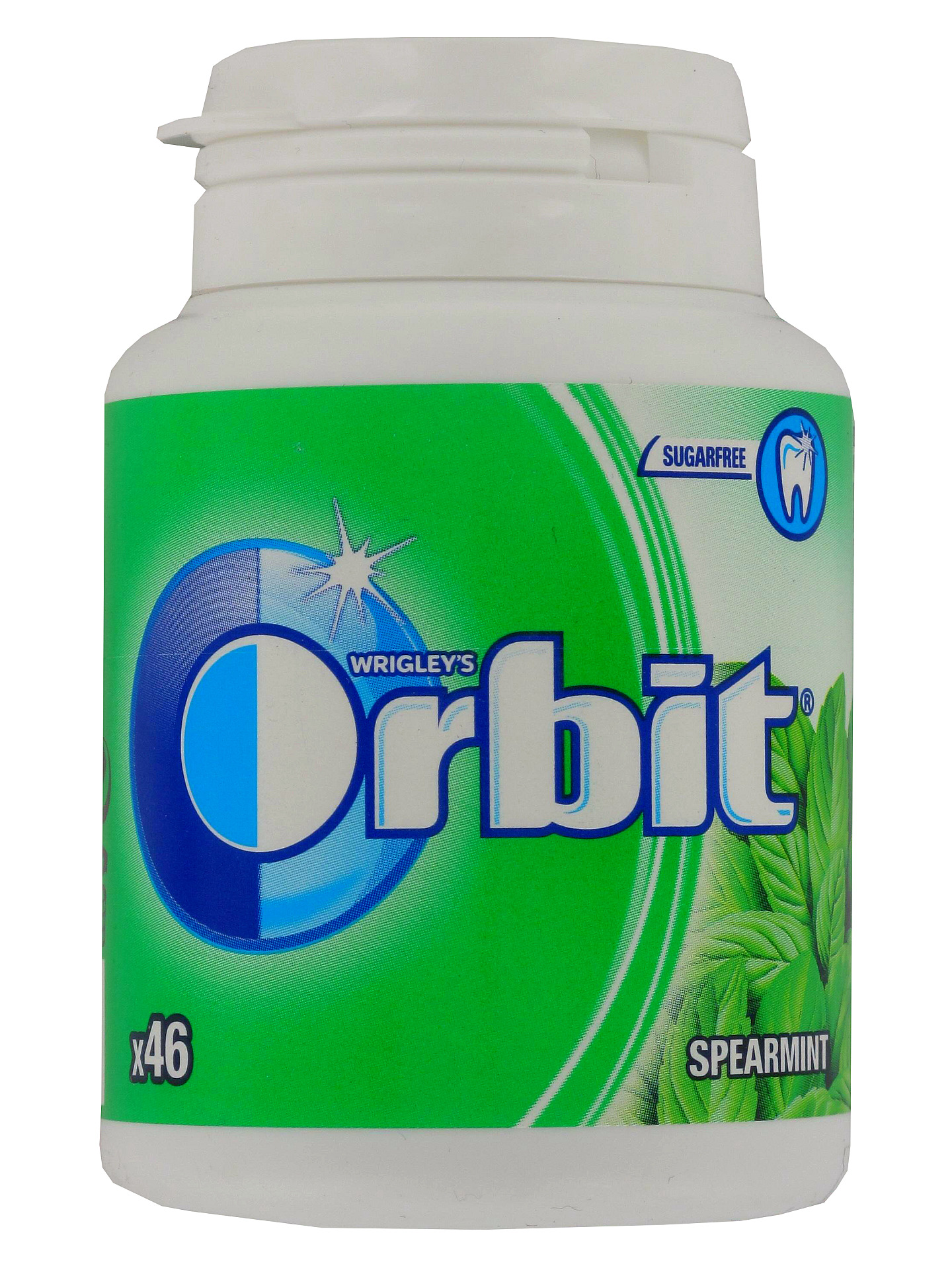
Wrigley's Orbit Spearmint Bottle is listed on Mamori. It is sold under the Wrigley's brand. On Mamori it sits under Confectionery › Chewing Gum. Its label lists 15 ingredients.
Wrigley's Orbit Spearmint Bottle at a glance
Wrigley's Orbit Spearmint Bottle carries the Crustaceans Free, Egg Free, Fish Free, Celery Free, Mustard Free, Lupin Free, Mollusks Free, Beef Free, Citrus Fruit Free, Latex Free, Pork Free and Poultry Free badges. Nutrition-wise, it's Low Salt/Sodium, Low Saturated Fat, Low Sugars, Low Fiber, Low Protein, High Carbs and Medium in Calories. Worth knowing: it's marked Non-Vegan, Non-Vegetarian, Non-Pescatarian, Non-Low FODMAP, Non-Vegan + Dairy, Non-Vegan + Eggs, Contains Soy, Contains Additives, Contains Artificial Flavourings, Contains Barley, Contains Corn, Contains Emulsifier, Contains Fructose, Contains Gelatin, Lactose, Contains Added Sugars, Contains Oats, Contains Rice, Contains Rye, Contains Seed and Contains Wheat.
Diet and allergens
Not suitable for vegan, vegetarian or pescatarian diets.
Contains soy.
Free from crustaceans, eggs, fish, celery, mustard, lupin and molluscs.
Based on Mamori's check of the ingredients on the label. Recipes change, so always read the pack if you have an allergy or intolerance.
Last updated 26 October 2026
Ingredients
Xylitol, Sorbitol, Mannitol, Aspartame, Acesulfame K, Sucralose, dyukova basis, humidifier agent: glycerin, Gum arabic, flavours, Soy lecithin, coloring: E171, Carnauba Wax, antioxidant: BHA, phenylalanine
Additives & flavourings
Additives
- E967: Xylitol: Generally safe
Xylitol (E967) is a sugar alcohol used as a sweetener. It is found naturally in small amounts in some fruits and vegetables, and is usually made commercially from plant materials such as birch wood or corn cobs.
It sweetens foods with fewer calories than sugar and can also help give a smooth texture. It is commonly used in sugar-free chewing gum, mints, sweets, desserts, and some baked goods.
Xylitol is generally considered safe at normal food amounts. It is allowed in food in the EU after safety assessment, and the sources checked raise no concern for usual consumption.
- E420: Sorbitol (I) Sorbitol (Ii) Sorbitol Syrup (Emulsifier) (Sweetener): Generally safe
Sorbitols (E420) are sugar alcohols used as food additives. They include sorbitol and sorbitol syrup, made from glucose, often from starch sources. Despite the name, they are not alcoholic drinks.
They are used to add sweetness, keep foods moist, improve texture, and help stabilise mixtures. They are often found in sugar-free sweets and chewing gum, desserts, baked goods, sauces, and some processed foods.
Sorbitols are generally considered safe at normal food amounts. They are authorised for use in the EU after safety assessment, and the sources checked raise no concern for typical intake.
- E421: Mannitol (Anti-Caking Agent): Generally safe
Mannitol (E421) is a sugar alcohol, a type of low-calorie sweetener found naturally in some fruits and vegetables and also made commercially, often from plant sugars. It may also be listed as an anti-caking agent.
In food, it can add sweetness, help control texture, and reduce clumping in powdered products. It is used in some sugar-free sweets and chewing gum, desserts, and other foods where a sugar alcohol or anti-caking effect is needed.
Mannitol is generally considered safe at normal food amounts. It is authorised for use in the EU after safety assessment, and the sources checked raise no concern at typical levels.
- E951: Aspartame: Some concerns
Aspartame (E951) is an artificial intense sweetener. It is made from two amino acids, aspartic acid and phenylalanine, joined with a small methanol component, and is much sweeter than sugar.
It is used to give sweetness with very little energy. It is found in many “diet” or “sugar-free” soft drinks, chewing gum, desserts, yoghurts, tabletop sweeteners and some medicines.
Aspartame is allowed for use, but some concerns have been raised. In 2023, IARC classed it as “possibly causing cancer” (Group 2B), while food safety bodies kept the acceptable daily intake; foods containing it must warn people with phenylketonuria that it contains phenylalanine.
- E950: Acesulfame K: Generally safe
Acesulfame K, also called acesulfame potassium or E950, is an artificial sweetener. It is a potassium salt of a synthetic sweet-tasting compound and is much sweeter than sugar, so only small amounts are used.
It is used to sweeten foods and drinks without adding much energy. It is often found in sugar-free or reduced-sugar soft drinks, desserts, chewing gum, tabletop sweeteners and some special dietary foods.
It is generally considered safe at normal amounts. It is authorised for use in the EU after safety assessment, and the sources checked raise no concern when it is used within permitted limits.
- E955: Sucralose (Trichlorogalactosucrose): Generally safe
Sucralose (E955), also called trichlorogalactosucrose, is an artificial high-intensity sweetener. It is made by chemically modifying sugar, which makes it taste very sweet while adding little or no energy in the small amounts used.
It is used to sweeten foods and drinks without using much sugar. You may find it in low-sugar or sugar-free drinks, desserts, yoghurts, chewing gum, tabletop sweeteners, and some special diet foods.
Sucralose is generally considered safe at normal amounts. It is authorised for use in the EU after safety assessment, and the sources checked raise no concern for typical food use.
- E422: Glycerol (Emulsifier): Generally safe
Glycerol, or E422, is a clear, sweet-tasting liquid also known as glycerine. It is a type of sugar alcohol and can be made from vegetable oils, animal fats, or produced synthetically.
In food, it helps keep moisture in, thickens texture, stabilises mixtures, and can help emulsions stay smooth. It is used in a range of foods where softness, moisture retention, or smooth texture is needed, such as confectionery, baked goods, icings, and some drinks.
Glycerol is generally considered safe at normal food amounts. It is allowed in food in the EU after safety assessment, and the sources checked raise no concern for typical use.
- E414: Gum Arabic (Acacia Gum): Generally safe
Gum arabic, or acacia gum, is E414. It is a natural gum obtained from the dried sap of acacia trees. It is a soluble dietary fibre made mainly of complex carbohydrates.
In food, it is used as a thickener, stabiliser and emulsifier. It helps keep mixtures even, improves texture, and can help hold flavours or colours in place. It may be found in sweets, soft drinks, icings, baked goods and flavourings.
It is generally considered safe at normal food amounts. It is authorised for use in the EU after safety assessment, and the sources checked raise no concern for typical use.
- E171: Titanium Dioxide: Not allowed in the EU (Commission Regulation (EU) 2022/63)
Titanium dioxide, E171, is a white mineral-based colourant made from titanium and oxygen. It is a very fine, insoluble powder used to make foods look brighter or more opaque.
It has been used in products such as sweets, chewing gum, icing, bakery decorations and some sauces or processed foods, mainly to give a clean white colour.
Its safety status differs by region. In the EU, E171 is no longer authorised for use in food because regulators could not rule out concerns about possible effects on genetic material.
- E903: Carnauba Wax: Generally safe
Carnauba wax (E903) is a natural plant wax taken from the leaves of the carnauba palm. It is a hard, glossy wax, also used outside food in coatings and polishes.
In food, it is used as a glazing agent to give a shiny surface and help reduce sticking or moisture loss. It can be found on some sweets, chewing gum, chocolate-coated products, and waxed fruit coatings.
Carnauba wax is generally considered safe at normal food amounts. It is authorised for use in the EU after EFSA safety assessment, and the checked sources raise no concern for typical dietary exposure.
- E320: Butylated Hydroxyanisole (Bha): Generally safe
Butylated hydroxyanisole, or BHA (E320), is a synthetic antioxidant. It is a mixture of related organic compounds made for use in foods and other products to slow down oxidation.
In food, it helps stop fats and oils from going rancid and can help protect flavour and colour. It may be used in fat-containing foods such as snacks, cereals, chewing gum, dried mixes, and some processed potato products.
BHA is generally considered safe at normal food-use levels. It is authorised for use in the EU after EFSA safety assessment, and the sources checked raise no concern at typical amounts.
Flavourings
- flavours: Flavouring (Regulation (EC) No 1334/2008 on flavourings, Article 16).
Questions and answers
Is Wrigley's Orbit Spearmint Bottle vegan?
No. It is not suitable for a vegan diet.
Is Wrigley's Orbit Spearmint Bottle vegetarian?
No. It is not suitable for a vegetarian diet.
Is Wrigley's Orbit Spearmint Bottle suitable for a pescatarian diet?
No. It is not suitable for a pescatarian diet.
Is Wrigley's Orbit Spearmint Bottle suitable for a Low FODMAP diet?
No. It is not suitable for a Low FODMAP diet.
Is Wrigley's Orbit Spearmint Bottle suitable for a Vegan + Dairy diet?
No. It is not suitable for a Vegan + Dairy diet.
Is Wrigley's Orbit Spearmint Bottle suitable for a Vegan + Eggs diet?
No. It is not suitable for a Vegan + Eggs diet.
Does Wrigley's Orbit Spearmint Bottle contain eggs?
No. Its ingredients include no eggs, and its label gives no egg warning.
Which allergens does Wrigley's Orbit Spearmint Bottle contain?
It contains soy.
More in Chewing Gum
- Wrigley's Freedent strawberry
- Bubble Gum
- Orbit Refreshers Peppermint school
- Orbit Refreshers Spearmint
- Mentos Spearmint Gum
- Wrigley's Orbit Sugar Free Peppermint
- Brooklyn Spearmint
- Chupa Chups Cotton Bubble Gum Tutti Frutti
- Wrigley's Orbit White Spearmint Sugar Free
- Big Babol Fruit Juice
- Mentos Gum Bubble Fresh
- Chupa Chups Cotton Bubble Gum