
Waistnot Creamy Beef Rigatoni 250 g
Waistnot
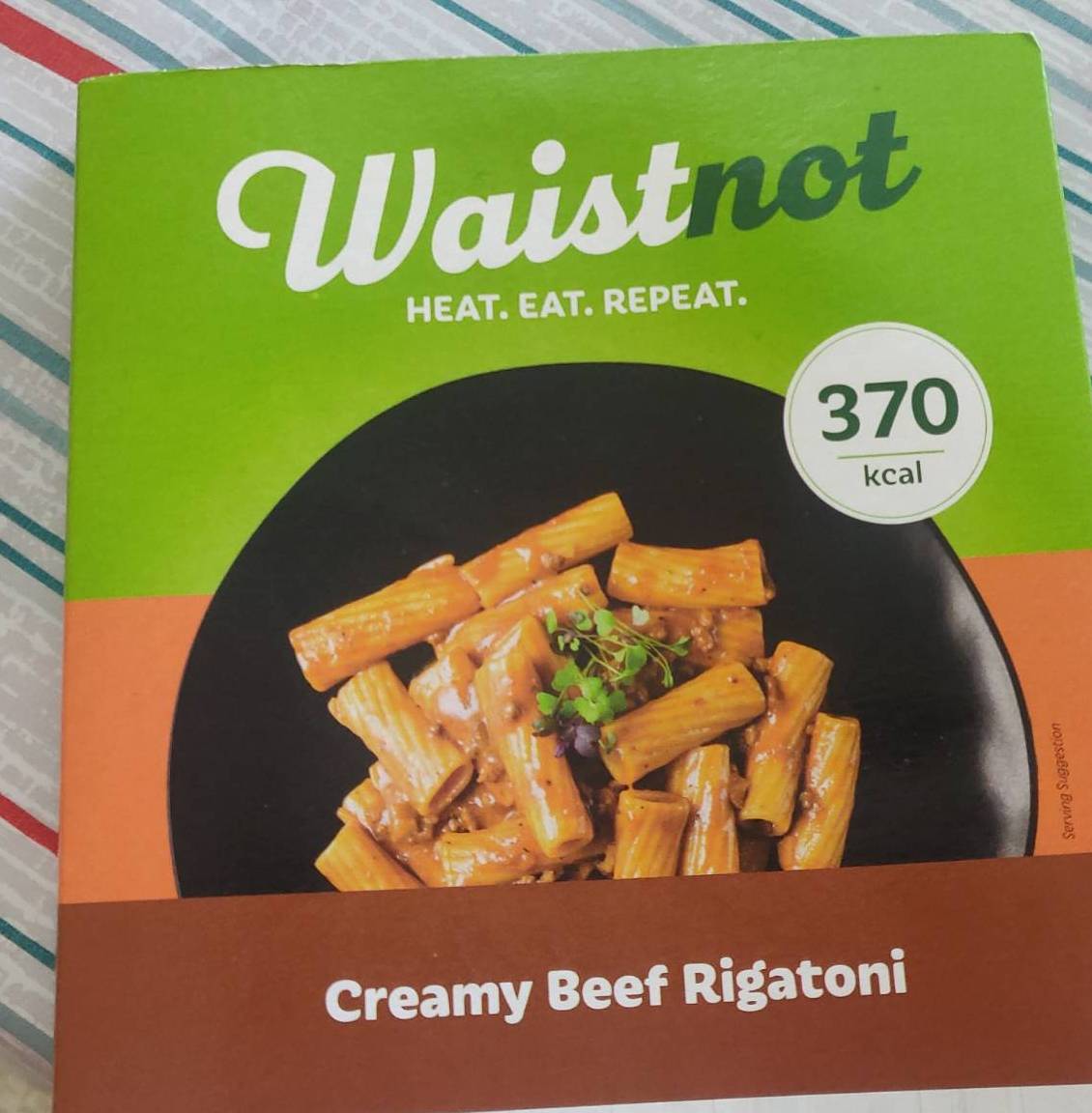
Waistnot Creamy Beef Rigatoni comes in a 250 g pack. It is sold under the Waistnot brand. On Mamori it sits under Groceries › Soups & Ready Meals › Pasta Ready Meal. Its label lists 54 ingredients.
Waistnot Creamy Beef Rigatoni at a glance
Waistnot Creamy Beef Rigatoni carries the Crustaceans Free, Fish Free, Celery Free, Sesame Free, Lupin Free, Mollusks Free, Barley Free, Citrus Fruit Free, Gelatin Free, Latex Free, Oats Free, Pork Free, Poultry Free and Rye Free badges. Nutrition-wise, it's Low Sugars, Low Protein, Medium in Fiber, Medium in Calories, Medium Carbs, Medium Salt/Sodium and Medium Saturated Fat. Worth knowing: it's marked Non-Vegan, Non-Vegetarian, Non-Pescatarian, Non-Low FODMAP, Non-Vegan + Dairy, Non-Vegan + Eggs, Contains Gluten, Contains Soy, Contains Dairy, Contains Mustard, Contains Sulfite, Contains Additives, Contains Artificial Flavourings, Contains Beef, Contains Corn, Contains Emulsifier, Contains Fructose, Lactose, Contains Added Sugars, Contains Rice, Contains Seed and Contains Wheat.
Diet and allergens
Not suitable for vegan, vegetarian or pescatarian diets.
Contains gluten, soy, milk, mustard and sulphites.
Free from crustaceans, fish, celery, sesame, lupin and molluscs.
May contain: soya, peanuts, eggs.
Based on Mamori's check of the ingredients on the label. Recipes change, so always read the pack if you have an allergy or intolerance.
Size: 250 g
Last updated 2 November 2026
Ingredients
pasta, durum wheat semolina, water, sunflower oil, tomato pulp, tomatoes, tomato juice, acidity regulator E330, minced beef, semi-skimmed milk, onion, cream, sunflower oil, tomato paste, tomatoes, sugar, salt, demi-glace, modified maize starch, wheat flour, maltodextrin, salt, sugar, tomato powder, flavourings including wheat and barley, flavour enhancer E621, yeast extract, vegetable oils, glucose syrup, caramel colour E150c, sulphites, milk protein, stabilisers E340 and E452, spices, garlic, sugar, margarine, palm fat, coconut fat, sunflower oil, soybean oil, emulsifier E471, flavourings, E330, colour E160a, salt, wheat flour, French mustard, mustard flour, vinegar, spices, additives including sulphites and E150c, herbs, spices
Additives & flavourings
Additives
- E330: Citric Acid: Generally safe
Citric acid (E330) is a natural organic acid found in citrus fruits and many other plants. The citric acid used in food is usually made by fermentation of sugars using micro-organisms.
It is used as an acidity regulator and antioxidant. It helps give a sharp, sour taste, control pH, and slow colour or flavour changes. It is common in soft drinks, sweets, jams, sauces, canned foods, and many processed foods.
Citric acid is generally considered safe at normal food levels. It is allowed in food in the EU after safety assessment, and the sources checked raise no concern for typical dietary amounts.
- E621: monosodium glutamate: Some concerns
Monosodium glutamate, or MSG (E621), is the sodium salt of glutamic acid, an amino acid found naturally in many foods. It is made as a purified flavour enhancer.
It boosts savoury “umami” taste and is used in foods such as soups, sauces, seasonings, savoury snacks, ready meals and processed meat or vegetable dishes.
It is allowed in food, but some concerns have been raised. EFSA found that people who eat a lot of foods containing glutamates can go over the safe daily amount, so exposure may be high for frequent consumers.
- E150C: Ammonia Caramel (E150c): Some concerns
Ammonia caramel (E150c) is a brown food colour made by heating sugars with ammonia compounds. It is one of the caramel colours, used to give foods and drinks a darker brown appearance.
It is used in products such as soft drinks, sauces, soups, baked goods, confectionery and some processed savoury foods, where a stable brown colour is needed.
It is allowed in food, but some concerns have been raised. A by-product that can form during manufacture, 4-methylimidazole, is classed by IARC as possibly causing cancer, and EFSA has found that people with high intakes of caramel colours may exceed the safe daily amount.
- E220: Sulphur Dioxide: Some concerns
Sulphur dioxide (E220) is a sulphite preservative. It is a gas that dissolves in water and is used in food for its antimicrobial and antioxidant effects.
It helps slow spoilage, prevents browning, and protects colour and flavour. It is commonly found in dried fruit, wine and other drinks, some pickled or processed vegetables, and potato products.
It is allowed in food, but some concerns have been raised. EFSA found that people who eat a lot of foods containing sulphites can go over the safe daily amount, and sulphites can also trigger reactions in some sensitive people.
- E340: Potassium Phosphates (I) Monopotassium Phosphate (Ii) Dipotassium Phosphate (Iii) Tripotassium Phosphate: Some concerns
Potassium phosphates (E340) are potassium salts of phosphoric acid. The group includes monopotassium phosphate, dipotassium phosphate and tripotassium phosphate. They are mineral-based phosphates used as acidity regulators and antioxidant-related stabilisers.
In food, E340 helps control acidity, stabilise mixtures, bind water and support texture. It may be used in processed meats, processed cheese, bakery products, powdered drinks, desserts and other processed foods where phosphate salts are useful.
E340 is allowed in food, but some concerns have been raised. EFSA found that people who eat many foods containing added phosphates can exceed the safe daily amount, and phosphate intake is a particular concern for people with kidney disease.
- E471: Mono- And Diglycerides Of Fatty Acids (Glyceryl Monostearate, Glyceryl Distearate): Generally safe
Mono- and diglycerides of fatty acids, or E471, are emulsifiers made from glycerol and fatty acids. The fatty acids can come from vegetable oils or animal fats, so the source is not always clear unless stated by the producer.
They help oil and water mix, improve texture, and keep foods stable. They are often used in baked goods, spreads, desserts, ice cream, sauces, and processed foods where a smooth or consistent texture is needed.
E471 is generally considered safe. It is allowed in food in the EU after safety assessment, and the sources we check raise no concern at normal amounts.
- E160a: Carotenes: Generally safe
Carotenes (E160a) are orange-yellow colourants, including alpha-carotene, beta-carotene and gamma-carotene. They are pigments found naturally in plants such as carrots and leafy greens, and can also be made synthetically or obtained from natural sources. Some forms may be animal derived.
They are used to add or restore yellow to orange colour in foods. They may be found in products such as margarines, dairy products, desserts, sauces, drinks and confectionery.
E160a is allowed in food in the EU after safety assessment. It is generally considered safe at normal food amounts, and the sources checked raise no concern for typical use.
Flavourings
- flavourings including wheat and barley: Flavouring (Regulation (EC) No 1334/2008 on flavourings, Article 16).
- flavourings: Flavouring (Regulation (EC) No 1334/2008 on flavourings, Article 16).
Questions and answers
Is Waistnot Creamy Beef Rigatoni vegan?
No. It contains milk, so it is not suitable for a vegan diet.
Is Waistnot Creamy Beef Rigatoni vegetarian?
No. It is not suitable for a vegetarian diet.
Is Waistnot Creamy Beef Rigatoni suitable for a pescatarian diet?
No. It is not suitable for a pescatarian diet.
Is Waistnot Creamy Beef Rigatoni suitable for a Low FODMAP diet?
No. It is not suitable for a Low FODMAP diet.
Is Waistnot Creamy Beef Rigatoni suitable for a Vegan + Dairy diet?
No. It is not suitable for a Vegan + Dairy diet.
Is Waistnot Creamy Beef Rigatoni suitable for a Vegan + Eggs diet?
No. It is not suitable for a Vegan + Eggs diet.
Is Waistnot Creamy Beef Rigatoni gluten-free?
No. It contains gluten.
Does Waistnot Creamy Beef Rigatoni contain milk?
Yes. It contains milk.
Which allergens does Waistnot Creamy Beef Rigatoni contain?
It contains gluten, soy, milk, mustard and sulphites. Its label also says it may contain: soya, peanuts, eggs.
More in Pasta Ready Meal
- Lidl Pasta e broccoli
- Toque du Chef Pan-fried gnocchi
- De Angelis Fresh Gluten Free Tagliatelle Pasta
- Goodfella's Goodfellas fully loaded mac & cheese
- John west Greek Tuna Pasta Salad
- De Angelis Gluten Free Puff Pastry
- Vitalis Maggi Original Recipe
- Alberto White Baked Macaroni
- Rio Mare Ready Beans
- Rana Ran So Gioiaverde Mushrooms
- Siciliatentazioni Trenette Alla Taormina
- Zerbinati The Monoprziomo Pasta and Beans