
Vive Soy Vanilla Drink 1.00 Ltr 1 l
Vive
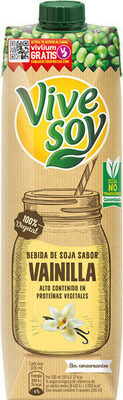
Vive Soy Vanilla Drink 1.00 Ltr comes in a 1 l pack. It is sold under the Vive brand. On Mamori it sits under Beverages › Dairy Alternatives › Soy Milk. Its label lists 17 ingredients.
Vive Soy Vanilla Drink 1.00 Ltr at a glance
Vive Soy Vanilla Drink 1.00 Ltr fits Vegan, Vegetarian, Pescatarian, Vegan + Dairy and Vegan + Eggs diets. It also carries the Gluten Free, Crustaceans Free, Egg Free, Fish Free, Peanut Free, Dairy Free, Tree Nut Free, Celery Free, Mustard Free, Sesame Free, Sulfite Free, Lupin Free, Mollusks Free, Barley Free, Beef Free, Citrus Fruit Free, Corn Free, Emulsifier Free, Gelatin Free, Lactose Free, Latex Free, Oats Free, Pork Free, Poultry Free, Rice Free, Rye Free and Wheat Free badges. Nutrition-wise, it's Low Carbs, Low Salt/Sodium, Low Saturated Fat, Low Sugars, Low Fiber, Low Protein and Medium in Calories. Worth knowing: it's marked Non-Low FODMAP, Contains Soy, Contains Additives, Contains Artificial Flavourings, Contains Fructose, Contains Added Sugars and Contains Seed.
Diet and allergens
Suitable for vegan, vegetarian and pescatarian diets.
Contains soy.
Free from gluten, crustaceans, eggs, fish, peanuts, milk, tree nuts, celery, mustard, sesame, sulphites, lupin and molluscs.
Based on Mamori's check of the ingredients on the label. Recipes change, so always read the pack if you have an allergy or intolerance.
Size: 1 l
Last updated 2 November 2026
Ingredients
Water, soybean seeds, sugar, Tricalcium phosphate, stabilizers, E-460, E-466, E-407, Flavor, salt, sweeteners, Acesulfame K, Sucralose, antioxidant: E-306, vitamins, Vitamin A, Vitamin D
Additives & flavourings
Additives
- E341(iii): Tricalcium Phosphate: Generally safe
Tricalcium phosphate (E341(iii)) is a calcium salt of phosphoric acid. It is a mineral-type food additive, also found naturally in bones and teeth, and is used as a source of calcium and phosphate.
In food, it can help regulate acidity, prevent powders from clumping, and support texture. It is often used in powdered foods, baking mixes, processed cheese, supplements, and some fortified foods.
It is generally considered safe at normal food-use amounts and is authorised for use in the EU after safety assessment. People with kidney disease may need to limit phosphate intake, but for most shoppers the sources checked raise no concern.
- E460: Cellulose (I) Microcrystalline Cellulose (Ii) Powdered Cellulose: Generally safe
Cellulose (E460) is a plant fibre and a form of carbohydrate found naturally in the cell walls of plants. As an additive it includes microcrystalline cellulose and powdered cellulose, usually made from purified plant material such as wood pulp or cotton.
It is used as a thickener, stabiliser, anti-caking agent and bulking agent. It can help improve texture, keep ingredients evenly mixed, or stop powders from clumping, and may be found in foods such as grated cheese, sauces, bakery products, low-energy foods and powdered mixes.
Cellulose (E460) is generally considered safe. It is allowed in food in the EU after EFSA safety assessment, and the sources checked raise no concern at normal amounts.
- E466: Sodium Carboxy Methyl Cellulose, Cellulose Gum: Generally safe
Sodium carboxy methyl cellulose, also called cellulose gum or E466, is a modified cellulose. Cellulose is a natural fibre found in plant cell walls, and E466 is made by chemically changing it so it dissolves or disperses in water.
It is used as a thickener, stabiliser and emulsifier. It helps give foods a smooth texture, keep ingredients mixed, and control thickness. It can be found in products such as sauces, dressings, desserts, ice cream, baked goods and some reduced-fat foods.
E466 is generally considered safe. It is authorised for use in the EU after safety assessment, and the sources checked raise no concern at normal food amounts.
- E407: Carrageenan (Thickener) (Stabiliser) (Gelling Agent): Some concerns
Carrageenan, or E407, is a thickening and gelling additive made from red seaweed. It is a large carbohydrate substance used to change the texture of foods.
It helps foods become thicker, creamier or more stable, and can also help gels form. It is often used in dairy desserts, flavoured milks, ice cream, plant-based drinks, sauces and processed meats.
It is allowed in food, but some concerns have been raised. EFSA found that people who eat a lot of foods containing carrageenan could go over the safe daily amount, so high intake is the main issue.
- E950: Acesulfame K: Generally safe
Acesulfame K, also called acesulfame potassium or E950, is an artificial sweetener. It is a potassium salt of a synthetic sweet-tasting compound and is much sweeter than sugar, so only small amounts are used.
It is used to sweeten foods and drinks without adding much energy. It is often found in sugar-free or reduced-sugar soft drinks, desserts, chewing gum, tabletop sweeteners and some special dietary foods.
It is generally considered safe at normal amounts. It is authorised for use in the EU after safety assessment, and the sources checked raise no concern when it is used within permitted limits.
- E955: Sucralose (Trichlorogalactosucrose): Generally safe
Sucralose (E955), also called trichlorogalactosucrose, is an artificial high-intensity sweetener. It is made by chemically modifying sugar, which makes it taste very sweet while adding little or no energy in the small amounts used.
It is used to sweeten foods and drinks without using much sugar. You may find it in low-sugar or sugar-free drinks, desserts, yoghurts, chewing gum, tabletop sweeteners, and some special diet foods.
Sucralose is generally considered safe at normal amounts. It is authorised for use in the EU after safety assessment, and the sources checked raise no concern for typical food use.
- E306: Tocopherol-Rich Extract: Generally safe
Tocopherol-rich extract (E306) is a natural form of vitamin E, made up of mixed tocopherols usually obtained from vegetable oils such as soya, sunflower or rapeseed oil.
It is used as an antioxidant, helping to slow rancidity and protect fats and oils from oxidation. It can be found in foods containing oils or fats, such as margarines, dressings, baked goods, snacks and some processed foods.
E306 is allowed in food in the EU after safety assessment. It is generally considered safe at normal amounts used in food, and the sources checked raise no specific concern.
Flavourings
- Flavor: Flavouring (Regulation (EC) No 1334/2008 on flavourings, Article 16).
Questions and answers
Is Vive Soy Vanilla Drink 1.00 Ltr vegan?
Yes. It is suitable for a vegan diet.
Is Vive Soy Vanilla Drink 1.00 Ltr vegetarian?
Yes. It is suitable for a vegetarian diet.
Is Vive Soy Vanilla Drink 1.00 Ltr suitable for a pescatarian diet?
Yes. It is suitable for a pescatarian diet.
Is Vive Soy Vanilla Drink 1.00 Ltr suitable for a Low FODMAP diet?
No. It is not suitable for a Low FODMAP diet.
Is Vive Soy Vanilla Drink 1.00 Ltr suitable for a Vegan + Dairy diet?
Yes. It is suitable for a Vegan + Dairy diet.
Is Vive Soy Vanilla Drink 1.00 Ltr suitable for a Vegan + Eggs diet?
Yes. It is suitable for a Vegan + Eggs diet.
Is Vive Soy Vanilla Drink 1.00 Ltr gluten-free?
Yes. Its ingredients include no gluten, and its label gives no gluten warning.
Does Vive Soy Vanilla Drink 1.00 Ltr contain milk?
No. Its ingredients include no milk, and its label gives no milk warning.
Is Vive Soy Vanilla Drink 1.00 Ltr nut-free?
Yes. Its ingredients include no peanuts or tree nuts, and its label gives no nut warning.
Does Vive Soy Vanilla Drink 1.00 Ltr contain eggs?
No. Its ingredients include no eggs, and its label gives no egg warning.
Which allergens does Vive Soy Vanilla Drink 1.00 Ltr contain?
It contains soy.
More in Soy Milk
- Amo Essere Veg Barista soy drink
- vemondo Soy drink
- Selex Soy protein-based beverage
- Valsoia Soya Drink Zero
- Koko Barista Dairy Free
- Deco Bio Soy Drink
- Alpro Drink Soya No Sugar
- Alpro Drink Soya Banana
- Céréal Soy cereal
- Eurospin I love being Soia
- Latteria Partially skimmed lactose-free UHT milk
- Good Hope Soy Milk Reg