
Vantastic Schnitzel Cheeze 200 g
Vantastic
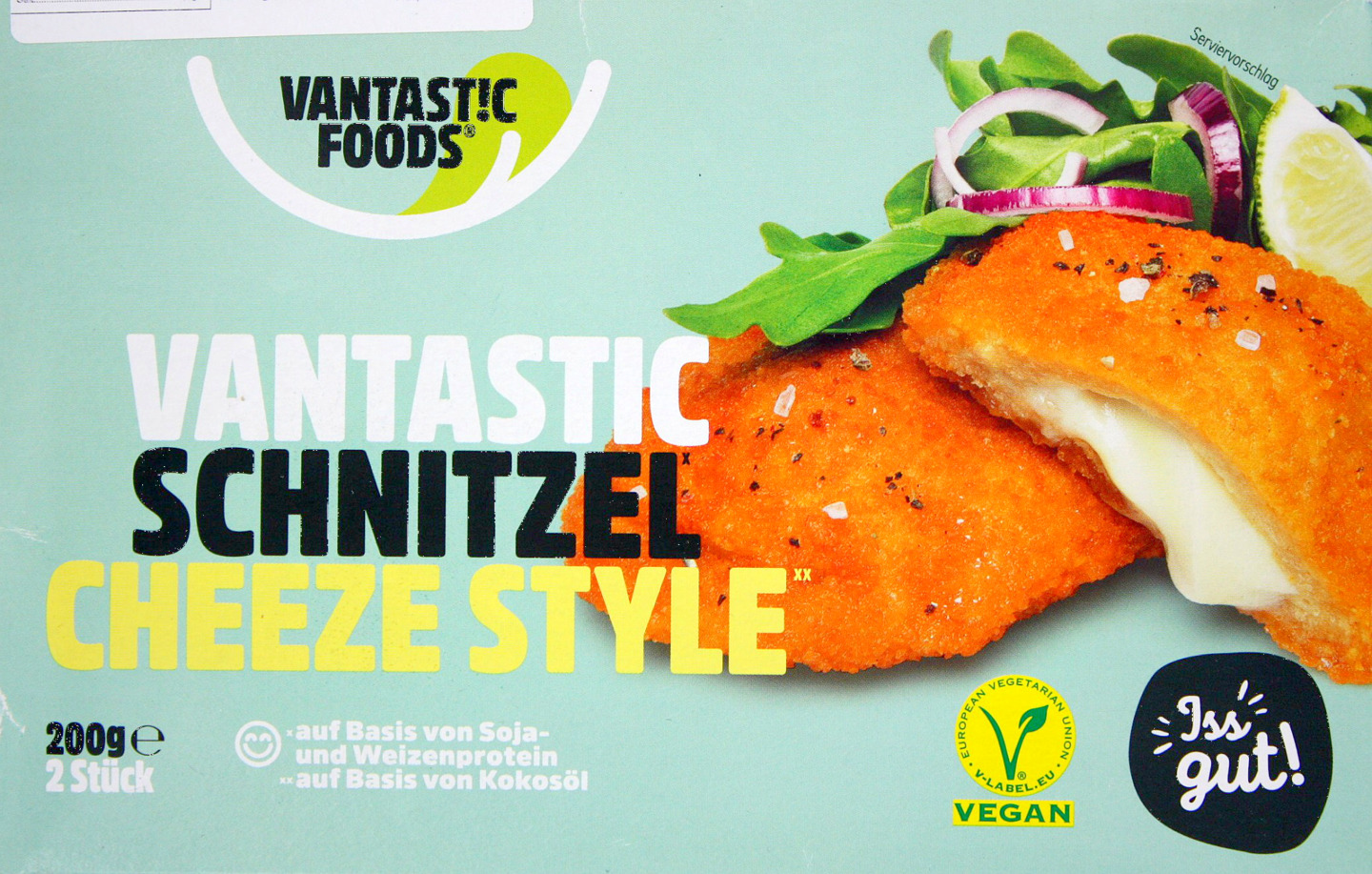
Vantastic Schnitzel Cheeze comes in a 200 g pack. It is sold under the Vantastic brand. On Mamori it sits under Meat and Seafood › Processed Meats › Schnitzel. Its label lists 25 ingredients.
Vantastic Schnitzel Cheeze at a glance
Vantastic Schnitzel Cheeze fits Vegan, Vegetarian and Pescatarian diets. It also carries the Crustaceans Free, Fish Free, Peanut Free, Tree Nut Free, Sesame Free, Lupin Free, Mollusks Free, Barley Free, Beef Free, Citrus Fruit Free, Gelatin Free, Latex Free, Oats Free, Pork Free, Poultry Free, Rice Free and Rye Free badges. Nutrition-wise, it's Low Sugars, High Salt/Sodium, Medium in Fiber, Medium in Protein, Medium in Calories, Medium Carbs and Medium Saturated Fat. Worth knowing: it's marked Non-Low FODMAP, Non-Vegan + Dairy, Non-Vegan + Eggs, Contains Gluten, Contains Soy, Contains Additives, Contains Artificial Flavourings, Contains Corn, Contains Emulsifier, Contains Fructose, Lactose, Contains Added Sugars, Contains Seed and Contains Wheat.
Diet and allergens
Suitable for vegan, vegetarian and pescatarian diets.
Contains gluten and soy.
Free from crustaceans, fish, peanuts, tree nuts, sesame, lupin and molluscs.
May contain: Eggs, Milk, Celery, mustard.
Based on Mamori's check of the ingredients on the label. Recipes change, so always read the pack if you have an allergy or intolerance.
Size: 200 g
Last updated 2 November 2026
Ingredients
Water, Wheat Flour, Rapeseed Oil, textured soy protein concentrate, modified starch, Coconut Oil, textured mixture containing wheat protein, Wheat protein, Wheat Flour, Wheat protein, natural flavours, thickener: methylcellulose, iodized salt, salt, potassium iodate, Soy protein isolate, spices, salt, yeast, Sea salt, Olive extract, dextrose, potato starch, Flavour, colour: carotene
Additives & flavourings
Additives
- E1401: Modified Starch ((Acid-Treated Starch) Stabiliser): Generally safe
Acid-treated starch, often labelled E1401 in some systems, is a modified starch. It is made by treating ordinary starch from plants such as maize, potato or wheat with acid to change how it behaves in food.
It helps thicken, stabilise or improve texture, especially where a smooth, consistent result is needed. Modified starches are used in foods such as sauces, soups, desserts, fillings and processed meals.
It is generally considered safe. Under EU law, acid-treated starch is not classed as a food additive; it is treated as a food ingredient instead.
- E461: Methyl Cellulose: Generally safe
Methyl cellulose (E461) is a modified form of cellulose, the natural fibre found in plant cell walls. It is made by chemically changing cellulose so it can dissolve or swell in water and form gels.
In food, it works as a thickener, stabiliser and emulsifier. It helps improve texture, hold water, and keep ingredients evenly mixed. It may be used in sauces, bakery fillings, processed foods, and products where a thicker or more stable texture is needed.
It is generally considered safe at normal amounts. Methyl cellulose is allowed in food in the EU after EFSA safety assessment, and the sources checked raise no concern for typical food use.
- E917: Potassium Iodate: Generally safe
Potassium iodate, sometimes listed as E917, is an iodine-containing mineral salt. It is not treated as a food additive under EU law, but as a permitted source of iodine that may be added to foods.
It can be used to add iodine for nutritional purposes, for example in fortified foods or iodised salt, rather than to glaze, sweeten or preserve food.
It is generally considered safe when used as an approved iodine source in foods. Its EU status reflects that it is regulated as a nutrient source, not as a food additive.
- E160a: Carotenes: Generally safe
Carotenes (E160a) are orange-yellow colourants, including alpha-carotene, beta-carotene and gamma-carotene. They are pigments found naturally in plants such as carrots and leafy greens, and can also be made synthetically or obtained from natural sources. Some forms may be animal derived.
They are used to add or restore yellow to orange colour in foods. They may be found in products such as margarines, dairy products, desserts, sauces, drinks and confectionery.
E160a is allowed in food in the EU after safety assessment. It is generally considered safe at normal food amounts, and the sources checked raise no concern for typical use.
Flavourings
- natural flavours: Natural flavouring (Regulation (EC) No 1334/2008 on flavourings, Article 16).
- Flavour: Flavouring (Regulation (EC) No 1334/2008 on flavourings, Article 16).
Questions and answers
Is Vantastic Schnitzel Cheeze vegan?
Yes. It is suitable for a vegan diet.
Is Vantastic Schnitzel Cheeze vegetarian?
Yes. It is suitable for a vegetarian diet.
Is Vantastic Schnitzel Cheeze suitable for a pescatarian diet?
Yes. It is suitable for a pescatarian diet.
Is Vantastic Schnitzel Cheeze suitable for a Low FODMAP diet?
No. It is not suitable for a Low FODMAP diet.
Is Vantastic Schnitzel Cheeze suitable for a Vegan + Dairy diet?
No. It is not suitable for a Vegan + Dairy diet.
Is Vantastic Schnitzel Cheeze suitable for a Vegan + Eggs diet?
No. It is not suitable for a Vegan + Eggs diet.
Is Vantastic Schnitzel Cheeze gluten-free?
No. It contains gluten.
Is Vantastic Schnitzel Cheeze nut-free?
Yes. Its ingredients include no peanuts or tree nuts, and its label gives no nut warning.
Which allergens does Vantastic Schnitzel Cheeze contain?
It contains gluten and soy. Its label also says it may contain: Eggs, Milk, Celery, mustard.