
Valsoia Walnut Drink 1 l
Valsoia
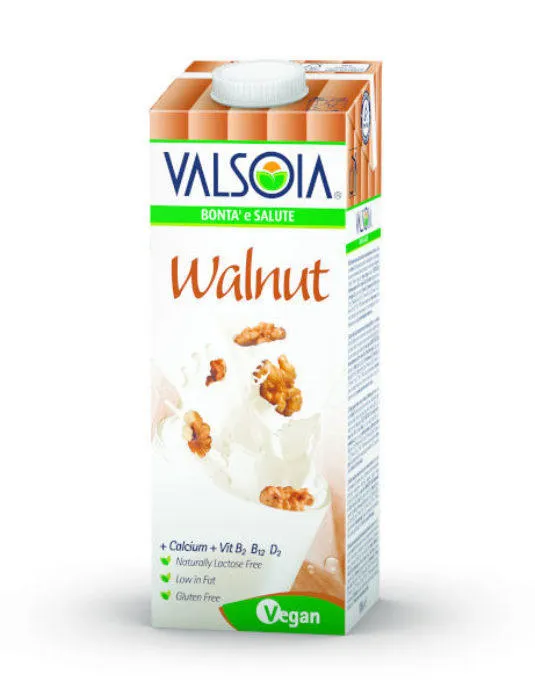
Valsoia Walnut Drink comes in a 1 l pack. It is sold under the Valsoia brand. On Mamori it sits under Beverages › Dairy Alternatives › Walnut Milk. Its label lists 14 ingredients.
Valsoia Walnut Drink at a glance
Valsoia Walnut Drink fits Vegetarian, Pescatarian, Vegan + Dairy and Vegan + Eggs diets. It also carries the Gluten Free, Crustaceans Free, Egg Free, Fish Free, Peanut Free, Soy Free, Dairy Free, Celery Free, Mustard Free, Sesame Free, Lupin Free, Mollusks Free, Barley Free, Beef Free, Citrus Fruit Free, Corn Free, Gelatin Free, Lactose Free, Latex Free, Oats Free, Pork Free, Poultry Free, Rice Free, Rye Free and Wheat Free badges. Nutrition-wise, it's Low Carbs, Low Salt/Sodium, Low Saturated Fat, Low Fiber, Low Protein, Medium in Calories and Medium in Sugars. Worth knowing: it's marked Non-Vegan, Non-Low FODMAP, Contains Tree Nut, Contains Additives, Contains Artificial Flavourings, Contains Emulsifier, Contains Fructose, Contains Added Sugars and Contains Seed.
Diet and allergens
Suitable for vegetarian and pescatarian diets.
Not suitable for a vegan diet.
Contains tree nuts.
Free from gluten, crustaceans, eggs, fish, peanuts, soy, milk, celery, mustard, sesame, lupin and molluscs.
Based on Mamori's check of the ingredients on the label. Recipes change, so always read the pack if you have an allergy or intolerance.
Size: 1 l
Last updated 17 August 2026
Ingredients
Water, Cane sugar, walnut paste, calcium phosphate, stabilisers, Locust Bean Gum, Gellan Gum, Sea salt, Emulsifier: Mono- and Diglycerides of Fatty Acids, flavouring, vitamins, Riboflavin: Vitamin B2, vitamin B12, Vitamin D2
Additives & flavourings
Additives
- E341: Calcium Phosphates (I) Monocalcium Phosphate (Ii) Dicalcium Phosphate (Iii) Tricalcium Phosphate: Some concerns
Calcium phosphates (E341) are mineral salts of calcium and phosphate. The group includes monocalcium phosphate, dicalcium phosphate and tricalcium phosphate, and they are forms of the same nutrients found naturally in bones and teeth.
They are used to control acidity, help powders flow, support raising agents, and sometimes add calcium. They can be found in foods such as flour mixes, baked goods, powdered drinks, processed cheese, and some supplements or fortified foods.
They are allowed in food, but there are some concerns. EFSA found that people who eat a lot of foods containing phosphate additives can exceed the safe daily amount, and people with kidney disease are often advised to limit phosphate intake.
- E410: Locust Bean Gum (Carob Gum) (Thickener) (Stabiliser) (Gelling Agent): Generally safe
Locust bean gum, or E410, is a natural gum made from the seeds of the carob tree. It is a type of soluble fibre and is also known as carob gum.
It is used to thicken, stabilise, and help give foods a smooth or gel-like texture. You may find it in products such as ice cream, dairy desserts, sauces, dressings, bakery fillings, and some processed foods.
It is generally considered safe at normal food-use amounts. It is allowed in the EU after EFSA safety assessment, and the sources checked raise no specific concern for typical dietary exposure.
- E418: Gellan Gum (Thickener) (Stabiliser): Generally safe
Gellan gum, or E418, is a food gum made by fermenting sugar with bacteria. It is a soluble fibre-like polysaccharide used in small amounts to change the texture of foods.
It helps thicken, stabilise, gel or keep ingredients evenly mixed. It may be used in products such as desserts, sauces, fillings, plant-based drinks and other foods where a smooth or stable texture is needed.
Gellan gum is generally considered safe at normal food levels. It is authorised for use in the EU after EFSA assessment, and the sources checked raise no specific concern for typical dietary amounts.
- E471: Mono- And Diglycerides Of Fatty Acids (Glyceryl Monostearate, Glyceryl Distearate): Generally safe
Mono- and diglycerides of fatty acids, or E471, are emulsifiers made from glycerol and fatty acids. The fatty acids can come from vegetable oils or animal fats, so the source is not always clear unless stated by the producer.
They help oil and water mix, improve texture, and keep foods stable. They are often used in baked goods, spreads, desserts, ice cream, sauces, and processed foods where a smooth or consistent texture is needed.
E471 is generally considered safe. It is allowed in food in the EU after safety assessment, and the sources we check raise no concern at normal amounts.
Flavourings
- flavouring: Flavouring (Regulation (EC) No 1334/2008 on flavourings, Article 16).
Questions and answers
Is Valsoia Walnut Drink vegan?
No. It is not suitable for a vegan diet.
Is Valsoia Walnut Drink vegetarian?
Yes. It is suitable for a vegetarian diet.
Is Valsoia Walnut Drink suitable for a pescatarian diet?
Yes. It is suitable for a pescatarian diet.
Is Valsoia Walnut Drink suitable for a Low FODMAP diet?
No. It is not suitable for a Low FODMAP diet.
Is Valsoia Walnut Drink suitable for a Vegan + Dairy diet?
Yes. It is suitable for a Vegan + Dairy diet.
Is Valsoia Walnut Drink suitable for a Vegan + Eggs diet?
Yes. It is suitable for a Vegan + Eggs diet.
Is Valsoia Walnut Drink gluten-free?
Yes. Its ingredients include no gluten, and its label gives no gluten warning.
Does Valsoia Walnut Drink contain milk?
No. Its ingredients include no milk, and its label gives no milk warning.
Is Valsoia Walnut Drink nut-free?
No. It contains tree nuts.
Does Valsoia Walnut Drink contain eggs?
No. Its ingredients include no eggs, and its label gives no egg warning.
Which allergens does Valsoia Walnut Drink contain?
It contains tree nuts.
More in Dairy Alternatives
- vemondo BiO Organic Bevanda Avena
- Carrefour Sensation Bevanda Mandorla Tostata Zero Zuccheri
- vemondo Bevanda Avena senza zuccheri
- Amo Essere Bevanda al Riso
- Alpro Barista Hafer
- Kara UHT Coconut Cream 24%
- Oddlygood Hazelnut Barista Oat Drink
- Cido Monthly banana juice carrot
- Amo Essere Veg Drink at the arena without sugars
- Amo Essere Veg Barista soy drink
- Freshona coconut milk
- Alpro COOKING LIGHT SOYA