
Bon Gelati Triple Chocolate 900 ml
On the pack: Triplo Cioccolato
Bon Gelati
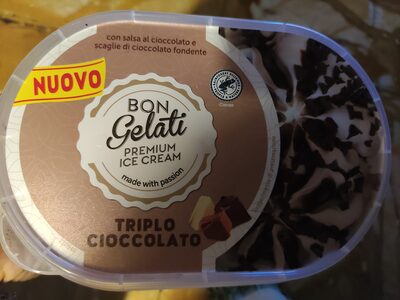
Bon Gelati Triple Chocolate comes in a 900 ml pack. It is sold under the Bon Gelati brand. On Mamori it sits under Frozen › Ice Cream and Desserts › Ice Cream. Its label lists 38 ingredients.
Bon Gelati Triple Chocolate at a glance
Bon Gelati Triple Chocolate fits Vegetarian and Pescatarian diets. It also carries the Crustaceans Free, Fish Free, Celery Free, Mustard Free, Sesame Free, Sulfite Free, Lupin Free, Mollusks Free, Beef Free, Citrus Fruit Free, Gelatin Free, Latex Free, Oats Free, Pork Free, Rye Free and Wheat Free badges. Nutrition-wise, it's Low Salt/Sodium, Low Protein, High Carbs, High Saturated Fat, High in Sugars, Medium in Fiber and Medium in Calories. Worth knowing: it's marked Non-Vegan, Non-Low FODMAP, Non-Vegan + Dairy, Non-Vegan + Eggs, Contains Dairy, Contains Additives, Contains Artificial Flavourings, Contains Barley, Contains Corn, Contains Emulsifier, Contains Fructose, Lactose, Contains Added Sugars, Contains Poultry, Contains Rice and Contains Seed.
Diet and allergens
Suitable for vegetarian and pescatarian diets.
Not suitable for a vegan diet.
Contains milk.
Free from crustaceans, fish, celery, mustard, sesame, sulphites, lupin and molluscs.
May contain: cereals containing gluten, eggs, soy, nuts, peanuts.
Based on Mamori's check of the ingredients on the label. Recipes change, so always read the pack if you have an allergy or intolerance.
Size: 900 ml
Last updated 2 November 2026
Ingredients
skimmed milk, sugar, water, glucose-fructose syrup, whey, coconut fat, dextrose, white chocolate, sugar, cocoa butter, whole milk powder, skimmed milk powder, clarified butter, emulsifiers, lecithins, polyglycerol polyricinoleate, flavoring, low-fat cocoa, cocoa mass, glucose syrup, milk chocolate, sugar, cocoa butter, whole milk powder, cocoa mass, emulsifier: lecithins, emulsifiers, mono- and diglycerides of fatty acids, lecithins, modified starch, cocoa butter, stabilizers, locust bean gum, guar gum, acidifier: lactic acid, carrot concentrate, salt, natural flavoring
Additives & flavourings
Additives
- E322: Lecithins: Generally safe
Lecithins (E322) are a group of natural fatty substances found in plants and animals. Food-grade lecithin is usually made from soya, sunflower, rapeseed or egg, and in some cases may be animal derived.
They are mainly used as emulsifiers, helping oil and water mix and keeping textures smooth. They are found in foods such as chocolate, spreads, baked goods, sauces, margarines and instant powders.
Lecithins are generally considered safe at normal food amounts and are allowed in the EU after safety assessment. People with relevant allergies should note the source, especially soya or egg.
- E476: Polyglycerol Polyricinoleate: Generally safe
Polyglycerol polyricinoleate (E476), often shortened to PGPR, is an emulsifier made from polyglycerol and fatty acids from castor oil. It is a specialised fat-like substance used in small amounts.
It helps mix ingredients that do not normally blend well, especially fat and water-based parts. It is commonly used in chocolate and cocoa products to improve flow, and can also be used in some spreads, sauces, and similar processed foods.
E476 is generally considered safe. It is authorised for use in food in the EU after EFSA safety assessment, and the sources checked raise no concern at normal amounts.
- E471: Mono- And Diglycerides Of Fatty Acids (Glyceryl Monostearate, Glyceryl Distearate): Generally safe
Mono- and diglycerides of fatty acids, or E471, are emulsifiers made from glycerol and fatty acids. The fatty acids can come from vegetable oils or animal fats, so the source is not always clear unless stated by the producer.
They help oil and water mix, improve texture, and keep foods stable. They are often used in baked goods, spreads, desserts, ice cream, sauces, and processed foods where a smooth or consistent texture is needed.
E471 is generally considered safe. It is allowed in food in the EU after safety assessment, and the sources we check raise no concern at normal amounts.
- E1401: Modified Starch ((Acid-Treated Starch) Stabiliser): Generally safe
Acid-treated starch, often labelled E1401 in some systems, is a modified starch. It is made by treating ordinary starch from plants such as maize, potato or wheat with acid to change how it behaves in food.
It helps thicken, stabilise or improve texture, especially where a smooth, consistent result is needed. Modified starches are used in foods such as sauces, soups, desserts, fillings and processed meals.
It is generally considered safe. Under EU law, acid-treated starch is not classed as a food additive; it is treated as a food ingredient instead.
- E410: Locust Bean Gum (Carob Gum) (Thickener) (Stabiliser) (Gelling Agent): Generally safe
Locust bean gum, or E410, is a natural gum made from the seeds of the carob tree. It is a type of soluble fibre and is also known as carob gum.
It is used to thicken, stabilise, and help give foods a smooth or gel-like texture. You may find it in products such as ice cream, dairy desserts, sauces, dressings, bakery fillings, and some processed foods.
It is generally considered safe at normal food-use amounts. It is allowed in the EU after EFSA safety assessment, and the sources checked raise no specific concern for typical dietary exposure.
- E412: Guar Gum (Thickener): Generally safe
Guar gum (E412) is a thickening fibre made from the seeds of the guar plant, a type of legume. It is a natural polysaccharide, meaning a long-chain carbohydrate that absorbs water easily.
It is used to thicken, stabilise or improve texture in foods such as sauces, dressings, dairy products, ice cream, gluten-free baked goods and processed foods. It can also help stop ingredients from separating.
Guar gum is generally considered safe at normal food amounts. It is allowed in food in the EU after safety assessment, and the sources checked raise no concern for typical use.
- E270: Lactic Acid (Preservative): Generally safe
Lactic acid (E270) is an organic acid found naturally in many foods and also made by fermenting sugars, often using bacteria. It is the same type of acid produced in foods such as yoghurt and fermented vegetables.
In food, it is used mainly as an acidity regulator and preservative, helping control pH and slow the growth of some microbes. It may be found in fermented foods, pickled products, drinks, sauces, confectionery and bakery products.
It is generally considered safe. It is allowed in food in the EU after safety assessment, and the sources checked raise no concern at normal amounts.
Flavourings
- flavoring: Flavouring (Regulation (EC) No 1334/2008 on flavourings, Article 16).
- natural flavoring: Natural flavouring (Regulation (EC) No 1334/2008 on flavourings, Article 16).
Questions and answers
Is Bon Gelati Triple Chocolate vegan?
No. It contains milk, so it is not suitable for a vegan diet.
Is Bon Gelati Triple Chocolate vegetarian?
Yes. It is suitable for a vegetarian diet.
Is Bon Gelati Triple Chocolate suitable for a pescatarian diet?
Yes. It is suitable for a pescatarian diet.
Is Bon Gelati Triple Chocolate suitable for a Low FODMAP diet?
No. It is not suitable for a Low FODMAP diet.
Is Bon Gelati Triple Chocolate suitable for a Vegan + Dairy diet?
No. It is not suitable for a Vegan + Dairy diet.
Is Bon Gelati Triple Chocolate suitable for a Vegan + Eggs diet?
No. It is not suitable for a Vegan + Eggs diet.
Does Bon Gelati Triple Chocolate contain milk?
Yes. It contains milk.
Which allergens does Bon Gelati Triple Chocolate contain?
It contains milk. Its label also says it may contain: cereals containing gluten, eggs, soy, nuts, peanuts.
More in Ice Cream
- Lidl Premium Ici Cream
- Algida Cornetto
- Algida Cucciolone
- Conad Mini stick
- Gelatelli Cones with fresh cream
- Bon Gelati Mini Mix Classic
- Gelatelli FAVOURITE'S MIX
- Bon Gelati Cocoa & Vanilla Flavour Ice Cream
- Gelatelli PROTEIN ICE BAR COCONUT FLAVOR
- Perugina Kisses Ice Cream
- Plant Based Gelato
- Eurospin 9 mixed gelatos