
Maypole Traditional Timpana 1 Kg
Maypole
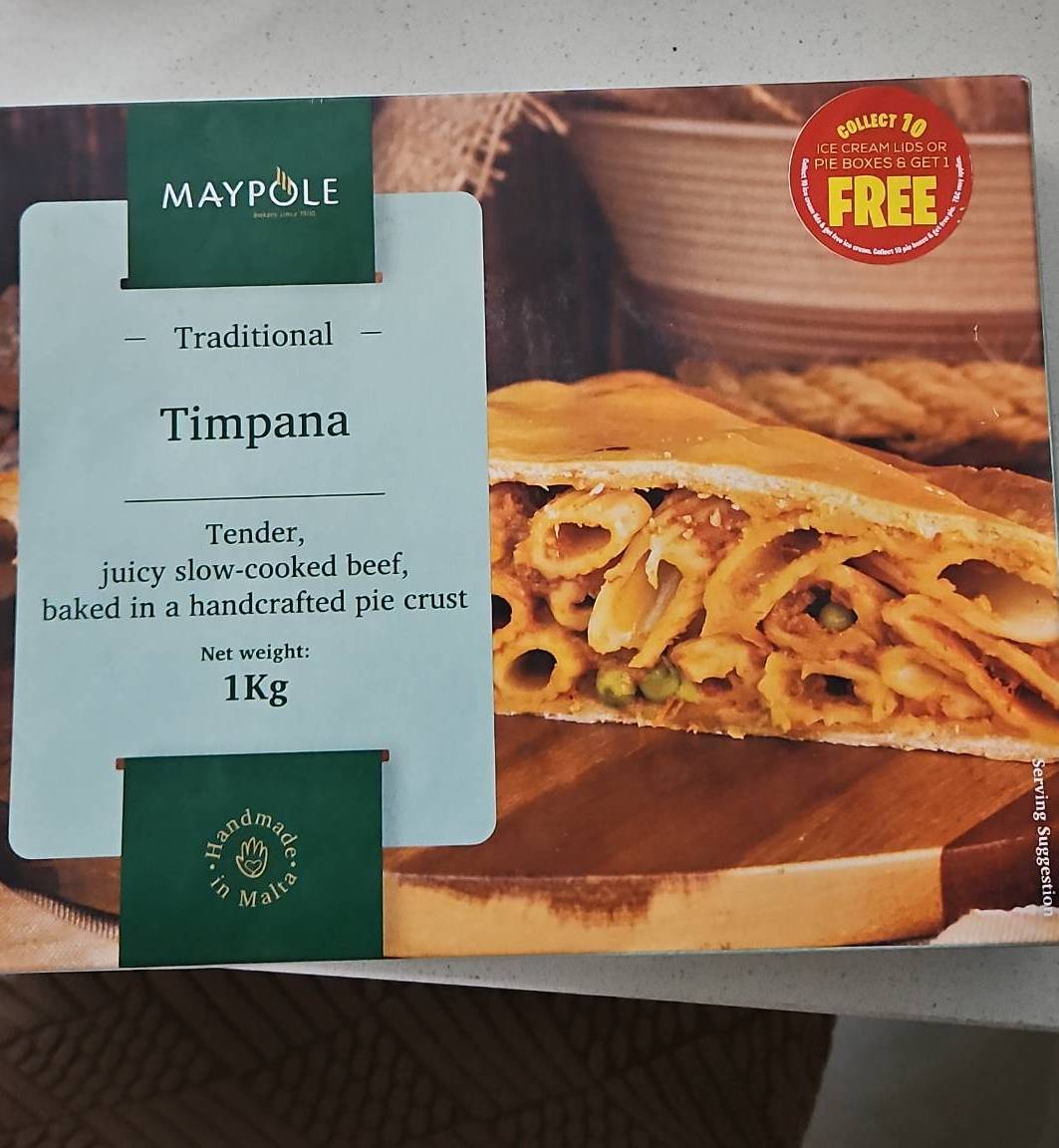
Maypole Traditional Timpana comes in a 1 Kg pack. It is sold under the Maypole brand. On Mamori it sits under Frozen › Frozen Pasta & Rice › Frozen Ready Meals. Its label lists 37 ingredients.
Maypole Traditional Timpana at a glance
Maypole Traditional Timpana carries the Citrus Fruit Free, Gelatin Free, Latex Free, Oats Free, Pork Free and Rice Free badges. Nutrition-wise, it's Low Sugars, High Saturated Fat, Medium in Fiber, Medium in Protein, Medium in Calories, Medium Carbs and Medium Salt/Sodium. Worth knowing: it's marked Non-Vegan, Non-Vegetarian, Non-Pescatarian, Non-Low FODMAP, Non-Vegan + Dairy, Non-Vegan + Eggs, Contains Gluten, Contains Egg, Contains Soy, Contains Dairy, Contains Celery, Contains Sesame, Contains Additives, Contains Artificial Flavourings, Contains Barley, Contains Beef, Contains Corn, Contains Emulsifier, Contains Fructose, Lactose, Contains Added Sugars, Contains Poultry, Contains Rye, Contains Seed and Contains Wheat.
Diet and allergens
Not suitable for vegan, vegetarian or pescatarian diets.
Contains gluten, eggs, soy, milk, celery and sesame.
May contain: gluten, eggs, milk, tree nuts, peanuts, soya, lupin, celery, sesame seeds, fish, molluscs, crustaceans, mustard, sulphites.
Based on Mamori's check of the ingredients on the label. Recipes change, so always read the pack if you have an allergy or intolerance.
Size: 1 Kg
Last updated 2 November 2026
Ingredients
wheat flour, vegetable fats: palm, oil: sunflower oil, water, tomatoes, eggs, milk, beef, vegetables, peas, onions, carrots, garlic, celery, cheese, red wine, sugar, salt, vinegar, herbs and spices, soy protein, yeast extracts, seasonings, sesame seeds, emulsifiers, E322: sunflower lecithin, E471, acidity regulators, E260, E330, preservative: E202, flavour enhancer: E621, flavourings, colours, E150c, E150d, E160a
Additives & flavourings
Additives
- E322: Lecithins: Generally safe
Lecithins (E322) are a group of natural fatty substances found in plants and animals. Food-grade lecithin is usually made from soya, sunflower, rapeseed or egg, and in some cases may be animal derived.
They are mainly used as emulsifiers, helping oil and water mix and keeping textures smooth. They are found in foods such as chocolate, spreads, baked goods, sauces, margarines and instant powders.
Lecithins are generally considered safe at normal food amounts and are allowed in the EU after safety assessment. People with relevant allergies should note the source, especially soya or egg.
- E471: Mono- And Diglycerides Of Fatty Acids (Glyceryl Monostearate, Glyceryl Distearate): Generally safe
Mono- and diglycerides of fatty acids, or E471, are emulsifiers made from glycerol and fatty acids. The fatty acids can come from vegetable oils or animal fats, so the source is not always clear unless stated by the producer.
They help oil and water mix, improve texture, and keep foods stable. They are often used in baked goods, spreads, desserts, ice cream, sauces, and processed foods where a smooth or consistent texture is needed.
E471 is generally considered safe. It is allowed in food in the EU after safety assessment, and the sources we check raise no concern at normal amounts.
- E260: Acetic Acid (Preservative): Generally safe
Acetic acid (E260) is the main acid in vinegar. It is a simple organic acid, usually made by fermentation of sugars or alcohol, or produced industrially to food-grade standards.
It is used as a preservative and acidity regulator. It helps give foods a sharp, sour taste and can slow the growth of some microbes. It is found in vinegar, pickles, sauces, dressings, marinades and some preserved foods.
It is generally considered safe at normal food amounts. It is authorised for use in foods in the EU after safety assessment, and the sources checked raise no specific concern for typical dietary exposure.
- E330: Citric Acid: Generally safe
Citric acid (E330) is a natural organic acid found in citrus fruits and many other plants. The citric acid used in food is usually made by fermentation of sugars using micro-organisms.
It is used as an acidity regulator and antioxidant. It helps give a sharp, sour taste, control pH, and slow colour or flavour changes. It is common in soft drinks, sweets, jams, sauces, canned foods, and many processed foods.
Citric acid is generally considered safe at normal food levels. It is allowed in food in the EU after safety assessment, and the sources checked raise no concern for typical dietary amounts.
- E202: Potassium Sorbate: Some concerns
Potassium sorbate (E202) is the potassium salt of sorbic acid. It is a preservative used to slow the growth of moulds and yeasts in food and drink.
It is often used in products where spoilage by yeasts or moulds is a concern, such as sauces, bakery fillings, cheese products, fruit preparations, drinks and some processed foods.
It is allowed in food, but some concerns have been raised. EFSA found that people who eat a lot of foods containing sorbates could go over the safe daily amount, so overall exposure is the main issue.
- E621: monosodium glutamate: Some concerns
Monosodium glutamate, or MSG (E621), is the sodium salt of glutamic acid, an amino acid found naturally in many foods. It is made as a purified flavour enhancer.
It boosts savoury “umami” taste and is used in foods such as soups, sauces, seasonings, savoury snacks, ready meals and processed meat or vegetable dishes.
It is allowed in food, but some concerns have been raised. EFSA found that people who eat a lot of foods containing glutamates can go over the safe daily amount, so exposure may be high for frequent consumers.
- E150C: Ammonia Caramel (E150c): Some concerns
Ammonia caramel (E150c) is a brown food colour made by heating sugars with ammonia compounds. It is one of the caramel colours, used to give foods and drinks a darker brown appearance.
It is used in products such as soft drinks, sauces, soups, baked goods, confectionery and some processed savoury foods, where a stable brown colour is needed.
It is allowed in food, but some concerns have been raised. A by-product that can form during manufacture, 4-methylimidazole, is classed by IARC as possibly causing cancer, and EFSA has found that people with high intakes of caramel colours may exceed the safe daily amount.
- E150D: Sulfite Ammonia Caramel (E150d): Some concerns
Sulphite ammonia caramel (E150d) is a dark brown food colour. It is a type of caramel colour made by heating sugars with sulphite and ammonia compounds, producing a stable colouring mixture rather than a flavour caramel.
It is used to give foods and drinks a brown colour and to keep colour consistent. It is commonly found in cola-style soft drinks, sauces, soups, beers, vinegars, and some processed savoury foods.
It is allowed for use, but some concerns have been raised because 4-methylimidazole, a by-product that can form when making these caramel colours, is classed by IARC as possibly causing cancer (Group 2B).
- E160a: Carotenes: Generally safe
Carotenes (E160a) are orange-yellow colourants, including alpha-carotene, beta-carotene and gamma-carotene. They are pigments found naturally in plants such as carrots and leafy greens, and can also be made synthetically or obtained from natural sources. Some forms may be animal derived.
They are used to add or restore yellow to orange colour in foods. They may be found in products such as margarines, dairy products, desserts, sauces, drinks and confectionery.
E160a is allowed in food in the EU after safety assessment. It is generally considered safe at normal food amounts, and the sources checked raise no concern for typical use.
Flavourings
- flavourings: Flavouring (Regulation (EC) No 1334/2008 on flavourings, Article 16).
Questions and answers
Is Maypole Traditional Timpana vegan?
No. It contains eggs and milk, so it is not suitable for a vegan diet.
Is Maypole Traditional Timpana vegetarian?
No. It is not suitable for a vegetarian diet.
Is Maypole Traditional Timpana suitable for a pescatarian diet?
No. It is not suitable for a pescatarian diet.
Is Maypole Traditional Timpana suitable for a Low FODMAP diet?
No. It is not suitable for a Low FODMAP diet.
Is Maypole Traditional Timpana suitable for a Vegan + Dairy diet?
No. It is not suitable for a Vegan + Dairy diet.
Is Maypole Traditional Timpana suitable for a Vegan + Eggs diet?
No. It is not suitable for a Vegan + Eggs diet.
Is Maypole Traditional Timpana gluten-free?
No. It contains gluten.
Does Maypole Traditional Timpana contain milk?
Yes. It contains milk.
Does Maypole Traditional Timpana contain eggs?
Yes. It contains eggs.
Which allergens does Maypole Traditional Timpana contain?
It contains gluten, eggs, soy, milk, celery and sesame. Its label also says it may contain: gluten, eggs, milk, tree nuts, peanuts, soya, lupin, celery, sesame seeds, fish, molluscs, crustaceans, mustard, sulphites.
More in Frozen Ready Meals
- Vegan no beef pasties
- Chef Select Paella
- Maypole Beef & Pie
- Cassegrain Ratatouille Cooked Provençal Style
- Pukka Pies Export All Steak Pie
- Happy Boy Wonton pastry
- Waistnot Chicken Masala With Rice
- Waistnot Chicken Biryani With Rice
- Waistnot Beef Biryani With Rice
- Findus Creamy Pumpkin and Carrots
- Findus Creamy Protein
- Birds Eye Bird's Eye Cottage Pie