
Thomson & Scott Noughty Rose Non Alcoholic 750 ml
Thomson & Scott Noughty
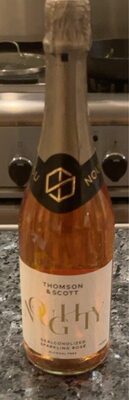
Thomson & Scott Noughty Rose Non Alcoholic comes in a 750 ml pack. It is sold under the Thomson & Scott Noughty brand. On Mamori it sits under Alcoholic Beverages › Wines › Sparkling Wine. Its label lists 11 ingredients.
Thomson & Scott Noughty Rose Non Alcoholic at a glance
Thomson & Scott Noughty Rose Non Alcoholic fits Vegan, Vegetarian, Pescatarian, Vegan + Dairy and Vegan + Eggs diets. It also carries the Gluten Free, Crustaceans Free, Egg Free, Fish Free, Peanut Free, Soy Free, Dairy Free, Tree Nut Free, Celery Free, Mustard Free, Sesame Free, Sulfite Free, Lupin Free, Mollusks Free, Barley Free, Beef Free, Citrus Fruit Free, Emulsifier Free, Gelatin Free, Lactose Free, Latex Free, Oats Free, Pork Free, Poultry Free, Rice Free, Rye Free, Seed Free and Wheat Free badges. Nutrition-wise, it's Low Calorie, Low Salt/Sodium, Low Saturated Fat, Low Fiber, Low Protein, Medium Carbs and Medium in Sugars. Worth knowing: it's marked Non-Low FODMAP, Contains Additives, Contains Artificial Flavourings, Contains Corn, Contains Fructose and Contains Added Sugars.
Diet and allergens
Suitable for vegan, vegetarian and pescatarian diets.
Free from all 14 major allergens: gluten, crustaceans, eggs, fish, peanuts, soy, milk, tree nuts, celery, mustard, sesame, sulphites, lupin and molluscs.
Based on Mamori's check of the ingredients on the label. Recipes change, so always read the pack if you have an allergy or intolerance.
Size: 750 ml
Last updated 17 August 2026
Ingredients
infusion of yeast, concentrated musts, natural aromas of rose, acidifier, lactic acid, citric acid, antioxidant, ascorbic acid, food coloring, anthocyanins, carbon dioxide
Additives & flavourings
Additives
- E270: Lactic Acid (Preservative): Generally safe
Lactic acid (E270) is an organic acid found naturally in many foods and also made by fermenting sugars, often using bacteria. It is the same type of acid produced in foods such as yoghurt and fermented vegetables.
In food, it is used mainly as an acidity regulator and preservative, helping control pH and slow the growth of some microbes. It may be found in fermented foods, pickled products, drinks, sauces, confectionery and bakery products.
It is generally considered safe. It is allowed in food in the EU after safety assessment, and the sources checked raise no concern at normal amounts.
- E330: Citric Acid: Generally safe
Citric acid (E330) is a natural organic acid found in citrus fruits and many other plants. The citric acid used in food is usually made by fermentation of sugars using micro-organisms.
It is used as an acidity regulator and antioxidant. It helps give a sharp, sour taste, control pH, and slow colour or flavour changes. It is common in soft drinks, sweets, jams, sauces, canned foods, and many processed foods.
Citric acid is generally considered safe at normal food levels. It is allowed in food in the EU after safety assessment, and the sources checked raise no concern for typical dietary amounts.
- E324: Ethoxyquin: Not allowed in the EU (Regulation (EC) No 1333/2008, Article 4(1) and Annex II)
Ethoxyquin (E324) is a synthetic antioxidant. It is not a vitamin-type antioxidant, but a manufactured chemical used to slow down oxidation, especially in fats and oils.
In food, antioxidants help prevent rancidity, colour changes, and loss of quality during storage. Ethoxyquin has mainly been used in animal feed and some preserved ingredients where fats need protection, rather than in a wide range of everyday foods.
Safety is treated through legal limits rather than a simple “safe or unsafe” label here. Ethoxyquin is allowed in the EU within set limits, which are intended to control how much can be present in foods or feed.
- E300: Ascorbic Acid (Vitamin C): Generally safe
Ascorbic acid (E300) is vitamin C, a water-soluble substance found naturally in many fruits and vegetables. As a food additive, it is usually made by controlled industrial production and used in purified form.
It helps prevent oxidation, which can stop foods from browning or developing off-flavours. It can also adjust acidity. It is used in a range of foods, especially fruit products, drinks, bakery products, meat products and foods where colour or freshness needs protecting.
It is generally considered safe at normal food amounts. It is authorised for use in the EU after safety assessment, and EFSA’s re-evaluation did not raise concern for its use as a food additive.
- E142: Green S: Some concerns
Green S (E142) is a synthetic green food colour. It is a water-soluble dye, rather than a colour made from plants, and is used to give foods a bright green shade.
It is used where a stable green colour is wanted, for example in some sweets, desserts, ice creams, sauces, drinks, and decorated foods. Its role is only to add colour; it does not preserve or sweeten food.
It is allowed for use, but some concerns have been raised. EFSA found that people who eat a lot of foods containing Green S could go over the safe daily intake, so overall exposure is the main issue.
- E163: Anthocyanins: Generally safe
Anthocyanins (E163) are natural red, purple and blue colourants. They are pigments found in plants, especially in fruits and vegetables such as berries, grapes, red cabbage and black carrots.
In food, E163 is used to add or restore red to purple shades. It can be found in products such as sweets, drinks, desserts, jams and some processed foods where a plant-based colour is needed.
Anthocyanins are generally considered safe at normal food-use levels. They are allowed in food in the EU after EFSA safety assessment, and the sources checked raise no concern at typical amounts.
- E290: Carbon Dioxide: Generally safe
Carbon dioxide (E290) is a colourless gas that occurs naturally in the air and is also produced by fermentation and respiration. For food use, it is the same simple gas substance, used in controlled amounts.
It is best known for adding bubbles to fizzy drinks, but it can also help protect packaged foods by displacing oxygen, which can slow spoilage. It may be used in drinks, modified-atmosphere packaging, and some chilled or packaged foods.
Carbon dioxide is generally considered safe at normal food-use levels. It is allowed in food in the EU after safety assessment, and the sources checked raise no concern at typical amounts.
Flavourings
- natural aromas of rose: Natural flavouring (Regulation (EC) No 1334/2008 on flavourings, Article 16).
Questions and answers
Is Thomson & Scott Noughty Rose Non Alcoholic vegan?
Yes. It is suitable for a vegan diet.
Is Thomson & Scott Noughty Rose Non Alcoholic vegetarian?
Yes. It is suitable for a vegetarian diet.
Is Thomson & Scott Noughty Rose Non Alcoholic suitable for a pescatarian diet?
Yes. It is suitable for a pescatarian diet.
Is Thomson & Scott Noughty Rose Non Alcoholic suitable for a Low FODMAP diet?
No. It is not suitable for a Low FODMAP diet.
Is Thomson & Scott Noughty Rose Non Alcoholic suitable for a Vegan + Dairy diet?
Yes. It is suitable for a Vegan + Dairy diet.
Is Thomson & Scott Noughty Rose Non Alcoholic suitable for a Vegan + Eggs diet?
Yes. It is suitable for a Vegan + Eggs diet.
Is Thomson & Scott Noughty Rose Non Alcoholic gluten-free?
Yes. Its ingredients include no gluten, and its label gives no gluten warning.
Does Thomson & Scott Noughty Rose Non Alcoholic contain milk?
No. Its ingredients include no milk, and its label gives no milk warning.
Is Thomson & Scott Noughty Rose Non Alcoholic nut-free?
Yes. Its ingredients include no peanuts or tree nuts, and its label gives no nut warning.
Does Thomson & Scott Noughty Rose Non Alcoholic contain eggs?
No. Its ingredients include no eggs, and its label gives no egg warning.
More in Sparkling Wine
- Chandon Garden Spritz
- Vicente Gandia Zero Coma Sparkling Zero Alcohol
- Simonsig Cape Sparkle
- Zonin Prosecco Cuvee 1821
- Zonin Prosecco Rose
- Moet & Chandon Champagne 1.50 Ltr
- Mionetto Prestige Prosecco Organic Extra Dry
- Martini Asti 1863
- G.H. Mumm Rose Brut In Box
- Charles Du Lac Semi-Dry
- Bolla Prosecco
- Martini Prosecco D.O.C.