
The Skinny Food Co Sauce Sweet Chilli Gluten Free 425 ml
The Skinny Food Co
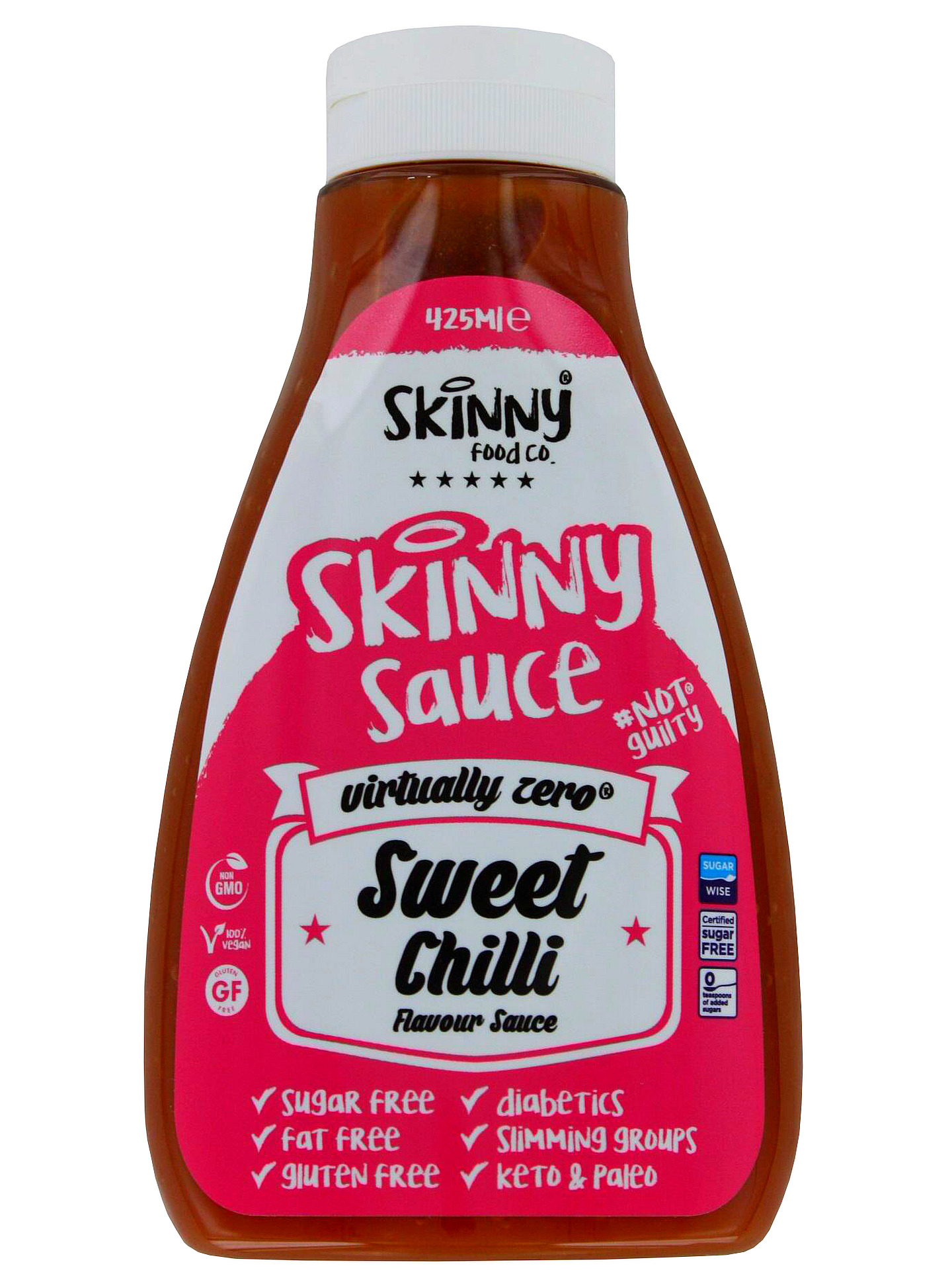
The Skinny Food Co Sauce Sweet Chilli Gluten Free comes in a 425 ml pack. It is sold under the The Skinny Food Co brand. On Mamori it sits under Groceries › Condiments › Sweet & Sour Sauce. Its label lists 30 ingredients.
The Skinny Food Co Sauce Sweet Chilli Gluten Free at a glance
The Skinny Food Co Sauce Sweet Chilli Gluten Free fits Vegan, Vegetarian and Pescatarian diets. It also carries the Lupin Free, Mollusks Free, Beef Free, Gelatin Free, Latex Free, Oats Free, Pork Free, Poultry Free and Rice Free badges. Nutrition-wise, it's Low Calorie, Low Carbs, Low Saturated Fat, Low Sugars, Low Fiber, Low Protein and High Salt/Sodium. Worth knowing: it's marked Non-Low FODMAP, Non-Vegan + Dairy, Non-Vegan + Eggs, Contains Celery, Contains Mustard, Contains Additives, Contains Artificial Flavourings, Contains Barley, Contains Citrus Fruit, Contains Corn, Contains Emulsifier, Contains Fructose, Lactose, Contains Added Sugars, Contains Rye, Contains Seed and Contains Wheat.
Diet and allergens
Suitable for vegan, vegetarian and pescatarian diets.
Contains celery and mustard.
Free from lupin and molluscs.
May contain: Milk, soy, Gluten, shellfish, Eggs, sesame seeds, Nuts.
Based on Mamori's check of the ingredients on the label. Recipes change, so always read the pack if you have an allergy or intolerance.
Size: 425 ml
Last updated 13 November 2026
Ingredients
Water, thickeners, sodium carboxy methyl cellulose, Xanthan Gum, flavouring, acid: lactic acid, sweetener: sucralose, preservatives, Potassium sorbate, Sodium Benzoate, Spirit Vinegar, wine vinegar, Acidity Regulator: Citric Acid, citrus fibre, tomato paste, Colour: Ammonia Caramel, salt, Srpska mustard, celery extract, extract from the fruit of black pepper, Colour: Carotenes, Onion Extract, concentrate, Carrot, blackcurrant, chilli powder, colour, Titanium dioxide, caramel E150d, curcumin extract
Additives & flavourings
Additives
- E468: Crosslinked Sodium Carboxymethyl Cellulose (Croscarmellose): Generally safe
Cross-linked sodium carboxymethyl cellulose, also called croscarmellose or E468, is a modified cellulose gum. It is made from cellulose, the main structural material in plant cell walls, which is chemically altered and cross-linked so it swells in water but does not dissolve easily.
In food, E468 is used as a thickener, stabiliser and emulsifier. It helps control texture, hold ingredients together, and keep mixtures even. Additives with this function may be used in processed foods where a stable or thicker texture is needed.
It is generally considered safe. E468 is authorised for use in food in the EU after safety assessment, and the sources checked raise no concern at normal amounts.
- E415: Xanthan Gum (Thickener): Generally safe
Xanthan gum (E415) is a thickening and stabilising gum made by fermenting sugars with the bacterium Xanthomonas campestris, then purifying and drying the resulting substance.
It helps foods hold water, thicken, and keep ingredients evenly mixed. It is often used in sauces, dressings, desserts, bakery products, gluten-free foods, and drinks where a smooth or stable texture is needed.
Xanthan gum is generally considered safe. It is allowed in food in the EU after EFSA assessment, and the sources checked do not raise concerns at normal amounts used in foods.
- E270: Lactic Acid (Preservative): Generally safe
Lactic acid (E270) is an organic acid found naturally in many foods and also made by fermenting sugars, often using bacteria. It is the same type of acid produced in foods such as yoghurt and fermented vegetables.
In food, it is used mainly as an acidity regulator and preservative, helping control pH and slow the growth of some microbes. It may be found in fermented foods, pickled products, drinks, sauces, confectionery and bakery products.
It is generally considered safe. It is allowed in food in the EU after safety assessment, and the sources checked raise no concern at normal amounts.
- E955: Sucralose (Trichlorogalactosucrose): Generally safe
Sucralose (E955), also called trichlorogalactosucrose, is an artificial high-intensity sweetener. It is made by chemically modifying sugar, which makes it taste very sweet while adding little or no energy in the small amounts used.
It is used to sweeten foods and drinks without using much sugar. You may find it in low-sugar or sugar-free drinks, desserts, yoghurts, chewing gum, tabletop sweeteners, and some special diet foods.
Sucralose is generally considered safe at normal amounts. It is authorised for use in the EU after safety assessment, and the sources checked raise no concern for typical food use.
- E202: Potassium Sorbate: Some concerns
Potassium sorbate (E202) is the potassium salt of sorbic acid. It is a preservative used to slow the growth of moulds and yeasts in food and drink.
It is often used in products where spoilage by yeasts or moulds is a concern, such as sauces, bakery fillings, cheese products, fruit preparations, drinks and some processed foods.
It is allowed in food, but some concerns have been raised. EFSA found that people who eat a lot of foods containing sorbates could go over the safe daily amount, so overall exposure is the main issue.
- E211: Sodium Benzoate: Some concerns
Sodium benzoate (E211) is the sodium salt of benzoic acid, a preservative. It is a manufactured form of a substance that also occurs naturally in small amounts in some fruits and spices.
It helps stop the growth of yeasts, moulds and some bacteria, especially in acidic foods and drinks. It is often used in soft drinks, fruit juices, pickles, sauces, dressings and some jams or preserves.
It is allowed in food, but some concerns have been raised. EFSA found that people who eat a lot of foods containing benzoates may exceed the safe daily amount, so overall intake can be an issue for high consumers.
- E330: Citric Acid: Generally safe
Citric acid (E330) is a natural organic acid found in citrus fruits and many other plants. The citric acid used in food is usually made by fermentation of sugars using micro-organisms.
It is used as an acidity regulator and antioxidant. It helps give a sharp, sour taste, control pH, and slow colour or flavour changes. It is common in soft drinks, sweets, jams, sauces, canned foods, and many processed foods.
Citric acid is generally considered safe at normal food levels. It is allowed in food in the EU after safety assessment, and the sources checked raise no concern for typical dietary amounts.
- E160a: Carotenes: Generally safe
Carotenes (E160a) are orange-yellow colourants, including alpha-carotene, beta-carotene and gamma-carotene. They are pigments found naturally in plants such as carrots and leafy greens, and can also be made synthetically or obtained from natural sources. Some forms may be animal derived.
They are used to add or restore yellow to orange colour in foods. They may be found in products such as margarines, dairy products, desserts, sauces, drinks and confectionery.
E160a is allowed in food in the EU after safety assessment. It is generally considered safe at normal food amounts, and the sources checked raise no concern for typical use.
- E171: Titanium Dioxide: Not allowed in the EU (Commission Regulation (EU) 2022/63)
Titanium dioxide, E171, is a white mineral-based colourant made from titanium and oxygen. It is a very fine, insoluble powder used to make foods look brighter or more opaque.
It has been used in products such as sweets, chewing gum, icing, bakery decorations and some sauces or processed foods, mainly to give a clean white colour.
Its safety status differs by region. In the EU, E171 is no longer authorised for use in food because regulators could not rule out concerns about possible effects on genetic material.
- E150D: Sulfite Ammonia Caramel (E150d): Some concerns
Sulphite ammonia caramel (E150d) is a dark brown food colour. It is a type of caramel colour made by heating sugars with sulphite and ammonia compounds, producing a stable colouring mixture rather than a flavour caramel.
It is used to give foods and drinks a brown colour and to keep colour consistent. It is commonly found in cola-style soft drinks, sauces, soups, beers, vinegars, and some processed savoury foods.
It is allowed for use, but some concerns have been raised because 4-methylimidazole, a by-product that can form when making these caramel colours, is classed by IARC as possibly causing cancer (Group 2B).
Flavourings
- flavouring: Flavouring (Regulation (EC) No 1334/2008 on flavourings, Article 16).
Questions and answers
Is The Skinny Food Co Sauce Sweet Chilli Gluten Free vegan?
Yes. It is suitable for a vegan diet.
Is The Skinny Food Co Sauce Sweet Chilli Gluten Free vegetarian?
Yes. It is suitable for a vegetarian diet.
Is The Skinny Food Co Sauce Sweet Chilli Gluten Free suitable for a pescatarian diet?
Yes. It is suitable for a pescatarian diet.
Is The Skinny Food Co Sauce Sweet Chilli Gluten Free suitable for a Low FODMAP diet?
No. It is not suitable for a Low FODMAP diet.
Is The Skinny Food Co Sauce Sweet Chilli Gluten Free suitable for a Vegan + Dairy diet?
No. It is not suitable for a Vegan + Dairy diet.
Is The Skinny Food Co Sauce Sweet Chilli Gluten Free suitable for a Vegan + Eggs diet?
No. It is not suitable for a Vegan + Eggs diet.
Which allergens does The Skinny Food Co Sauce Sweet Chilli Gluten Free contain?
It contains celery and mustard. Its label also says it may contain: Milk, soy, Gluten, shellfish, Eggs, sesame seeds, Nuts.
More in Sweet & Sour Sauce
- Bens Original Sweet & Sour sauce
- Ben's Orginal Ben's Original Sweet & Sour Extra Pineapple
- Ben's Orginal Ben's Original Sweet And Sour Sauce
- Bangbang Sriracha Chilli Sauce
- Tesco Sweet And Sour Sauce
- Colmans Bramley Apple Sauce
- Uncle Ben's Sweet & Sour No Added Sugar
- Uncle Ben's Sweet & Sour Sauce
- Sharwoods Sharwood's Sweet Chilli Sauce
- Desiam Thai Pineapple Sauce
- Blue Dragon Reduced Sugar Sweet Chilli Sauce
- Blue Dragon Mild Sweet Chilli Sauce