
Tgi Fridays Onion Rings Original 78 g
Tgi Fridays
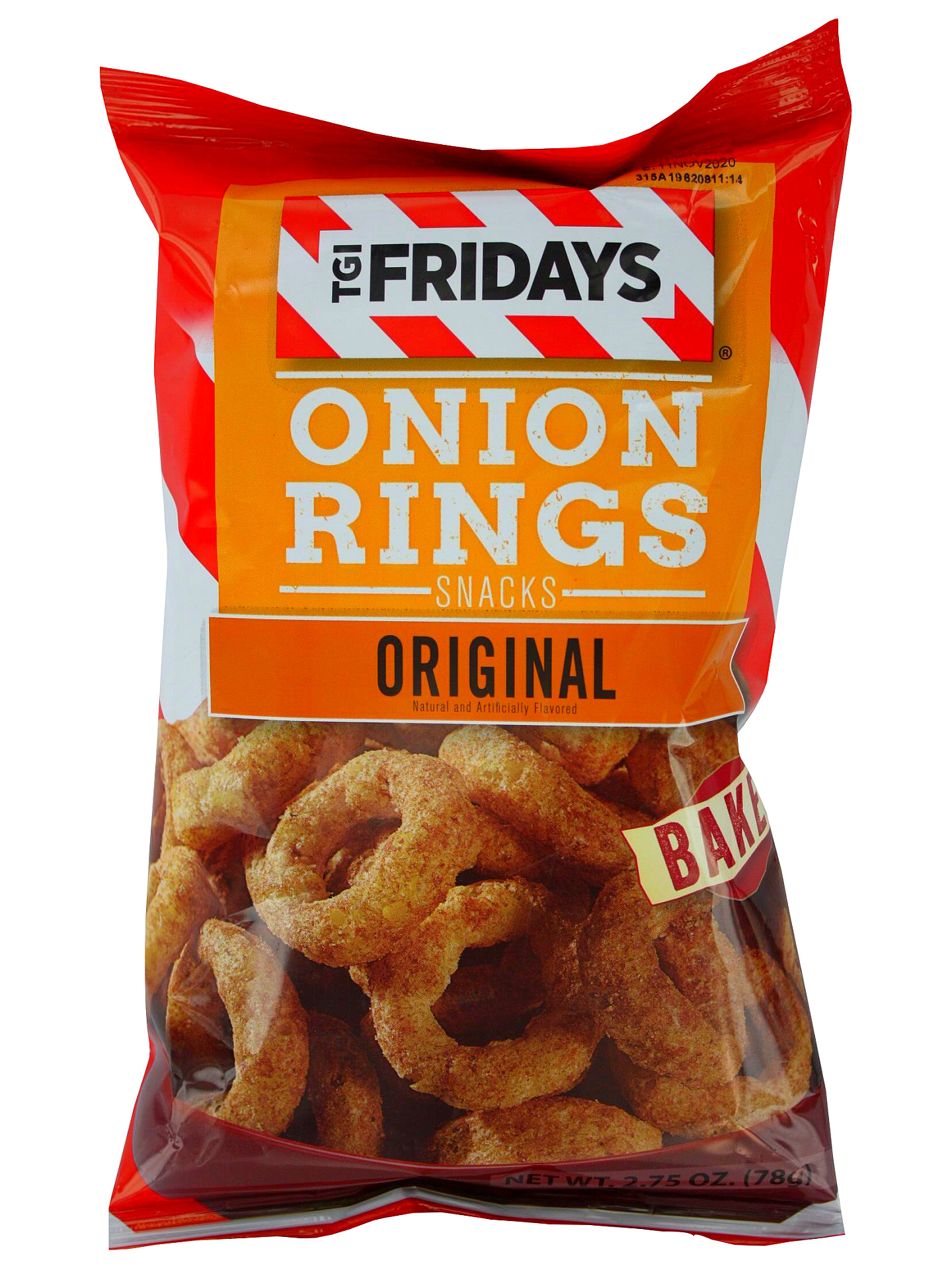
Tgi Fridays Onion Rings Original comes in a 78 g pack. It is sold under the Tgi Fridays brand. On Mamori it sits under Confectionery › Biscuits, Wafers & Cookies › Wafer. Its label lists 30 ingredients.
Tgi Fridays Onion Rings Original at a glance
Tgi Fridays Onion Rings Original carries the Gluten Free, Crustaceans Free, Egg Free, Fish Free, Peanut Free, Tree Nut Free, Celery Free, Mustard Free, Sesame Free, Lupin Free, Mollusks Free, Barley Free, Beef Free, Citrus Fruit Free, Fructose Free, Gelatin Free, Latex Free, Oats Free, Pork Free, Poultry Free and Rye Free badges. Nutrition-wise, it's Low Sugars, High Calorie, High Carbs, High Salt/Sodium, Medium in Fiber, Medium in Protein and Medium Saturated Fat. Worth knowing: it's marked Non-Vegan, Non-Vegetarian, Non-Pescatarian, Non-Low FODMAP, Non-Vegan + Dairy, Non-Vegan + Eggs, Contains Soy, Contains Dairy, Contains Additives, Contains Artificial Flavourings, Contains Corn, Contains Emulsifier, Lactose, Contains Added Sugars, Contains Rice, Contains Seed and Contains Wheat.
Diet and allergens
Not suitable for vegan, vegetarian or pescatarian diets.
Contains soy and milk.
Free from gluten, crustaceans, eggs, fish, peanuts, tree nuts, celery, mustard, sesame, lupin and molluscs.
Based on Mamori's check of the ingredients on the label. Recipes change, so always read the pack if you have an allergy or intolerance.
Size: 78 g
Last updated 2 November 2026
Ingredients
enriched cornmeal, corn, ferrous sulfate, niacin, Thiamine Mononitrate, Riboflavin, Folic Acid, soybean oil, Sunflower oil, minced onion, Rice flour, salt, whey, monosodium glutamate, Corn oil, Buttermilk Powder, Caramel Color, Natural flavors, corn syrup solids, Maltodextrin, sodium caseinate, Lactic Acid, disodium inosinate and disodium guanylate, yellow #5 lake, red #40 lake, turmeric extract: color, Canola oil, Artificial Flavor, BHT and propyl gallate: to help protect flavor, calcium carbonate
Additives & flavourings
Additives
- E621: monosodium glutamate: Some concerns
Monosodium glutamate, or MSG (E621), is the sodium salt of glutamic acid, an amino acid found naturally in many foods. It is made as a purified flavour enhancer.
It boosts savoury “umami” taste and is used in foods such as soups, sauces, seasonings, savoury snacks, ready meals and processed meat or vegetable dishes.
It is allowed in food, but some concerns have been raised. EFSA found that people who eat a lot of foods containing glutamates can go over the safe daily amount, so exposure may be high for frequent consumers.
- E150B: Caustic Sulfite Caramel (E150b): Generally safe
Caustic sulphite caramel (E150b) is a brown food colour. It is one of the caramel colours, made by heating sugars with sulphite compounds under controlled conditions, producing a dark colouring substance rather than a sweet caramel flavour.
It is used to give foods and drinks a consistent brown colour. Caramel colours are commonly used in products such as soft drinks, sauces, soups, gravies, baked goods and confectionery.
E150b is allowed in food in the EU after safety assessment. EFSA’s review of caramel colours found no risk of eating too much at normal dietary levels, so it is generally considered safe.
- E270: Lactic Acid (Preservative): Generally safe
Lactic acid (E270) is an organic acid found naturally in many foods and also made by fermenting sugars, often using bacteria. It is the same type of acid produced in foods such as yoghurt and fermented vegetables.
In food, it is used mainly as an acidity regulator and preservative, helping control pH and slow the growth of some microbes. It may be found in fermented foods, pickled products, drinks, sauces, confectionery and bakery products.
It is generally considered safe. It is allowed in food in the EU after safety assessment, and the sources checked raise no concern at normal amounts.
- E631: Disodium Inosinate: Generally safe
Disodium inosinate, or E631, is a flavour enhancer. It is the sodium salt of inosinic acid, a substance related to naturally occurring compounds found in some foods. It can be made from animal or microbial sources, so it may not always be suitable for vegetarian or vegan diets.
It is used to boost savoury, “umami” flavours, often together with glutamates such as MSG. It may be found in snack foods, seasoning mixes, instant noodles, soups, sauces and processed savoury foods.
It is allowed in food in the EU after safety assessment, and is generally considered safe at normal amounts used in foods. The sources checked raise no specific concern for typical dietary exposure.
- E102: Tartrazine (Fd&C Yellow 5): Some concerns
Tartrazine (E102), also called FD&C Yellow 5, is a synthetic yellow azo dye. It is a man-made colourant used to give foods and drinks a bright yellow to orange shade.
It is found in some soft drinks, sweets, desserts, sauces, snacks, and other processed foods where a strong yellow colour is wanted.
It is permitted for use in food, but some concerns have been raised. In the EU, foods containing tartrazine must carry a warning that it “may have an adverse effect on activity and attention in children”.
- E128: Red 2G: Not allowed in the EU (Commission Regulation (EC) No 884/2007)
Red 2G, or E128, is a synthetic azo dye used to give food a red colour. It is not made from natural food sources.
It was mainly used in some meat products, especially sausages and burgers, where a stable red colour was wanted during processing or cooking.
Red 2G is not currently permitted for use as a food additive in the EU. The main safety concern is that it can break down into aniline, a substance considered potentially harmful, so its use has been withdrawn rather than managed by normal limits.
- E310: Propyl Gallate: Generally safe
Propyl gallate (E310) is a synthetic antioxidant. It is the propyl ester of gallic acid, a substance related to compounds found naturally in some plants.
It helps stop fats and oils from going rancid by slowing oxidation. It may be used in fatty foods and food ingredients such as oils, fats, chewing gum, snacks, and some processed potato products, where protection from oxidation is needed.
Propyl gallate is generally considered safe at normal food-use levels. It is authorised for use in the EU after EFSA safety assessment, and the sources checked raise no concern at typical amounts.
- E170: Calcium Carbonate, Chalk: Generally safe
Calcium carbonate (E170), also known as chalk, is a naturally occurring mineral made of calcium, carbon and oxygen. For food use it is purified, and it may come from sources such as limestone or shells.
It is mainly used as a white colourant, but it can also help with acidity control, anti-caking, or as a calcium source in some foods. It may be found in confectionery, chewing gum, bakery products, decorations and some supplements or fortified foods.
It is generally considered safe at normal food amounts. It is authorised for use in the EU after safety assessment, and the sources checked raise no concern for typical dietary exposure.
Flavourings
- Natural flavors: Natural flavouring (Regulation (EC) No 1334/2008 on flavourings, Article 16).
- Artificial Flavor: Flavouring (Regulation (EC) No 1334/2008 on flavourings, Article 16).
Questions and answers
Is Tgi Fridays Onion Rings Original vegan?
No. It contains milk, so it is not suitable for a vegan diet.
Is Tgi Fridays Onion Rings Original vegetarian?
No. It is not suitable for a vegetarian diet.
Is Tgi Fridays Onion Rings Original suitable for a pescatarian diet?
No. It is not suitable for a pescatarian diet.
Is Tgi Fridays Onion Rings Original suitable for a Low FODMAP diet?
No. It is not suitable for a Low FODMAP diet.
Is Tgi Fridays Onion Rings Original suitable for a Vegan + Dairy diet?
No. It is not suitable for a Vegan + Dairy diet.
Is Tgi Fridays Onion Rings Original suitable for a Vegan + Eggs diet?
No. It is not suitable for a Vegan + Eggs diet.
Is Tgi Fridays Onion Rings Original gluten-free?
Yes. Its ingredients include no gluten, and its label gives no gluten warning.
Does Tgi Fridays Onion Rings Original contain milk?
Yes. It contains milk.
Is Tgi Fridays Onion Rings Original nut-free?
Yes. Its ingredients include no peanuts or tree nuts, and its label gives no nut warning.
Does Tgi Fridays Onion Rings Original contain eggs?
No. Its ingredients include no eggs, and its label gives no egg warning.
Which allergens does Tgi Fridays Onion Rings Original contain?
It contains soy and milk.
More in Wafer
- Schär Maxi Break
- Loacker CLASSIC STRAWBERRY
- Lindt Choco Wafer Milk Chocolate & Hazelnut
- Florbú Gourmet Wafer Mix
- Crich Wafer with cocoa cream
- M&S Food Sugar Free Chocolate Mini Wafer Squares
- Delacre Croustifondant Vanilla Wafers Biscuits
- Delacre Smoked ham Canasta biscuits
- Gullón Chocolate Flavour Wafer
- Sondey Wafer with vanilla cream
- Spar Wafer
- Smart Organic Organic Vegan Wafer With Hazelnut Cream