
Tgi Fridays Jalapeno Poppers Cheese 99 g
Tgi Fridays
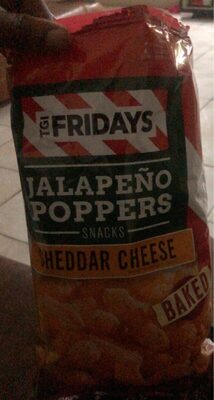
Tgi Fridays Jalapeno Poppers Cheese comes in a 99 g pack. It is sold under the Tgi Fridays brand. On Mamori it sits under Snacks › Snacks & Crisps › Veggie Snacks. Its label lists 74 ingredients.
Tgi Fridays Jalapeno Poppers Cheese at a glance
Tgi Fridays Jalapeno Poppers Cheese carries the Crustaceans Free, Peanut Free, Tree Nut Free, Celery Free, Mustard Free, Sesame Free, Lupin Free, Mollusks Free, Gelatin Free, Latex Free, Oats Free and Rye Free badges. Nutrition-wise, it's Low Saturated Fat, Low Sugars, Low Fiber, Low Protein, Medium in Calories, Medium Carbs and Medium Salt/Sodium. Worth knowing: it's marked Non-Vegan, Non-Vegetarian, Non-Pescatarian, Non-Low FODMAP, Non-Vegan + Dairy, Non-Vegan + Eggs, Contains Gluten, Contains Egg, Contains Soy, Contains Dairy, Contains Additives, Contains Artificial Flavourings, Contains Barley, Contains Beef, Contains Citrus Fruit, Contains Corn, Contains Emulsifier, Contains Fructose, Lactose, Contains Added Sugars, Contains Pork, Contains Poultry, Contains Rice, Contains Seed and Contains Wheat.
Diet and allergens
Not suitable for vegan, vegetarian or pescatarian diets.
Contains gluten, eggs, soy and milk.
Free from crustaceans, peanuts, tree nuts, celery, mustard, sesame, lupin and molluscs.
Based on Mamori's check of the ingredients on the label. Recipes change, so always read the pack if you have an allergy or intolerance.
Size: 99 g
Last updated 13 November 2026
Ingredients
Jalapeño Pepper, Water, Acetic acid, salt, Calcium Chloride, Sodium Benzoate, Water, Cheese Blend, Cheddar Cheese, Cultured Milk, salt, Enzymes, Water, milk protein concentrate, Canola oil, Enzyme Modified Cheese, Cultured Milk, Water, Milkfat, salt, Enzymes, sodium phosphate, sodium hexametaphosphate, salt, Lactic Acid, Sorbic acid, Apocarotenal, Wheat Flour, Bleached Wheat Flour, soybean oil, modified food starch, Cheese Powder, whey, modified food starch, Natural flavors, Cheddar Cheese, PASTEURIZED MILK, Cheese Cultures, salt, Enzymes, salt, cellulose gum, yeast extract, Butter, cream, salt, disodium phosphate, Guar Gum, spice, Lactic Acid, Mono & Diglycerides, buttermilk, nonfat milk, Annatto Extract, salt, sugar, Wheat Starch, Annatto Extract, Caramel Color, Oleoresin Paprika, yeast, yellow corn flour, dextrose, dried egg whites, Dried Garlic, Dried Onion, Leavening, sodium bicarbonate, sodium acid pyrophosphate, monocalcium phosphate, Nonfat Dry Milk, Sodium Alginate, spice extract, spices
Additives & flavourings
Additives
- E260: Acetic Acid (Preservative): Generally safe
Acetic acid (E260) is the main acid in vinegar. It is a simple organic acid, usually made by fermentation of sugars or alcohol, or produced industrially to food-grade standards.
It is used as a preservative and acidity regulator. It helps give foods a sharp, sour taste and can slow the growth of some microbes. It is found in vinegar, pickles, sauces, dressings, marinades and some preserved foods.
It is generally considered safe at normal food amounts. It is authorised for use in foods in the EU after safety assessment, and the sources checked raise no specific concern for typical dietary exposure.
- E509: Calcium Chloride (Sequestrant): Some concerns
Calcium chloride (E509) is a salt made from calcium and chloride. In food, it is used as an acidity regulator, firming agent, stabiliser, and anti-caking agent.
It can help keep fruit and vegetables firm, support cheese making, improve texture in tofu, and prevent powders or salts from clumping. It may also be used where control of acidity or mineral balance is needed.
It is allowed for use in food, but some concerns have been raised about high intakes. EFSA found that people who consume a lot of foods containing calcium chloride could exceed the safe daily amount.
- E211: Sodium Benzoate: Some concerns
Sodium benzoate (E211) is the sodium salt of benzoic acid, a preservative. It is a manufactured form of a substance that also occurs naturally in small amounts in some fruits and spices.
It helps stop the growth of yeasts, moulds and some bacteria, especially in acidic foods and drinks. It is often used in soft drinks, fruit juices, pickles, sauces, dressings and some jams or preserves.
It is allowed in food, but some concerns have been raised. EFSA found that people who eat a lot of foods containing benzoates may exceed the safe daily amount, so overall intake can be an issue for high consumers.
- E339: Sodium Phosphates (I) Monosodium Phosphate (Ii) Disodium Phosphate (Iii) Trisodium Phosphate: Some concerns
Sodium phosphates (E339) are salts of phosphoric acid and sodium. They include monosodium, disodium and trisodium phosphate, and are used as acidity regulators and antioxidants.
They help control acidity, keep mixtures stable, improve texture, and support moisture retention. They can be found in processed cheese, meat products, baked goods, powdered mixes and some drinks.
They are allowed in food, but some concerns have been raised. EFSA found that people who eat a lot of foods containing phosphate additives can exceed the safe daily amount, and people with kidney disease are usually advised to limit phosphate intake.
- E452: Polyphosphates (I) Sodium Polyphosphates (Ii) Potassium Polyphosphates (Iii) Sodium Calcium Polyphosphate (Iv) Calcium Polyphosphates (V) Ammonium Polyphosphate: Some concerns
Polyphosphates (E452) are phosphate salts, including sodium, potassium, sodium calcium, calcium and ammonium polyphosphates. They are made from phosphoric acid compounds and belong to the wider group of phosphate additives.
They help foods hold water, keep texture stable, emulsify mixtures and improve thickness. They are used in foods such as processed meat and fish products, cheese products, sauces, desserts and some bakery or potato products.
They are allowed in food, but some concerns have been raised. EFSA found that people who eat a lot of foods containing phosphate additives can exceed the safe daily amount, so exposure may be high for frequent consumers.
- E270: Lactic Acid (Preservative): Generally safe
Lactic acid (E270) is an organic acid found naturally in many foods and also made by fermenting sugars, often using bacteria. It is the same type of acid produced in foods such as yoghurt and fermented vegetables.
In food, it is used mainly as an acidity regulator and preservative, helping control pH and slow the growth of some microbes. It may be found in fermented foods, pickled products, drinks, sauces, confectionery and bakery products.
It is generally considered safe. It is allowed in food in the EU after safety assessment, and the sources checked raise no concern at normal amounts.
- E200: Sorbic Acid: Some concerns
Sorbic acid (E200) is a preservative. It is an organic acid, originally found in rowan berries, but usually made synthetically for food use. It is related to sorbates such as potassium sorbate.
It helps slow the growth of moulds and yeasts, helping foods keep for longer. It is used in a range of foods such as cheese, baked goods, sauces, fruit products, drinks and other foods where mould control is needed.
It is allowed in food, but some concerns have been raised. EFSA found that people who eat a lot of foods containing sorbic acid or sorbates can exceed the safe daily amount.
- E160a: Carotenes: Generally safe
Carotenes (E160a) are orange-yellow colourants, including alpha-carotene, beta-carotene and gamma-carotene. They are pigments found naturally in plants such as carrots and leafy greens, and can also be made synthetically or obtained from natural sources. Some forms may be animal derived.
They are used to add or restore yellow to orange colour in foods. They may be found in products such as margarines, dairy products, desserts, sauces, drinks and confectionery.
E160a is allowed in food in the EU after safety assessment. It is generally considered safe at normal food amounts, and the sources checked raise no concern for typical use.
- E466: Sodium Carboxy Methyl Cellulose, Cellulose Gum: Generally safe
Sodium carboxy methyl cellulose, also called cellulose gum or E466, is a modified cellulose. Cellulose is a natural fibre found in plant cell walls, and E466 is made by chemically changing it so it dissolves or disperses in water.
It is used as a thickener, stabiliser and emulsifier. It helps give foods a smooth texture, keep ingredients mixed, and control thickness. It can be found in products such as sauces, dressings, desserts, ice cream, baked goods and some reduced-fat foods.
E466 is generally considered safe. It is authorised for use in the EU after safety assessment, and the sources checked raise no concern at normal food amounts.
- E412: Guar Gum (Thickener): Generally safe
Guar gum (E412) is a thickening fibre made from the seeds of the guar plant, a type of legume. It is a natural polysaccharide, meaning a long-chain carbohydrate that absorbs water easily.
It is used to thicken, stabilise or improve texture in foods such as sauces, dressings, dairy products, ice cream, gluten-free baked goods and processed foods. It can also help stop ingredients from separating.
Guar gum is generally considered safe at normal food amounts. It is allowed in food in the EU after safety assessment, and the sources checked raise no concern for typical use.
- E488: Ethoxylated Mono- And Di-Glycerides: Not allowed in the EU (Regulation (EC) No 1333/2008, Article 4(1) and Annex II)
Ethoxylated mono- and di-glycerides, E488, are emulsifiers made by reacting edible fats or oils with ethylene oxide. They are modified glycerides, related to common fat-based emulsifiers.
They help water and oil mix, improve texture, and keep foods stable. They may be used where emulsifiers or stabilisers are needed, such as in some baked goods, dessert mixes, sauces, or processed foods.
E488 is allowed in the EU within set limits. It is not rated here, so this should be read as a neutral status rather than a specific safety concern or reassurance.
- E150B: Caustic Sulfite Caramel (E150b): Generally safe
Caustic sulphite caramel (E150b) is a brown food colour. It is one of the caramel colours, made by heating sugars with sulphite compounds under controlled conditions, producing a dark colouring substance rather than a sweet caramel flavour.
It is used to give foods and drinks a consistent brown colour. Caramel colours are commonly used in products such as soft drinks, sauces, soups, gravies, baked goods and confectionery.
E150b is allowed in food in the EU after safety assessment. EFSA’s review of caramel colours found no risk of eating too much at normal dietary levels, so it is generally considered safe.
- E500: Sodium Carbonates: (I) Sodium Carbonate (Ii) Sodium Bicarbonate (Sodium Hydrogen Carbonate) (Iii) Sodium Sesquicarbonate (Acidity Regulator): Generally safe
Sodium carbonates (E500) are a group of sodium salts, including sodium carbonate, sodium bicarbonate and sodium sesquicarbonate. The best-known is sodium bicarbonate, also called bicarbonate of soda.
They are used to control acidity, help baked goods rise by releasing carbon dioxide, and reduce clumping in some powdered foods. They can be found in baking powders, biscuits, cakes, self-raising flour, cocoa mixes and other dry food mixes.
E500 is generally considered safe. It is allowed in food in the EU after safety assessment, and the sources checked do not raise concerns at normal food amounts.
- E450: Diphosphates (I) Disodium Diphosphate (Ii) Trisodium Diphosphate (Iii) Tetrasodium Diphosphate (Iv) Dipotassium Diphosphate (V) Tetrapotassium Diphosphate (Vi) Dicalcium Diphosphate (Vii) Calcium Dihydrogen Diphosphate: Some concerns
Diphosphates (E450) are phosphate salts, including sodium, potassium and calcium diphosphates. They are mineral-based food additives used in several forms, such as disodium diphosphate and dicalcium diphosphate.
They help control acidity, improve texture, hold moisture, stabilise mixtures and support raising in baked goods. They may be found in processed meats, bakery products, cheese products, desserts, sauces and some powdered mixes.
They are allowed in food, but some concerns have been raised. EFSA found that people who eat a lot of foods containing phosphates can go over the safe daily amount, so high intake from many processed foods is the main issue.
- E341: Calcium Phosphates (I) Monocalcium Phosphate (Ii) Dicalcium Phosphate (Iii) Tricalcium Phosphate: Some concerns
Calcium phosphates (E341) are mineral salts of calcium and phosphate. The group includes monocalcium phosphate, dicalcium phosphate and tricalcium phosphate, and they are forms of the same nutrients found naturally in bones and teeth.
They are used to control acidity, help powders flow, support raising agents, and sometimes add calcium. They can be found in foods such as flour mixes, baked goods, powdered drinks, processed cheese, and some supplements or fortified foods.
They are allowed in food, but there are some concerns. EFSA found that people who eat a lot of foods containing phosphate additives can exceed the safe daily amount, and people with kidney disease are often advised to limit phosphate intake.
- E401: Sodium Alginate (Thickener) (Stabiliser) (Gelling Agent): Generally safe
Sodium alginate (E401) is the sodium salt of alginic acid, a natural substance extracted from brown seaweed. It is a type of soluble fibre and is used as a thickener, stabiliser and gelling agent.
In food, it helps liquids become thicker, keeps mixtures smooth, and can form gels. It may be used in sauces, desserts, ice cream, processed cheese, fillings and other foods where texture and stability are needed.
It is generally considered safe. It is allowed in food in the EU after EFSA safety assessment, and the sources checked raise no concern at normal amounts.
Flavourings
- Natural flavors: Natural flavouring (Regulation (EC) No 1334/2008 on flavourings, Article 16).
Questions and answers
Is Tgi Fridays Jalapeno Poppers Cheese vegan?
No. It contains eggs and milk, so it is not suitable for a vegan diet.
Is Tgi Fridays Jalapeno Poppers Cheese vegetarian?
No. It is not suitable for a vegetarian diet.
Is Tgi Fridays Jalapeno Poppers Cheese suitable for a pescatarian diet?
No. It is not suitable for a pescatarian diet.
Is Tgi Fridays Jalapeno Poppers Cheese suitable for a Low FODMAP diet?
No. It is not suitable for a Low FODMAP diet.
Is Tgi Fridays Jalapeno Poppers Cheese suitable for a Vegan + Dairy diet?
No. It is not suitable for a Vegan + Dairy diet.
Is Tgi Fridays Jalapeno Poppers Cheese suitable for a Vegan + Eggs diet?
No. It is not suitable for a Vegan + Eggs diet.
Is Tgi Fridays Jalapeno Poppers Cheese gluten-free?
No. It contains gluten.
Does Tgi Fridays Jalapeno Poppers Cheese contain milk?
Yes. It contains milk.
Is Tgi Fridays Jalapeno Poppers Cheese nut-free?
Yes. Its ingredients include no peanuts or tree nuts, and its label gives no nut warning.
Does Tgi Fridays Jalapeno Poppers Cheese contain eggs?
Yes. It contains eggs.
Which allergens does Tgi Fridays Jalapeno Poppers Cheese contain?
It contains gluten, eggs, soy and milk.
More in Veggie Snacks
- Snack Day Vegetable crisps
- Vitasia Nori snacks
- Viasia Seaweed Crisps sea salt
- Puertosol Spicchi di Mela disidratati
- greens SUPERMARKET Dried Fruit
- Mixed Vegetable Chips
- Kallø Lentil & pea veggie cakes spinach & pesto imp
- Seeberger Crunchy Fava Snack
- Eat Real Veggie Straws Sea Salt + Black Pepper
- Organix Melty Veggie Sticks Organic Snacks 7m+
- Organix Melty Sweetcorn Rings Organic 7m+
- Aperitivos Flaper Vegechips