
Sunshine Snacks Taytos Waved Potato Chips 40 g
Sunshine Snacks
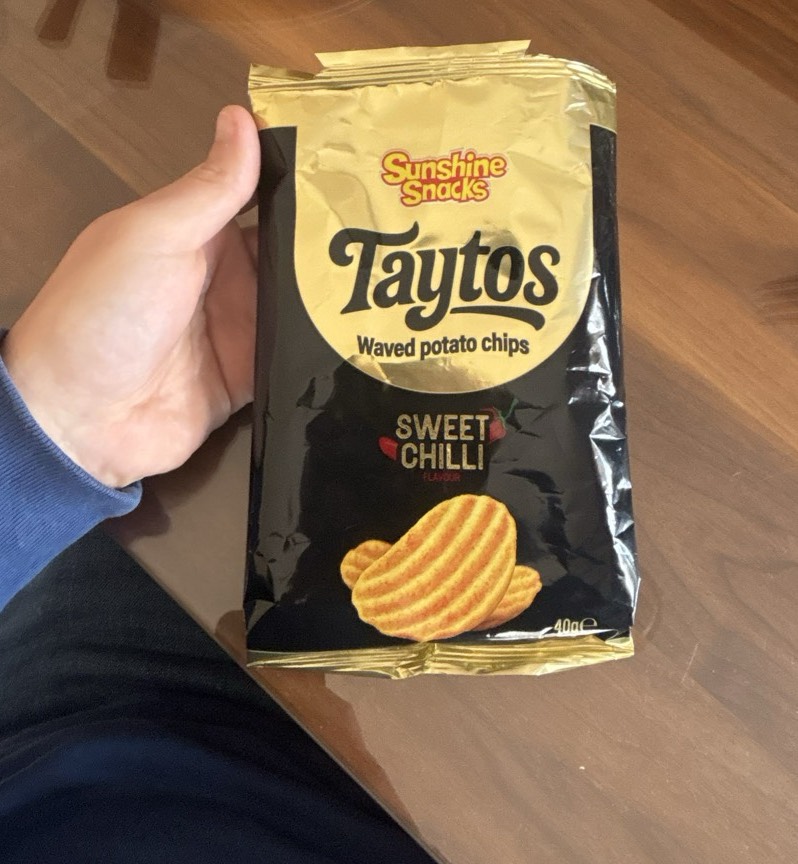
Sunshine Snacks Taytos Waved Potato Chips comes in a 40 g pack. It is sold under the Sunshine Snacks brand. On Mamori it sits under Snacks › Snacks & Crisps › Crisps. Its label lists 23 ingredients.
Sunshine Snacks Taytos Waved Potato Chips at a glance
Sunshine Snacks Taytos Waved Potato Chips fits Pescatarian and Vegan + Dairy diets. It also carries the Gluten Free, Crustaceans Free, Egg Free, Fish Free, Celery Free, Mustard Free, Sesame Free, Lupin Free, Mollusks Free, Barley Free, Beef Free, Citrus Fruit Free, Corn Free, Gelatin Free, Latex Free, Oats Free, Pork Free, Poultry Free, Rye Free and Wheat Free badges. Nutrition-wise, it's Low Sugars, Low Protein, High Calorie, High Carbs, High Salt/Sodium, High Saturated Fat and Medium in Fiber. Worth knowing: it's marked Non-Vegan, Non-Vegetarian, Non-Low FODMAP, Non-Vegan + Eggs, Contains Additives, Contains Artificial Flavourings, Contains Emulsifier, Contains Fructose, Lactose, Contains Added Sugars, Contains Rice and Contains Seed.
Diet and allergens
Suitable for a pescatarian diet.
Not suitable for vegan or vegetarian diets.
Free from gluten, crustaceans, eggs, fish, celery, mustard, sesame, lupin and molluscs.
May contain: milk, peanuts.
Based on Mamori's check of the ingredients on the label. Recipes change, so always read the pack if you have an allergy or intolerance.
Size: 40 g
Last updated 13 November 2026
Ingredients
Potato Pellet, Dehydrated Potato, Potato Starch, Salt, Acidity Regulators, Potassium Citrate, Citric Acid, Spices, Paprika, Turmeric, Palm Oil: Antioxidant E319, Sweet chilli Seasoning, Sugar, Rice Flour, Salt, Flavouring, Colours, Annatto, Paprika Extract, Flavour Enhancers, Disodium Inosinate, Disodium Guanylate, Sweetener: E951
Additives & flavourings
Additives
- E332: Potassium Citrates (I) Monopotassium Citrate (Ii) Potassium Citrate (Tripotassium Citrate): Generally safe
Potassium citrates (E332) are potassium salts of citric acid, a natural acid found in citrus fruits. They include monopotassium citrate and tripotassium citrate, and are used as acidity regulators and antioxidants.
In food, they help control acidity, stabilise flavour, and can slow changes caused by oxidation. They may be used in products such as drinks, jams, confectionery, processed cheese, and other foods where acidity control is needed.
Potassium citrates are generally considered safe at normal food amounts. They are authorised for use in the EU after safety assessment, and the sources checked raise no concern for typical dietary exposure.
- E330: Citric Acid: Generally safe
Citric acid (E330) is a natural organic acid found in citrus fruits and many other plants. The citric acid used in food is usually made by fermentation of sugars using micro-organisms.
It is used as an acidity regulator and antioxidant. It helps give a sharp, sour taste, control pH, and slow colour or flavour changes. It is common in soft drinks, sweets, jams, sauces, canned foods, and many processed foods.
Citric acid is generally considered safe at normal food levels. It is allowed in food in the EU after safety assessment, and the sources checked raise no concern for typical dietary amounts.
- E319: Tertiary-Butyl Hydroquinone (TBHQ): Generally safe
Tertiary-butyl hydroquinone, or TBHQ (E319), is a synthetic antioxidant. It is related to hydroquinone and is made for use in very small amounts to help protect fats and oils.
It slows rancidity and helps preserve flavour, colour and shelf life in fatty foods. It may be used in products such as vegetable oils, frying fats, snacks, dried mixes and other foods where oxidation of fats is a concern.
TBHQ is generally considered safe at permitted levels. It is allowed in food in the EU after EFSA safety assessment, and the reviewed sources raise no concern at normal amounts.
- E160B: Annatto, Bixin, Norbixin (E160b): Generally safe
Annatto, bixin and norbixin are orange-red colourings known as E160b. They are natural pigments extracted from the seeds of the annatto tree. Bixin is oil-soluble, while norbixin is water-soluble.
They are used to give foods a yellow, orange or red colour. They are commonly used in foods such as cheese, butter-like spreads, snacks, desserts and processed foods where a stable colour is needed.
E160b is generally considered safe at normal amounts. It is allowed in food in the EU after EFSA safety assessment, and the sources checked raise no concern for typical dietary exposure.
- E160c: Paprika Extract, Capsanthin, Capsorubin: Generally safe
Paprika extract, capsanthin and capsorubin (E160c) is a natural red-orange food colouring made from paprika peppers. The main colouring substances are carotenoids, especially capsanthin and capsorubin.
It is used to give or strengthen orange, red or reddish-brown colour in foods. It may be found in items such as cheeses, sauces, soups, snacks, meat products and seasonings.
It is generally considered safe at normal food-use amounts. It is authorised for use in the EU after EFSA safety assessment, and the sources checked raise no concern at typical levels of consumption.
- E631: Disodium Inosinate: Generally safe
Disodium inosinate, or E631, is a flavour enhancer. It is the sodium salt of inosinic acid, a substance related to naturally occurring compounds found in some foods. It can be made from animal or microbial sources, so it may not always be suitable for vegetarian or vegan diets.
It is used to boost savoury, “umami” flavours, often together with glutamates such as MSG. It may be found in snack foods, seasoning mixes, instant noodles, soups, sauces and processed savoury foods.
It is allowed in food in the EU after safety assessment, and is generally considered safe at normal amounts used in foods. The sources checked raise no specific concern for typical dietary exposure.
- E627: Disodium Guanylate: Generally safe
Disodium guanylate (E627) is a flavour enhancer made from guanylic acid, a substance related to natural nucleotides found in living cells. It can be produced by fermentation or extracted from natural sources, and may sometimes be animal derived.
It is used to boost savoury, meaty or “umami” flavours, often together with monosodium glutamate (MSG). It may be found in foods such as soups, sauces, seasonings, savoury snacks, instant noodles and processed meat products.
E627 is generally considered safe at normal amounts used in food. It is authorised for use in the EU after safety assessment, and the sources checked raise no concern for typical dietary exposure.
- E951: Aspartame: Some concerns
Aspartame (E951) is an artificial intense sweetener. It is made from two amino acids, aspartic acid and phenylalanine, joined with a small methanol component, and is much sweeter than sugar.
It is used to give sweetness with very little energy. It is found in many “diet” or “sugar-free” soft drinks, chewing gum, desserts, yoghurts, tabletop sweeteners and some medicines.
Aspartame is allowed for use, but some concerns have been raised. In 2023, IARC classed it as “possibly causing cancer” (Group 2B), while food safety bodies kept the acceptable daily intake; foods containing it must warn people with phenylketonuria that it contains phenylalanine.
Flavourings
- Flavouring: Flavouring (Regulation (EC) No 1334/2008 on flavourings, Article 16).
Questions and answers
Is Sunshine Snacks Taytos Waved Potato Chips vegan?
No. It is not suitable for a vegan diet.
Is Sunshine Snacks Taytos Waved Potato Chips vegetarian?
No. It is not suitable for a vegetarian diet.
Is Sunshine Snacks Taytos Waved Potato Chips suitable for a pescatarian diet?
Yes. It is suitable for a pescatarian diet.
Is Sunshine Snacks Taytos Waved Potato Chips suitable for a Low FODMAP diet?
No. It is not suitable for a Low FODMAP diet.
Is Sunshine Snacks Taytos Waved Potato Chips suitable for a Vegan + Dairy diet?
Yes. It is suitable for a Vegan + Dairy diet.
Is Sunshine Snacks Taytos Waved Potato Chips suitable for a Vegan + Eggs diet?
No. It is not suitable for a Vegan + Eggs diet.
Is Sunshine Snacks Taytos Waved Potato Chips gluten-free?
Yes. Its ingredients include no gluten, and its label gives no gluten warning.
Does Sunshine Snacks Taytos Waved Potato Chips contain eggs?
No. Its ingredients include no eggs, and its label gives no egg warning.
Does Sunshine Snacks Taytos Waved Potato Chips carry an allergy warning?
Yes. Its label says it may contain: milk, peanuts.
More in Crisps
- Fiorentini Snick snack
- Snack Day Patatine Gusto Paprika
- Wellix Spinach Chips Lemon Pepper
- Pringles French style black truffle & butter flavour
- Todis Sfogliatine di patate
- Lidl Chips paysanne nature
- Lay's Super chips deep american BBQ flavour
- Lay's Chips Max saveur sauce BBQ
- Frit Ravich Bacon & Cheese Chips
- Tim’s Cascade Style Potato Chips
- Ustukių Pink Gin Mini Potato Chips
- El SABOR Nacho Chips Spicy Jalapeño Flavor