
Sour Patch Kids Are OK 350 g
On the pack: Sour Patch Kids Ayr Uk
Sour Patch
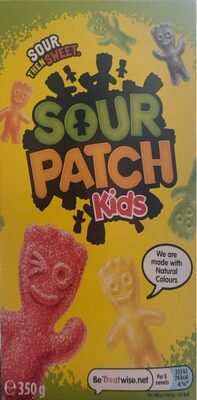
Sour Patch Kids Are OK comes in a 350 g pack. It is sold under the Sour Patch brand. On Mamori it sits under Confectionery › Candy, Sweets & Nougat › Chewy Candies. Its label lists 16 ingredients.
Sour Patch Kids Are OK at a glance
Sour Patch Kids Are OK carries the Crustaceans Free, Egg Free, Fish Free, Peanut Free, Soy Free, Dairy Free, Tree Nut Free, Celery Free, Mustard Free, Sesame Free, Lupin Free, Mollusks Free, Barley Free, Citrus Fruit Free, Lactose Free, Latex Free, Oats Free, Poultry Free, Rye Free and Wheat Free badges. Nutrition-wise, it's Low Salt/Sodium, Low Saturated Fat, Low Fiber, Low Protein, High Carbs, High in Sugars and Medium in Calories. Worth knowing: it's marked Non-Vegan, Non-Vegetarian, Non-Pescatarian, Non-Low FODMAP, Non-Vegan + Dairy, Non-Vegan + Eggs, Contains Additives, Contains Artificial Flavourings, Contains Beef, Contains Corn, Contains Emulsifier, Contains Fructose, Contains Gelatin, Contains Added Sugars, Contains Pork, Contains Rice and Contains Seed.
Diet and allergens
Not suitable for vegan, vegetarian or pescatarian diets.
Free from crustaceans, eggs, fish, peanuts, soy, milk, tree nuts, celery, mustard, sesame, lupin and molluscs.
Based on Mamori's check of the ingredients on the label. Recipes change, so always read the pack if you have an allergy or intolerance.
Size: 350 g
Last updated 2 November 2026
Ingredients
Sugar, Glucose Syrup, Water, Starch, Gelatine, Acid: Malic Acid, Concentrated Apple Juice, Colours, Anthocyanins, Vegetable Carbon, Paprika Extract, Lutein, Curcumin, Acidity Regulator: Calcium Citrates, Palm Oil, Flavourings
Additives & flavourings
Additives
- E441: Gelatine (Emulsifier): Generally safe
Gelatine, sometimes listed as E441, is a protein-based ingredient made by processing collagen from animal skin, bones and connective tissue, usually from pigs or cattle.
It helps foods set, thicken, stabilise or give a smooth texture. It is commonly used in jellies, marshmallows, gummy sweets, desserts, yoghurts and some low-fat spreads or meat products.
It is generally considered safe for most people. Under EU law, edible gelatine is treated as a food ingredient rather than a food additive, so it is not classed as an additive in Regulation (EC) No 1333/2008.
- E296: Malic Acid (Acid): Generally safe
Malic acid (E296) is an acid naturally found in many fruits, especially apples. For food use, it is usually made by industrial fermentation or chemical production and is used as a food acid.
It adds a sharp, fruity sour taste and helps control acidity in foods and drinks. It may be found in sweets, soft drinks, jams, fruit products, desserts and some processed foods where a tart flavour or acidity control is needed.
It is generally considered safe at normal food amounts. It is allowed in the EU after safety assessment, and the sources checked raise no concern for typical use.
- E163: Anthocyanins: Generally safe
Anthocyanins (E163) are natural red, purple and blue colourants. They are pigments found in plants, especially in fruits and vegetables such as berries, grapes, red cabbage and black carrots.
In food, E163 is used to add or restore red to purple shades. It can be found in products such as sweets, drinks, desserts, jams and some processed foods where a plant-based colour is needed.
Anthocyanins are generally considered safe at normal food-use levels. They are allowed in food in the EU after EFSA safety assessment, and the sources checked raise no concern at typical amounts.
- E153: Vegetable Carbon: Generally safe
Vegetable carbon (E153) is a black food colour. It is a form of carbon made by heating plant material such as wood, shells, or other vegetable matter at high temperature, then processing it for use in food.
It is used to give foods a deep grey or black colour. It may be found in some confectionery, decorations, bakery products, cheeses, or coatings where a dark colour is wanted.
It is generally considered safe at normal food amounts. It is authorised for use in the EU after safety assessment, and EFSA’s review did not raise concerns for typical uses.
- E160c: Paprika Extract, Capsanthin, Capsorubin: Generally safe
Paprika extract, capsanthin and capsorubin (E160c) is a natural red-orange food colouring made from paprika peppers. The main colouring substances are carotenoids, especially capsanthin and capsorubin.
It is used to give or strengthen orange, red or reddish-brown colour in foods. It may be found in items such as cheeses, sauces, soups, snacks, meat products and seasonings.
It is generally considered safe at normal food-use amounts. It is authorised for use in the EU after EFSA safety assessment, and the sources checked raise no concern at typical levels of consumption.
- E161B: Lutein (E161b): Generally safe
Lutein (E161b) is a yellow to orange natural colourant. It is a carotenoid pigment, the same family of substances that gives colour to some plants, and is commonly obtained from plant sources such as marigold flowers.
It is used to add or restore yellow and orange colour in foods. Colourants like lutein may be used in products such as confectionery, desserts, drinks, sauces, and processed foods where a stable yellow shade is needed.
Lutein is generally considered safe at normal food amounts. It is allowed in food in the EU after EFSA safety assessment, and the sources checked raise no concern for typical use.
- E100: Curcumin (From Turmeric): Generally safe
Curcumin (E100) is a yellow-orange food colour made from turmeric, the spice from the root of the Curcuma longa plant. It is the main natural pigment in turmeric and may also be produced as a purified extract for food use.
It is used to give foods a yellow to orange colour. It can be found in products such as sauces, soups, snacks, confectionery, dairy products and processed foods where a warm yellow colour is wanted.
Curcumin is generally considered safe at normal food amounts. It is allowed for use in the EU after EFSA safety assessment, and the sources checked do not raise concerns for typical dietary exposure.
- E333: Calcium Citrates (I) Monocalcium Citrate (Ii) Dicalcium Citrate (Iii) Calcium Citrate (Tricalcium Citrate): Generally safe
Calcium citrates (E333) are calcium salts of citric acid. They include mono-, di- and tricalcium citrate, and are made by combining citric acid with calcium compounds.
They are used as acidity regulators, to help control sourness and pH, and can also support antioxidant effects by binding minerals that speed up spoilage. They may be used in drinks, dairy products, jams, confectionery and other processed foods where acidity control is needed.
Calcium citrates are generally considered safe at normal food amounts. They are authorised for use in the EU after safety assessment, and the sources checked raise no concern for typical dietary exposure.
Flavourings
- Flavourings: Flavouring (Regulation (EC) No 1334/2008 on flavourings, Article 16).
Questions and answers
Is Sour Patch Kids Are OK vegan?
No. It is not suitable for a vegan diet.
Is Sour Patch Kids Are OK vegetarian?
No. It is not suitable for a vegetarian diet.
Is Sour Patch Kids Are OK suitable for a pescatarian diet?
No. It is not suitable for a pescatarian diet.
Is Sour Patch Kids Are OK suitable for a Low FODMAP diet?
No. It is not suitable for a Low FODMAP diet.
Is Sour Patch Kids Are OK suitable for a Vegan + Dairy diet?
No. It is not suitable for a Vegan + Dairy diet.
Is Sour Patch Kids Are OK suitable for a Vegan + Eggs diet?
No. It is not suitable for a Vegan + Eggs diet.
Does Sour Patch Kids Are OK contain milk?
No. Its ingredients include no milk, and its label gives no milk warning.
Is Sour Patch Kids Are OK nut-free?
Yes. Its ingredients include no peanuts or tree nuts, and its label gives no nut warning.
Does Sour Patch Kids Are OK contain eggs?
No. Its ingredients include no eggs, and its label gives no egg warning.