
Nestlé MINI sachet 375 g
Nestlé, Smarties, Smarties minis
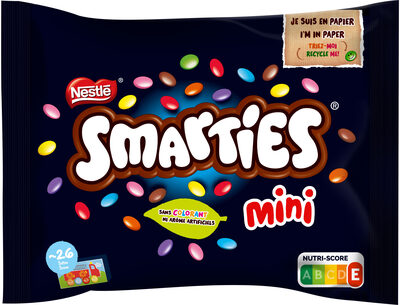
Nestlé MINI sachet comes in a 375 g pack. It is sold under the Nestlé, Smarties and Smarties minis brands. On Mamori it sits under Confectionery › Chocolates › Chocolate Bites. Its label lists 25 ingredients.
Nestlé MINI sachet at a glance
Nestlé MINI sachet fits Vegetarian, Pescatarian and Vegan + Dairy diets. It also carries the Crustaceans Free, Egg Free, Fish Free, Peanut Free, Tree Nut Free, Celery Free, Mustard Free, Sesame Free, Sulfite Free, Lupin Free, Mollusks Free, Artificial Flavourings Free, Beef Free, Citrus Fruit Free, Gelatin Free, Latex Free, Oats Free, Pork Free and Rye Free badges. Nutrition-wise, it's Low Salt/Sodium, High Calorie, High Carbs, High Saturated Fat, High in Sugars, Medium in Fiber and Medium in Protein. Worth knowing: it's marked Non-Vegan, Non-Low FODMAP, Non-Vegan + Eggs, Contains Gluten, Contains Dairy, Contains Additives, Contains Barley, Contains Corn, Contains Emulsifier, Contains Fructose, Lactose, Contains Added Sugars, Contains Poultry, Contains Rice, Contains Seed and Contains Wheat.
Diet and allergens
Suitable for vegetarian and pescatarian diets.
Not suitable for a vegan diet.
Contains gluten and milk.
Free from crustaceans, eggs, fish, peanuts, tree nuts, celery, mustard, sesame, sulphites, lupin and molluscs.
Based on Mamori's check of the ingredients on the label. Recipes change, so always read the pack if you have an allergy or intolerance.
Size: 375 g
Last updated 2 November 2026
Ingredients
sugar, skimmed milk powder, cocoa mass, cocoa butter, glucose syrup, wheat flour, whey powder, anhydrous milk fat, vegetable fats, palm oil, shea oil, starch, emulsifier: lecithins, colorings, beetroot red, carotenoids, curcumin, spirulina concentrate, coating agents, carnauba wax, white beeswax, plant concentrates, safflower, radish, barley malt extract
Additives
- E322: Lecithins: Generally safe
Lecithins (E322) are a group of natural fatty substances found in plants and animals. Food-grade lecithin is usually made from soya, sunflower, rapeseed or egg, and in some cases may be animal derived.
They are mainly used as emulsifiers, helping oil and water mix and keeping textures smooth. They are found in foods such as chocolate, spreads, baked goods, sauces, margarines and instant powders.
Lecithins are generally considered safe at normal food amounts and are allowed in the EU after safety assessment. People with relevant allergies should note the source, especially soya or egg.
- E160a: Carotenes: Generally safe
Carotenes (E160a) are orange-yellow colourants, including alpha-carotene, beta-carotene and gamma-carotene. They are pigments found naturally in plants such as carrots and leafy greens, and can also be made synthetically or obtained from natural sources. Some forms may be animal derived.
They are used to add or restore yellow to orange colour in foods. They may be found in products such as margarines, dairy products, desserts, sauces, drinks and confectionery.
E160a is allowed in food in the EU after safety assessment. It is generally considered safe at normal food amounts, and the sources checked raise no concern for typical use.
- E100: Curcumin (From Turmeric): Generally safe
Curcumin (E100) is a yellow-orange food colour made from turmeric, the spice from the root of the Curcuma longa plant. It is the main natural pigment in turmeric and may also be produced as a purified extract for food use.
It is used to give foods a yellow to orange colour. It can be found in products such as sauces, soups, snacks, confectionery, dairy products and processed foods where a warm yellow colour is wanted.
Curcumin is generally considered safe at normal food amounts. It is allowed for use in the EU after EFSA safety assessment, and the sources checked do not raise concerns for typical dietary exposure.
- E903: Carnauba Wax: Generally safe
Carnauba wax (E903) is a natural plant wax taken from the leaves of the carnauba palm. It is a hard, glossy wax, also used outside food in coatings and polishes.
In food, it is used as a glazing agent to give a shiny surface and help reduce sticking or moisture loss. It can be found on some sweets, chewing gum, chocolate-coated products, and waxed fruit coatings.
Carnauba wax is generally considered safe at normal food amounts. It is authorised for use in the EU after EFSA safety assessment, and the checked sources raise no concern for typical dietary exposure.
Questions and answers
Is Nestlé MINI sachet vegan?
No. It contains milk, so it is not suitable for a vegan diet.
Is Nestlé MINI sachet vegetarian?
Yes. It is suitable for a vegetarian diet.
Is Nestlé MINI sachet suitable for a pescatarian diet?
Yes. It is suitable for a pescatarian diet.
Is Nestlé MINI sachet suitable for a Low FODMAP diet?
No. It is not suitable for a Low FODMAP diet.
Is Nestlé MINI sachet suitable for a Vegan + Dairy diet?
Yes. It is suitable for a Vegan + Dairy diet.
Is Nestlé MINI sachet suitable for a Vegan + Eggs diet?
No. It is not suitable for a Vegan + Eggs diet.
Is Nestlé MINI sachet gluten-free?
No. It contains gluten.
Does Nestlé MINI sachet contain milk?
Yes. It contains milk.
Is Nestlé MINI sachet nut-free?
Yes. Its ingredients include no peanuts or tree nuts, and its label gives no nut warning.
Does Nestlé MINI sachet contain eggs?
No. Its ingredients include no eggs, and its label gives no egg warning.
Which allergens does Nestlé MINI sachet contain?
It contains gluten and milk.
More in Chocolate Bites
- Kinder ChocoBalls Milk & Caramel Biscuit
- Kinder choco bons
- Toblerone truffles
- Mister Choc Big Hit Milk Chocolate Peanuts
- Cadbury Easter egg hunt
- Mister Choc Big Hit milk chocolate
- Baileys Chocolate Truffles
- Balconi MixMax
- Dolciando crunchy Belgian chocolate
- Royal Family Mochi Salted Caramel
- Nestlé Quality Street
- Nestlé Little Rolo