
DACO art Slime Activator 147 ml
DACO art
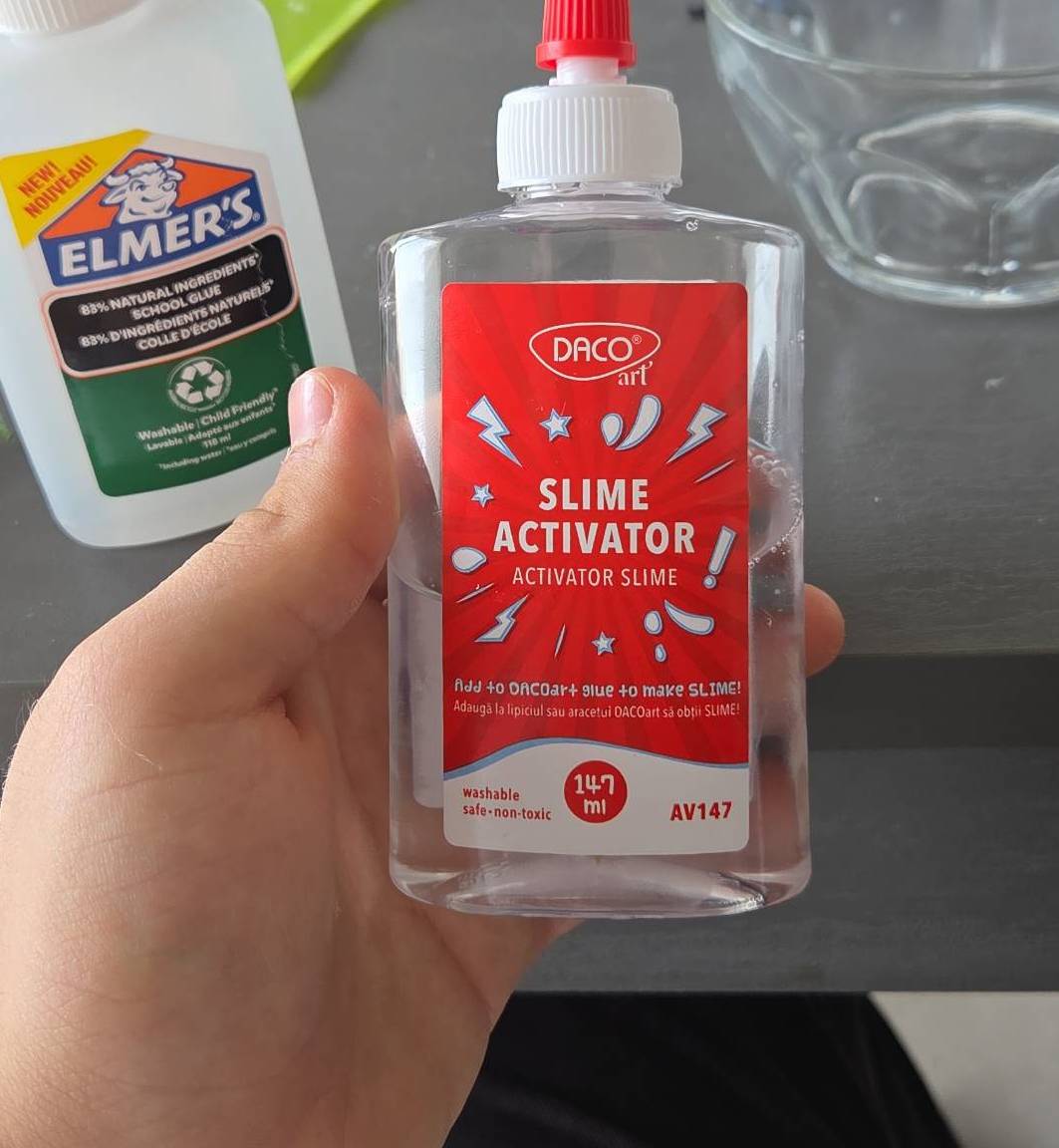
DACO art Slime Activator comes in a 147 ml pack. It is sold under the DACO art brand. On Mamori it sits under Additives › Chemical Additives › Coagulant. Its label lists 12 ingredients.
DACO art Slime Activator at a glance
DACO art Slime Activator fits Vegan, Vegetarian and Pescatarian diets. It also carries the Crustaceans Free, Fish Free, Celery Free, Mustard Free, Sesame Free, Sulfite Free, Mollusks Free, Barley Free, Beef Free, Citrus Fruit Free, Emulsifier Free, Gelatin Free, Latex Free, Oats Free, Pork Free, Poultry Free and Rice Free badges. Nutrition-wise, it's Low Salt/Sodium, Low Saturated Fat, Low Fiber, Low Protein, High Carbs, High in Sugars and Medium in Calories. Worth knowing: it's marked Non-Low FODMAP, Non-Vegan + Dairy, Non-Vegan + Eggs, Contains Additives, Contains Artificial Flavourings, Contains Corn, Contains Fructose, Lactose, Contains Added Sugars, Contains Rye, Contains Seed and Contains Wheat.
Diet and allergens
Suitable for vegan, vegetarian and pescatarian diets.
Free from crustaceans, fish, celery, mustard, sesame, sulphites and molluscs.
May contain: milk, eggs, tree nuts, peanuts, wheat, soy.
Based on Mamori's check of the ingredients on the label. Recipes change, so always read the pack if you have an allergy or intolerance.
Size: 147 ml
Last updated 2 November 2026
Ingredients
corn syrup, sugar, dextrose, malic acid: DL-malic acid, gum arabic: or less, natural flavors: or less, carnauba wax: or less, red 40 lake: or less, color added: or less, yellow 5: or less, blue 1: or less, watermelon juice concentrate
Additives & flavourings
Additives
- E414: Gum Arabic (Acacia Gum): Generally safe
Gum arabic, or acacia gum, is E414. It is a natural gum obtained from the dried sap of acacia trees. It is a soluble dietary fibre made mainly of complex carbohydrates.
In food, it is used as a thickener, stabiliser and emulsifier. It helps keep mixtures even, improves texture, and can help hold flavours or colours in place. It may be found in sweets, soft drinks, icings, baked goods and flavourings.
It is generally considered safe at normal food amounts. It is authorised for use in the EU after safety assessment, and the sources checked raise no concern for typical use.
- E903: Carnauba Wax: Generally safe
Carnauba wax (E903) is a natural plant wax taken from the leaves of the carnauba palm. It is a hard, glossy wax, also used outside food in coatings and polishes.
In food, it is used as a glazing agent to give a shiny surface and help reduce sticking or moisture loss. It can be found on some sweets, chewing gum, chocolate-coated products, and waxed fruit coatings.
Carnauba wax is generally considered safe at normal food amounts. It is authorised for use in the EU after EFSA safety assessment, and the checked sources raise no concern for typical dietary exposure.
- E128: Red 2G: Not allowed in the EU (Commission Regulation (EC) No 884/2007)
Red 2G, or E128, is a synthetic azo dye used to give food a red colour. It is not made from natural food sources.
It was mainly used in some meat products, especially sausages and burgers, where a stable red colour was wanted during processing or cooking.
Red 2G is not currently permitted for use as a food additive in the EU. The main safety concern is that it can break down into aniline, a substance considered potentially harmful, so its use has been withdrawn rather than managed by normal limits.
- E296: Malic Acid (Acid): Generally safe
Malic acid (E296) is an acid naturally found in many fruits, especially apples. For food use, it is usually made by industrial fermentation or chemical production and is used as a food acid.
It adds a sharp, fruity sour taste and helps control acidity in foods and drinks. It may be found in sweets, soft drinks, jams, fruit products, desserts and some processed foods where a tart flavour or acidity control is needed.
It is generally considered safe at normal food amounts. It is allowed in the EU after safety assessment, and the sources checked raise no concern for typical use.
- E102: Tartrazine (Fd&C Yellow 5): Some concerns
Tartrazine (E102), also called FD&C Yellow 5, is a synthetic yellow azo dye. It is a man-made colourant used to give foods and drinks a bright yellow to orange shade.
It is found in some soft drinks, sweets, desserts, sauces, snacks, and other processed foods where a strong yellow colour is wanted.
It is permitted for use in food, but some concerns have been raised. In the EU, foods containing tartrazine must carry a warning that it “may have an adverse effect on activity and attention in children”.
- E131: Patent Blue V: Some concerns
Patent Blue V (E131) is a synthetic blue food colour. It is a water-soluble dye used to give foods a bright blue shade or to mix with other colours to make green or purple tones.
It is used as a colourant in some sweets, desserts, drinks, decorations and other processed foods where a strong, stable colour is wanted. Its use is regulated and only allowed in certain food categories.
Patent Blue V is allowed in food, but some concerns have been raised. EFSA found that people who eat a lot of foods containing it could go over the safe daily amount, so exposure can be an issue for high consumers.
Flavourings
- natural flavors: or less: Natural flavouring (Regulation (EC) No 1334/2008 on flavourings, Article 16).
Questions and answers
Is DACO art Slime Activator vegan?
Yes. It is suitable for a vegan diet.
Is DACO art Slime Activator vegetarian?
Yes. It is suitable for a vegetarian diet.
Is DACO art Slime Activator suitable for a pescatarian diet?
Yes. It is suitable for a pescatarian diet.
Is DACO art Slime Activator suitable for a Low FODMAP diet?
No. It is not suitable for a Low FODMAP diet.
Is DACO art Slime Activator suitable for a Vegan + Dairy diet?
No. It is not suitable for a Vegan + Dairy diet.
Is DACO art Slime Activator suitable for a Vegan + Eggs diet?
No. It is not suitable for a Vegan + Eggs diet.
Does DACO art Slime Activator carry an allergy warning?
Yes. Its label says it may contain: milk, eggs, tree nuts, peanuts, wheat, soy.