
Sheese White Cheddar Style 200 g
On the pack: Sheese White Chedder Style 200 g
Sheese
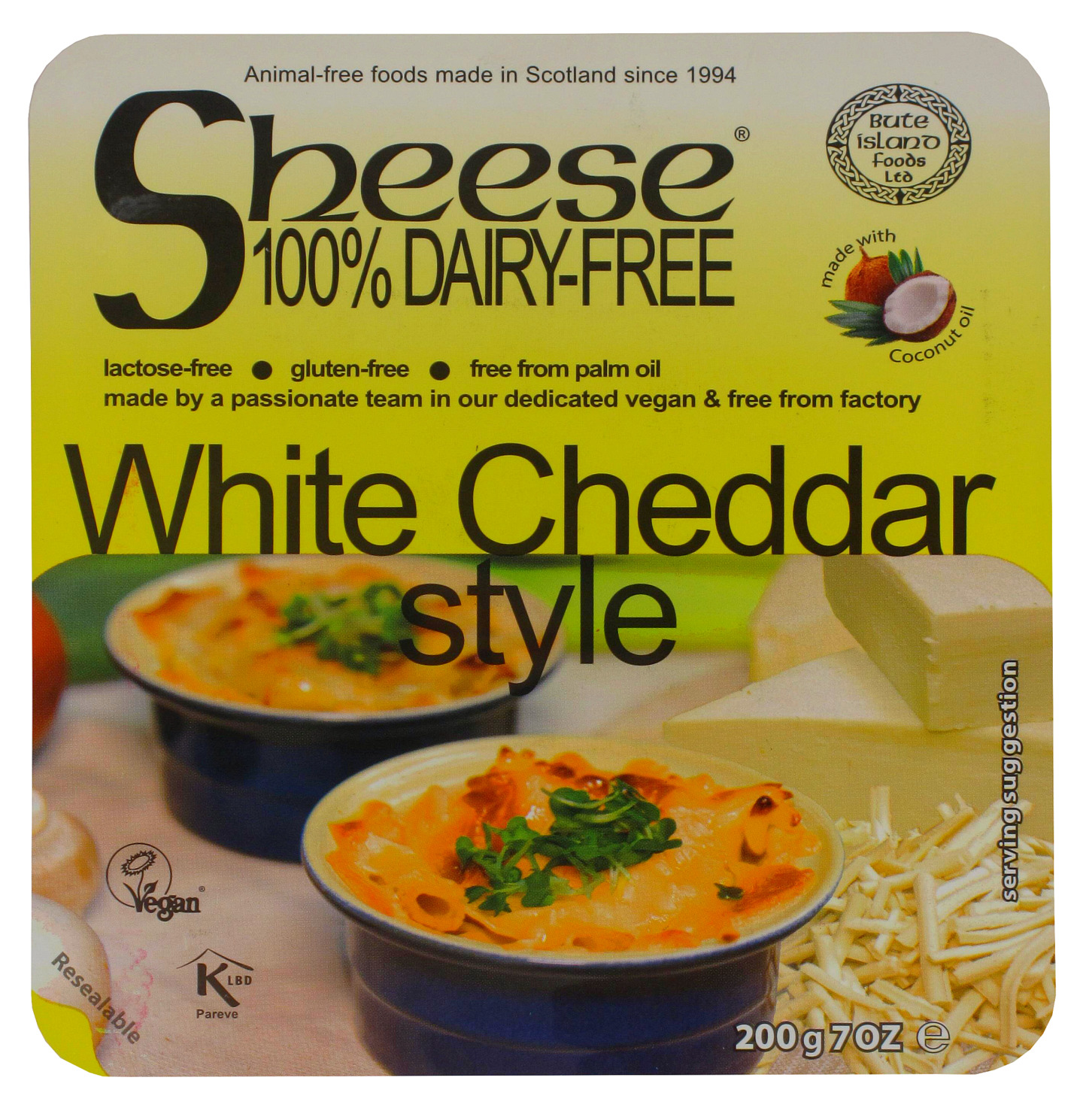
Sheese White Cheddar Style comes in a 200 g pack. It is sold under the Sheese brand. On Mamori it sits under Chilled › Cheese › Semi-Hard Microbial. Its label lists 17 ingredients.
Sheese White Cheddar Style at a glance
Sheese White Cheddar Style fits Vegetarian, Pescatarian, Vegan + Dairy and Vegan + Eggs diets. It also carries the Crustaceans Free, Egg Free, Fish Free, Peanut Free, Soy Free, Dairy Free, Tree Nut Free, Celery Free, Mustard Free, Sesame Free, Lupin Free, Mollusks Free, Barley Free, Beef Free, Citrus Fruit Free, Fructose Free, Gelatin Free, Lactose Free, Latex Free, No Added Sugars, Pork Free, Poultry Free, Rice Free, Rye Free and Wheat Free badges. Nutrition-wise, it's Low Sugars, Low Protein, High Salt/Sodium, High Saturated Fat, Medium in Fiber, Medium in Calories and Medium Carbs. Worth knowing: it's marked Non-Vegan, Non-Low FODMAP, Contains Additives, Contains Artificial Flavourings, Contains Corn, Contains Emulsifier, Contains Oats and Contains Seed.
Diet and allergens
Suitable for vegetarian and pescatarian diets.
Not suitable for a vegan diet.
Free from crustaceans, eggs, fish, peanuts, soy, milk, tree nuts, celery, mustard, sesame, lupin and molluscs.
Based on Mamori's check of the ingredients on the label. Recipes change, so always read the pack if you have an allergy or intolerance.
Size: 200 g
Last updated 26 October 2026
Ingredients
Water, Coconut Oil, Modified potato starch, gluten free oat fibre, Maize Starch, salt, Modified Maize Starch, Thickeners, Carrageenan, Guar Gum, tricalcium citrate, yeast extract, Natural Flavourings, Acidity Regulators, Lactic Acid, sodium lactate, Colour: Carotenes
Additives & flavourings
Additives
- E407: Carrageenan (Thickener) (Stabiliser) (Gelling Agent): Some concerns
Carrageenan, or E407, is a thickening and gelling additive made from red seaweed. It is a large carbohydrate substance used to change the texture of foods.
It helps foods become thicker, creamier or more stable, and can also help gels form. It is often used in dairy desserts, flavoured milks, ice cream, plant-based drinks, sauces and processed meats.
It is allowed in food, but some concerns have been raised. EFSA found that people who eat a lot of foods containing carrageenan could go over the safe daily amount, so high intake is the main issue.
- E412: Guar Gum (Thickener): Generally safe
Guar gum (E412) is a thickening fibre made from the seeds of the guar plant, a type of legume. It is a natural polysaccharide, meaning a long-chain carbohydrate that absorbs water easily.
It is used to thicken, stabilise or improve texture in foods such as sauces, dressings, dairy products, ice cream, gluten-free baked goods and processed foods. It can also help stop ingredients from separating.
Guar gum is generally considered safe at normal food amounts. It is allowed in food in the EU after safety assessment, and the sources checked raise no concern for typical use.
- E333: Calcium Citrates (I) Monocalcium Citrate (Ii) Dicalcium Citrate (Iii) Calcium Citrate (Tricalcium Citrate): Generally safe
Calcium citrates (E333) are calcium salts of citric acid. They include mono-, di- and tricalcium citrate, and are made by combining citric acid with calcium compounds.
They are used as acidity regulators, to help control sourness and pH, and can also support antioxidant effects by binding minerals that speed up spoilage. They may be used in drinks, dairy products, jams, confectionery and other processed foods where acidity control is needed.
Calcium citrates are generally considered safe at normal food amounts. They are authorised for use in the EU after safety assessment, and the sources checked raise no concern for typical dietary exposure.
- E270: Lactic Acid (Preservative): Generally safe
Lactic acid (E270) is an organic acid found naturally in many foods and also made by fermenting sugars, often using bacteria. It is the same type of acid produced in foods such as yoghurt and fermented vegetables.
In food, it is used mainly as an acidity regulator and preservative, helping control pH and slow the growth of some microbes. It may be found in fermented foods, pickled products, drinks, sauces, confectionery and bakery products.
It is generally considered safe. It is allowed in food in the EU after safety assessment, and the sources checked raise no concern at normal amounts.
- E325: Sodium Lactate: Generally safe
Sodium lactate (E325) is the sodium salt of lactic acid. It is usually made by fermenting sugars to produce lactic acid, then neutralising it with a sodium source. It is an acidity regulator and can also help protect food quality.
In food, it helps control acidity, retain moisture, and slow some spoilage changes. It is often used in processed meat, poultry, seafood, sauces, dressings, and some bakery or confectionery products.
Sodium lactate is generally considered safe at normal food-use levels. It is allowed in food in the EU after safety assessment, and the sources checked raise no specific concern at normal amounts.
- E160a: Carotenes: Generally safe
Carotenes (E160a) are orange-yellow colourants, including alpha-carotene, beta-carotene and gamma-carotene. They are pigments found naturally in plants such as carrots and leafy greens, and can also be made synthetically or obtained from natural sources. Some forms may be animal derived.
They are used to add or restore yellow to orange colour in foods. They may be found in products such as margarines, dairy products, desserts, sauces, drinks and confectionery.
E160a is allowed in food in the EU after safety assessment. It is generally considered safe at normal food amounts, and the sources checked raise no concern for typical use.
Flavourings
- Natural Flavourings: Natural flavouring (Regulation (EC) No 1334/2008 on flavourings, Article 16).
Questions and answers
Is Sheese White Cheddar Style vegan?
No. It is not suitable for a vegan diet.
Is Sheese White Cheddar Style vegetarian?
Yes. It is suitable for a vegetarian diet.
Is Sheese White Cheddar Style suitable for a pescatarian diet?
Yes. It is suitable for a pescatarian diet.
Is Sheese White Cheddar Style suitable for a Low FODMAP diet?
No. It is not suitable for a Low FODMAP diet.
Is Sheese White Cheddar Style suitable for a Vegan + Dairy diet?
Yes. It is suitable for a Vegan + Dairy diet.
Is Sheese White Cheddar Style suitable for a Vegan + Eggs diet?
Yes. It is suitable for a Vegan + Eggs diet.
Does Sheese White Cheddar Style contain milk?
No. Its ingredients include no milk, and its label gives no milk warning.
Is Sheese White Cheddar Style nut-free?
Yes. Its ingredients include no peanuts or tree nuts, and its label gives no nut warning.
Does Sheese White Cheddar Style contain eggs?
No. Its ingredients include no eggs, and its label gives no egg warning.
More in Semi-Hard Microbial
- Leerdammer Spec Toast Lf S11
- Carrefour Smoked Scamorza
- Snowdonia Rock Star Cheddar
- Wyke Farms Red Leicester Cheese
- Cathedral City Mature Cheddar
- Entre Mont Gouda
- Elite Natural Cheddar Slices 150 g
- Violife Prosociano Mild
- Galbani Beautiful Country
- Cathedral City Mature Cheddar
- Cathedral City Extra Mature Cheddar
- Glenstal Mild Cheddar Mellow And Creamy