
Schar Pizza Salami Gluten & Lactose Free (G. F. S) 375 g
Schar
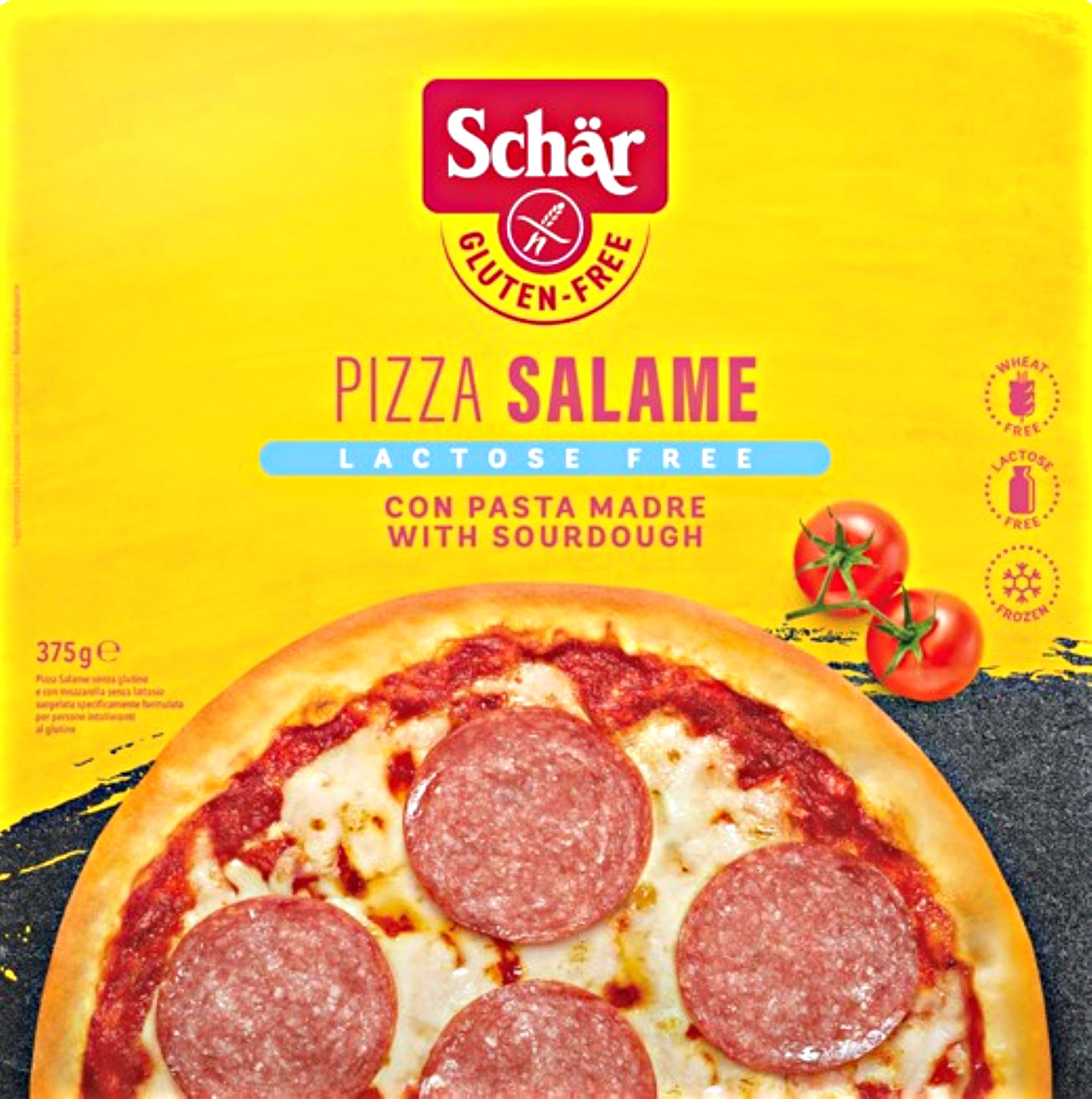
Schar Pizza Salami Gluten & Lactose Free (G. F. S) comes in a 375 g pack. It is sold under the Schar brand. On Mamori it sits under Frozen › Pizza. Its label lists 50 ingredients.
Schar Pizza Salami Gluten & Lactose Free (G. F. S) at a glance
Schar Pizza Salami Gluten & Lactose Free (G. F. S) carries the Gluten Free, Crustaceans Free, Egg Free, Fish Free, Peanut Free, Tree Nut Free, Celery Free, Mustard Free, Sesame Free, Sulfite Free, Lupin Free, Mollusks Free, Barley Free, Beef Free, Citrus Fruit Free, Emulsifier Free, Gelatin Free, Lactose Free, Latex Free, Oats Free, Poultry Free, Rye Free and Wheat Free badges. Nutrition-wise, it's Low Sugars, High Salt/Sodium, High Saturated Fat, Medium in Fiber, Medium in Protein, Medium in Calories and Medium Carbs. Worth knowing: it's marked Non-Vegan, Non-Vegetarian, Non-Pescatarian, Non-Low FODMAP, Non-Vegan + Dairy, Non-Vegan + Eggs, Contains Dairy, Contains Additives, Contains Artificial Flavourings, Contains Corn, Contains Fructose, Contains Added Sugars, Contains Pork, Contains Rice and Contains Seed.
Diet and allergens
Not suitable for vegan, vegetarian or pescatarian diets.
Contains milk.
Free from gluten, crustaceans, eggs, fish, peanuts, tree nuts, celery, mustard, sesame, sulphites, lupin and molluscs.
May contain: soy.
Based on Mamori's check of the ingredients on the label. Recipes change, so always read the pack if you have an allergy or intolerance.
Size: 375 g
Last updated 2 November 2026
Ingredients
Dough, cornstarch, Rice flour, sourdough, Rice flour, Water, Water, thickening agents, Cellulose, hydroxypropyl methylcellulose, Rice starch, Extra Virgin Olive Oil, yeast, corn flour, Sunflower oil, iodized salt, salt, Potassium Iodide, fruit extract, Carob, apple, sugar, dextrose, raising agents, sodium bicarbonate, Glucono-delta-lactone, acids, tartaric acid, Citric Acid, Topping, Mozzarella Cheese, salt, Microbial rennet, Acidity Regulator: Citric Acid, tomato puree, smoked salami, pork meat, salt, dextrose, Spices and herbs, antioxidant: sodium ascorbate, Natural Flavor, preservatives, sodium nitrite, sodium nitrate, potassium nitrate, iodized salt, salt, Potassium Iodide, oregano
Additives & flavourings
Additives
- E464: Hydroxypropyl Methyl Cellulose: Generally safe
Hydroxypropyl methyl cellulose, or E464, is also called hypromellose. It is a modified cellulose, made from plant fibre cellulose that has been chemically adjusted so it dissolves and works well in water.
In food, E464 acts as a thickener, stabiliser and emulsifier. It helps improve texture, hold mixtures together, and control moisture. It may be used in products such as sauces, bakery fillings, desserts, processed foods, and some gluten-free or reduced-fat foods.
It is generally considered safe. E464 is allowed in food in the EU after safety assessment, and the sources checked raise no concern at normal amounts.
- E500: Sodium Carbonates: (I) Sodium Carbonate (Ii) Sodium Bicarbonate (Sodium Hydrogen Carbonate) (Iii) Sodium Sesquicarbonate (Acidity Regulator): Generally safe
Sodium carbonates (E500) are a group of sodium salts, including sodium carbonate, sodium bicarbonate and sodium sesquicarbonate. The best-known is sodium bicarbonate, also called bicarbonate of soda.
They are used to control acidity, help baked goods rise by releasing carbon dioxide, and reduce clumping in some powdered foods. They can be found in baking powders, biscuits, cakes, self-raising flour, cocoa mixes and other dry food mixes.
E500 is generally considered safe. It is allowed in food in the EU after safety assessment, and the sources checked do not raise concerns at normal food amounts.
- E334: Tartaric Acid: Generally safe
Tartaric acid (L(+)-) (E334) is a naturally occurring organic acid. It is found in grapes and some other fruits, and the food additive is the same type of acid used to adjust acidity in foods.
It helps give foods a sharper taste, controls acidity, and can support antioxidant effects. It may be used in products such as sweets, jams, soft drinks, bakery mixes, and wine-related products.
It is generally considered safe at normal food amounts. It is authorised for use in the EU after safety assessment, and the sources checked raise no concern for typical dietary exposure.
- E330: Citric Acid: Generally safe
Citric acid (E330) is a natural organic acid found in citrus fruits and many other plants. The citric acid used in food is usually made by fermentation of sugars using micro-organisms.
It is used as an acidity regulator and antioxidant. It helps give a sharp, sour taste, control pH, and slow colour or flavour changes. It is common in soft drinks, sweets, jams, sauces, canned foods, and many processed foods.
Citric acid is generally considered safe at normal food levels. It is allowed in food in the EU after safety assessment, and the sources checked raise no concern for typical dietary amounts.
- E301: Sodium Ascorbate: Generally safe
Sodium ascorbate (E301) is the sodium salt of ascorbic acid, better known as vitamin C. It is a water-soluble substance used as an antioxidant and acidity regulator.
In food, it helps slow oxidation, which can prevent browning and flavour changes. It is used in a range of foods where antioxidant protection is needed, such as processed meats, preserved fruit, drinks and bakery products.
It is generally considered safe. It is allowed in food in the EU after safety assessment, and EFSA’s review raised no concern at normal dietary amounts.
- E250: Sodium Nitrite: Best avoided
Sodium nitrite (E250) is a preservative made from sodium and nitrite salts. It is closely related to potassium nitrite (E249) and is used in small amounts because it is very active.
It helps stop dangerous bacteria growing and helps cured meats keep their pink colour and flavour. It is mainly found in processed and cured meats such as bacon, ham, sausages, salami and other similar products.
This additive is best avoided. Nitrites can help form nitrosamines under some conditions, which are classed as probably causing cancer, and processed meat is classed as causing cancer; high consumers may also exceed the safe daily amount.
- E251: Sodium Nitrate (Chile Saltpetre): Best avoided
Sodium nitrate (E251), also known as Chile saltpetre, is a nitrate salt used as a preservative. It can be mined naturally or made industrially, and in food it is part of the nitrate/nitrite group of curing agents.
It helps preserve cured meats by limiting bacterial growth and helping maintain their colour and flavour. It is mainly associated with processed meats such as cured sausages, bacon, ham and similar products.
It is best avoided because nitrate and nitrite can form nitrosamines under some conditions, and these are classed as probably causing cancer. People who eat a lot of foods containing nitrates may also exceed the safe daily amount.
- E252: Potassium Nitrate (Saltpetre): Best avoided
Potassium nitrate, also called saltpetre, is preservative E252. It is a nitrate salt made of potassium and nitrate, used in food curing.
It helps preserve foods and keep the typical colour and flavour of cured products. It is mainly used in processed meats such as cured ham, bacon, sausages and similar products, and may also be used in some cheeses depending on local rules.
Best avoided. Nitrates can form nitrosamines under certain conditions, and these are classed as probably causing cancer; processed meat, where nitrates and nitrites are often used, is classed as causing cancer. People who eat a lot of foods containing nitrates may also exceed the safe daily amount.
Flavourings
- Natural Flavor: Natural flavouring (Regulation (EC) No 1334/2008 on flavourings, Article 16).
Questions and answers
Is Schar Pizza Salami Gluten & Lactose Free (G. F. S) vegan?
No. It contains milk, so it is not suitable for a vegan diet.
Is Schar Pizza Salami Gluten & Lactose Free (G. F. S) vegetarian?
No. It is not suitable for a vegetarian diet.
Is Schar Pizza Salami Gluten & Lactose Free (G. F. S) suitable for a pescatarian diet?
No. It is not suitable for a pescatarian diet.
Is Schar Pizza Salami Gluten & Lactose Free (G. F. S) suitable for a Low FODMAP diet?
No. It is not suitable for a Low FODMAP diet.
Is Schar Pizza Salami Gluten & Lactose Free (G. F. S) suitable for a Vegan + Dairy diet?
No. It is not suitable for a Vegan + Dairy diet.
Is Schar Pizza Salami Gluten & Lactose Free (G. F. S) suitable for a Vegan + Eggs diet?
No. It is not suitable for a Vegan + Eggs diet.
Is Schar Pizza Salami Gluten & Lactose Free (G. F. S) gluten-free?
Yes. Its ingredients include no gluten, and its label gives no gluten warning.
Does Schar Pizza Salami Gluten & Lactose Free (G. F. S) contain milk?
Yes. It contains milk.
Is Schar Pizza Salami Gluten & Lactose Free (G. F. S) nut-free?
Yes. Its ingredients include no peanuts or tree nuts, and its label gives no nut warning.
Does Schar Pizza Salami Gluten & Lactose Free (G. F. S) contain eggs?
No. Its ingredients include no eggs, and its label gives no egg warning.
Which allergens does Schar Pizza Salami Gluten & Lactose Free (G. F. S) contain?
It contains milk. Its label also says it may contain: soy.
More in Pizza
- Alfredo stonebaked pizza - Margherita
- Alberto Pizza Margherita
- Goodfella's Italian Hot Pizza
- Alnatura Salami Pizza
- Chef Select Margherita pizza
- Neapolitan Pizza Manufacturing 4 Cheeses
- Paneangeli Liev.istan Quick Pizza
- Italpizza The number one
- Goodfella's Classic Crust Takeaway Fully Loaded Pepperoni
- Goodfella's Pepperoni Stone baked Thin
- Goodfella's Goodfellas Deep Pepperoni Pizza
- Goodfella's stonebaked thin cheesy garlic bread