
Airos Sacher Torte 410 g
On the pack: Sacher Tarte
Airos
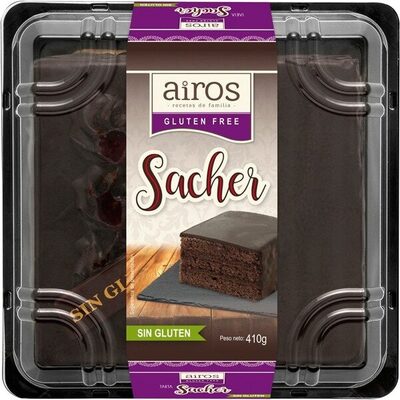
Airos Sacher Torte comes in a 410 g pack. It is sold under the Airos brand. On Mamori it sits under Snacks › Desserts › Brownie. Its label lists 37 ingredients.
Airos Sacher Torte at a glance
Airos Sacher Torte fits Vegetarian, Pescatarian and Vegan + Eggs diets. It also carries the Gluten Free, Crustaceans Free, Fish Free, Peanut Free, Soy Free, Dairy Free, Tree Nut Free, Celery Free, Mustard Free, Sesame Free, Lupin Free, Mollusks Free, Barley Free, Beef Free, Citrus Fruit Free, Gelatin Free, Lactose Free, Latex Free, Oats Free, Pork Free, Rice Free, Rye Free and Wheat Free badges. Nutrition-wise, it's Low Salt/Sodium, Low Protein, High Carbs, High in Sugars, Medium in Fiber, Medium in Calories and Medium Saturated Fat. Worth knowing: it's marked Non-Vegan, Non-Low FODMAP, Non-Vegan + Dairy, Contains Egg, Contains Additives, Contains Artificial Flavourings, Contains Corn, Contains Emulsifier, Contains Fructose, Contains Added Sugars, Contains Poultry and Contains Seed.
Diet and allergens
Suitable for vegetarian and pescatarian diets.
Not suitable for a vegan diet.
Contains eggs.
Free from gluten, crustaceans, fish, peanuts, soy, milk, tree nuts, celery, mustard, sesame, lupin and molluscs.
May contain: Sulfites.
Based on Mamori's check of the ingredients on the label. Recipes change, so always read the pack if you have an allergy or intolerance.
Size: 410 g
Last updated 25 August 2026
Ingredients
Cake, pasteurized egg, sugar, starches, corn, tapioca, defatted cocoa powder, humectant: E422, egg albumin, water, emulsifiers, E471, E477, E470a, stabilizers, E415, E1520, thickener: E464, natural flavor, salt, raspberry preparation, sugar, water, raspberry, glucose and fructose syrup, thickeners, E1422, E410, gelling agent: E440ii, acidulant: E330, preservative: E202, flavor, cocoa cream, sugar, defatted cocoa powder, sunflower oil, palm fat
Additives & flavourings
Additives
- E422: Glycerol (Emulsifier): Generally safe
Glycerol, or E422, is a clear, sweet-tasting liquid also known as glycerine. It is a type of sugar alcohol and can be made from vegetable oils, animal fats, or produced synthetically.
In food, it helps keep moisture in, thickens texture, stabilises mixtures, and can help emulsions stay smooth. It is used in a range of foods where softness, moisture retention, or smooth texture is needed, such as confectionery, baked goods, icings, and some drinks.
Glycerol is generally considered safe at normal food amounts. It is allowed in food in the EU after safety assessment, and the sources checked raise no concern for typical use.
- E471: Mono- And Diglycerides Of Fatty Acids (Glyceryl Monostearate, Glyceryl Distearate): Generally safe
Mono- and diglycerides of fatty acids, or E471, are emulsifiers made from glycerol and fatty acids. The fatty acids can come from vegetable oils or animal fats, so the source is not always clear unless stated by the producer.
They help oil and water mix, improve texture, and keep foods stable. They are often used in baked goods, spreads, desserts, ice cream, sauces, and processed foods where a smooth or consistent texture is needed.
E471 is generally considered safe. It is allowed in food in the EU after safety assessment, and the sources we check raise no concern at normal amounts.
- E477: Propane-1,2-Diol Esters Of Fatty Acids, Propylene Glycol Esters Of Fatty Acids: Generally safe
Propane-1,2-diol esters of fatty acids (E477), also called propylene glycol esters of fatty acids, are emulsifiers made by combining propylene glycol with fatty acids. The fatty acids can come from vegetable or animal sources.
E477 helps oil and water mix, improves texture, and can help stabilise foods. It may be used in products such as cakes, whipped toppings, desserts, confectionery, and fat-based spreads, where a smooth or stable texture is needed.
E477 is generally considered safe at normal food-use levels. It is authorised for use in the EU after safety assessment, and the sources checked raise no concern at typical amounts.
- E470A: Sodium, Potassium And Calcium Salts Of Fatty Acids (Emulsifier) (E470a): Generally safe
Sodium, potassium and calcium salts of fatty acids (E470a) are emulsifiers and stabilisers made by combining common fatty acids with sodium, potassium or calcium. The fatty acids can come from plant or animal fats, so the source may matter for vegetarian, vegan or religious diets.
They help oils and water mix, improve texture, and stop ingredients separating. They may be used in foods where emulsifying, stabilising or anti-caking effects are needed, such as some baked goods, confectionery, powders, and processed foods.
E470a is allowed in food in the EU after safety assessment. It is generally considered safe at normal amounts, and the checked sources raise no specific concern for typical dietary use.
- E415: Xanthan Gum (Thickener): Generally safe
Xanthan gum (E415) is a thickening and stabilising gum made by fermenting sugars with the bacterium Xanthomonas campestris, then purifying and drying the resulting substance.
It helps foods hold water, thicken, and keep ingredients evenly mixed. It is often used in sauces, dressings, desserts, bakery products, gluten-free foods, and drinks where a smooth or stable texture is needed.
Xanthan gum is generally considered safe. It is allowed in food in the EU after EFSA assessment, and the sources checked do not raise concerns at normal amounts used in foods.
- E1520: Propane-1, 2-Diol (Propylene Glycol): Generally safe
Propane-1,2-diol, better known as propylene glycol, is food additive E1520. It is a clear, slightly sweet liquid made industrially, and is used as a carrier or solvent for other ingredients such as flavours and colours.
In food, it helps dissolve, carry, or keep ingredients evenly mixed. It may be found where flavourings, colours, or other additives need a liquid carrier, rather than being used mainly for taste or texture itself.
It is generally considered safe at normal food amounts. It is allowed in the EU after EFSA safety assessment, and EFSA’s 2018 review found no concern about people eating too much from its approved uses.
- E464: Hydroxypropyl Methyl Cellulose: Generally safe
Hydroxypropyl methyl cellulose, or E464, is also called hypromellose. It is a modified cellulose, made from plant fibre cellulose that has been chemically adjusted so it dissolves and works well in water.
In food, E464 acts as a thickener, stabiliser and emulsifier. It helps improve texture, hold mixtures together, and control moisture. It may be used in products such as sauces, bakery fillings, desserts, processed foods, and some gluten-free or reduced-fat foods.
It is generally considered safe. E464 is allowed in food in the EU after safety assessment, and the sources checked raise no concern at normal amounts.
- E1422: Acetylated Distarch Adipate (Stabiliser): Generally safe
Acetylated distarch adipate (E1422) is a modified starch. It is usually made from food starches such as maize, potato or tapioca, which are chemically treated to make them more stable during heating, freezing and mixing.
It is used as a thickener, stabiliser and texture improver. It helps foods stay smooth and consistent, especially in products such as sauces, soups, dairy desserts, pie fillings, frozen meals and processed foods.
E1422 is generally considered safe at normal food-use levels. It is allowed in the EU after safety assessment, and the sources checked do not raise concerns for typical amounts used in foods.
- E410: Locust Bean Gum (Carob Gum) (Thickener) (Stabiliser) (Gelling Agent): Generally safe
Locust bean gum, or E410, is a natural gum made from the seeds of the carob tree. It is a type of soluble fibre and is also known as carob gum.
It is used to thicken, stabilise, and help give foods a smooth or gel-like texture. You may find it in products such as ice cream, dairy desserts, sauces, dressings, bakery fillings, and some processed foods.
It is generally considered safe at normal food-use amounts. It is allowed in the EU after EFSA safety assessment, and the sources checked raise no specific concern for typical dietary exposure.
- E440: Pectins (I) Pectin (Ii) Amidated Pectin: Generally safe
Pectins (E440) are natural gelling fibres found in the cell walls of fruits and vegetables, especially apples and citrus peel. E440 includes ordinary pectin and amidated pectin, a modified form that gels more easily in some foods.
They are used as thickeners, stabilisers and gelling agents. You may find them in jams, jellies, fruit spreads, desserts, confectionery, yoghurts and some drinks or sauces where a thicker texture is needed.
Pectins are generally considered safe. They are authorised for use in food in the EU after safety assessment, and the sources checked raise no concern at normal food amounts.
- E330: Citric Acid: Generally safe
Citric acid (E330) is a natural organic acid found in citrus fruits and many other plants. The citric acid used in food is usually made by fermentation of sugars using micro-organisms.
It is used as an acidity regulator and antioxidant. It helps give a sharp, sour taste, control pH, and slow colour or flavour changes. It is common in soft drinks, sweets, jams, sauces, canned foods, and many processed foods.
Citric acid is generally considered safe at normal food levels. It is allowed in food in the EU after safety assessment, and the sources checked raise no concern for typical dietary amounts.
- E202: Potassium Sorbate: Some concerns
Potassium sorbate (E202) is the potassium salt of sorbic acid. It is a preservative used to slow the growth of moulds and yeasts in food and drink.
It is often used in products where spoilage by yeasts or moulds is a concern, such as sauces, bakery fillings, cheese products, fruit preparations, drinks and some processed foods.
It is allowed in food, but some concerns have been raised. EFSA found that people who eat a lot of foods containing sorbates could go over the safe daily amount, so overall exposure is the main issue.
Flavourings
- natural flavor: Natural flavouring (Regulation (EC) No 1334/2008 on flavourings, Article 16).
- flavor: Flavouring (Regulation (EC) No 1334/2008 on flavourings, Article 16).
Questions and answers
Is Airos Sacher Torte vegan?
No. It contains eggs, so it is not suitable for a vegan diet.
Is Airos Sacher Torte vegetarian?
Yes. It is suitable for a vegetarian diet.
Is Airos Sacher Torte suitable for a pescatarian diet?
Yes. It is suitable for a pescatarian diet.
Is Airos Sacher Torte suitable for a Low FODMAP diet?
No. It is not suitable for a Low FODMAP diet.
Is Airos Sacher Torte suitable for a Vegan + Dairy diet?
No. It is not suitable for a Vegan + Dairy diet.
Is Airos Sacher Torte suitable for a Vegan + Eggs diet?
Yes. It is suitable for a Vegan + Eggs diet.
Is Airos Sacher Torte gluten-free?
Yes. Its ingredients include no gluten, and its label gives no gluten warning.
Does Airos Sacher Torte contain milk?
No. Its ingredients include no milk, and its label gives no milk warning.
Is Airos Sacher Torte nut-free?
Yes. Its ingredients include no peanuts or tree nuts, and its label gives no nut warning.
Does Airos Sacher Torte contain eggs?
Yes. It contains eggs.
Which allergens does Airos Sacher Torte contain?
It contains eggs. Its label also says it may contain: Sulfites.
More in Brownie
- oppo pro Chocolate Brownie
- Qnt Barre raspberry brownie
- Carrefour Small Chocolate Pot de Crème
- IronMaxx Nutrition vegan Protein Bar Brownie
- Waitrose 4 Chocolate brownies
- Mr Brownie Display Galactic Brownie
- Milka Choco brownie
- Bettr Bett'r Brownie Mix
- Medela Brownie Raspberry Strudel
- Medela Brownie Orange Strudel
- Nestle Lion Brownie
- Bross Bros Brownie Choc&Haz