
Rubicon Exotic Passion Fruit 330 ml
Rubicon
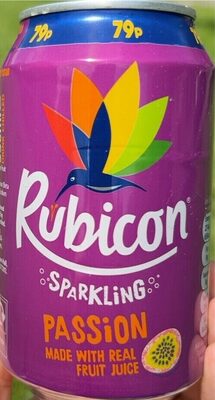
Rubicon Exotic Passion Fruit comes in a 330 ml pack. It is sold under the Rubicon brand. On Mamori it sits under Additives › Flavor Enhancers › Passion Fruit Flavour. Its label lists 12 ingredients.
Rubicon Exotic Passion Fruit at a glance
Rubicon Exotic Passion Fruit fits Vegan, Vegetarian, Pescatarian, Vegan + Dairy and Vegan + Eggs diets. It also carries the Gluten Free, Crustaceans Free, Egg Free, Fish Free, Peanut Free, Soy Free, Dairy Free, Tree Nut Free, Celery Free, Mustard Free, Sesame Free, Lupin Free, Mollusks Free, Barley Free, Beef Free, Citrus Fruit Free, Corn Free, Gelatin Free, Lactose Free, Latex Free, Oats Free, Pork Free, Poultry Free, Rice Free, Rye Free and Wheat Free badges. Nutrition-wise, it's Low Calorie, Low Carbs, Low Salt/Sodium, Low Saturated Fat, Low Sugars, Low Fiber and Low Protein. Worth knowing: it's marked Non-Low FODMAP, Contains Additives, Contains Artificial Flavourings, Contains Emulsifier, Contains Fructose, Contains Added Sugars and Contains Seed.
Diet and allergens
Suitable for vegan, vegetarian and pescatarian diets.
Free from gluten, crustaceans, eggs, fish, peanuts, soy, milk, tree nuts, celery, mustard, sesame, lupin and molluscs.
Based on Mamori's check of the ingredients on the label. Recipes change, so always read the pack if you have an allergy or intolerance.
Size: 330 ml
Last updated 2 November 2026
Ingredients
Carbonated Water, Sugar, Passion Fruit Juice From Concentrate, Acid, Malic Acid, Flavourings, Stabilisers, Gellan Gum, Pectin, Colour: Sea Carotene, Sweetener: Sucralose, Preservative: Sodium Benzoate
Additives & flavourings
Additives
- E296: Malic Acid (Acid): Generally safe
Malic acid (E296) is an acid naturally found in many fruits, especially apples. For food use, it is usually made by industrial fermentation or chemical production and is used as a food acid.
It adds a sharp, fruity sour taste and helps control acidity in foods and drinks. It may be found in sweets, soft drinks, jams, fruit products, desserts and some processed foods where a tart flavour or acidity control is needed.
It is generally considered safe at normal food amounts. It is allowed in the EU after safety assessment, and the sources checked raise no concern for typical use.
- E418: Gellan Gum (Thickener) (Stabiliser): Generally safe
Gellan gum, or E418, is a food gum made by fermenting sugar with bacteria. It is a soluble fibre-like polysaccharide used in small amounts to change the texture of foods.
It helps thicken, stabilise, gel or keep ingredients evenly mixed. It may be used in products such as desserts, sauces, fillings, plant-based drinks and other foods where a smooth or stable texture is needed.
Gellan gum is generally considered safe at normal food levels. It is authorised for use in the EU after EFSA assessment, and the sources checked raise no specific concern for typical dietary amounts.
- E440: Pectins (I) Pectin (Ii) Amidated Pectin: Generally safe
Pectins (E440) are natural gelling fibres found in the cell walls of fruits and vegetables, especially apples and citrus peel. E440 includes ordinary pectin and amidated pectin, a modified form that gels more easily in some foods.
They are used as thickeners, stabilisers and gelling agents. You may find them in jams, jellies, fruit spreads, desserts, confectionery, yoghurts and some drinks or sauces where a thicker texture is needed.
Pectins are generally considered safe. They are authorised for use in food in the EU after safety assessment, and the sources checked raise no concern at normal food amounts.
- E160a: Carotenes: Generally safe
Carotenes (E160a) are orange-yellow colourants, including alpha-carotene, beta-carotene and gamma-carotene. They are pigments found naturally in plants such as carrots and leafy greens, and can also be made synthetically or obtained from natural sources. Some forms may be animal derived.
They are used to add or restore yellow to orange colour in foods. They may be found in products such as margarines, dairy products, desserts, sauces, drinks and confectionery.
E160a is allowed in food in the EU after safety assessment. It is generally considered safe at normal food amounts, and the sources checked raise no concern for typical use.
- E955: Sucralose (Trichlorogalactosucrose): Generally safe
Sucralose (E955), also called trichlorogalactosucrose, is an artificial high-intensity sweetener. It is made by chemically modifying sugar, which makes it taste very sweet while adding little or no energy in the small amounts used.
It is used to sweeten foods and drinks without using much sugar. You may find it in low-sugar or sugar-free drinks, desserts, yoghurts, chewing gum, tabletop sweeteners, and some special diet foods.
Sucralose is generally considered safe at normal amounts. It is authorised for use in the EU after safety assessment, and the sources checked raise no concern for typical food use.
- E211: Sodium Benzoate: Some concerns
Sodium benzoate (E211) is the sodium salt of benzoic acid, a preservative. It is a manufactured form of a substance that also occurs naturally in small amounts in some fruits and spices.
It helps stop the growth of yeasts, moulds and some bacteria, especially in acidic foods and drinks. It is often used in soft drinks, fruit juices, pickles, sauces, dressings and some jams or preserves.
It is allowed in food, but some concerns have been raised. EFSA found that people who eat a lot of foods containing benzoates may exceed the safe daily amount, so overall intake can be an issue for high consumers.
Flavourings
- Flavourings: Flavouring (Regulation (EC) No 1334/2008 on flavourings, Article 16).
Questions and answers
Is Rubicon Exotic Passion Fruit vegan?
Yes. It is suitable for a vegan diet.
Is Rubicon Exotic Passion Fruit vegetarian?
Yes. It is suitable for a vegetarian diet.
Is Rubicon Exotic Passion Fruit suitable for a pescatarian diet?
Yes. It is suitable for a pescatarian diet.
Is Rubicon Exotic Passion Fruit suitable for a Low FODMAP diet?
No. It is not suitable for a Low FODMAP diet.
Is Rubicon Exotic Passion Fruit suitable for a Vegan + Dairy diet?
Yes. It is suitable for a Vegan + Dairy diet.
Is Rubicon Exotic Passion Fruit suitable for a Vegan + Eggs diet?
Yes. It is suitable for a Vegan + Eggs diet.
Is Rubicon Exotic Passion Fruit gluten-free?
Yes. Its ingredients include no gluten, and its label gives no gluten warning.
Does Rubicon Exotic Passion Fruit contain milk?
No. Its ingredients include no milk, and its label gives no milk warning.
Is Rubicon Exotic Passion Fruit nut-free?
Yes. Its ingredients include no peanuts or tree nuts, and its label gives no nut warning.
Does Rubicon Exotic Passion Fruit contain eggs?
No. Its ingredients include no eggs, and its label gives no egg warning.
More in Flavor Enhancers
- Kania Cream with porcini mushrooms
- Eurospin Vanilla-flavored soy drink
- Qnt LIFE PROTEIN WATER
- Milbona Creamy
- Ferrero Mini Hazelnut Eggs
- Milbona British Mild Cheddar
- Cantina Orsogna Nero D'avola Sicily
- Milbona Skyr Strawberry
- Mlekovita Cheddar cheese shavings
- Alsa Vanilla sugar packets
- Sapori Ricciarelli Pistachio
- Shan Haleem Mix Complete