
Quorn Vegan Hot & Spicy Burgers 264 g
On the pack: Quorn Vegan Hot & Spicy Burgers X4 264 g
Quorn
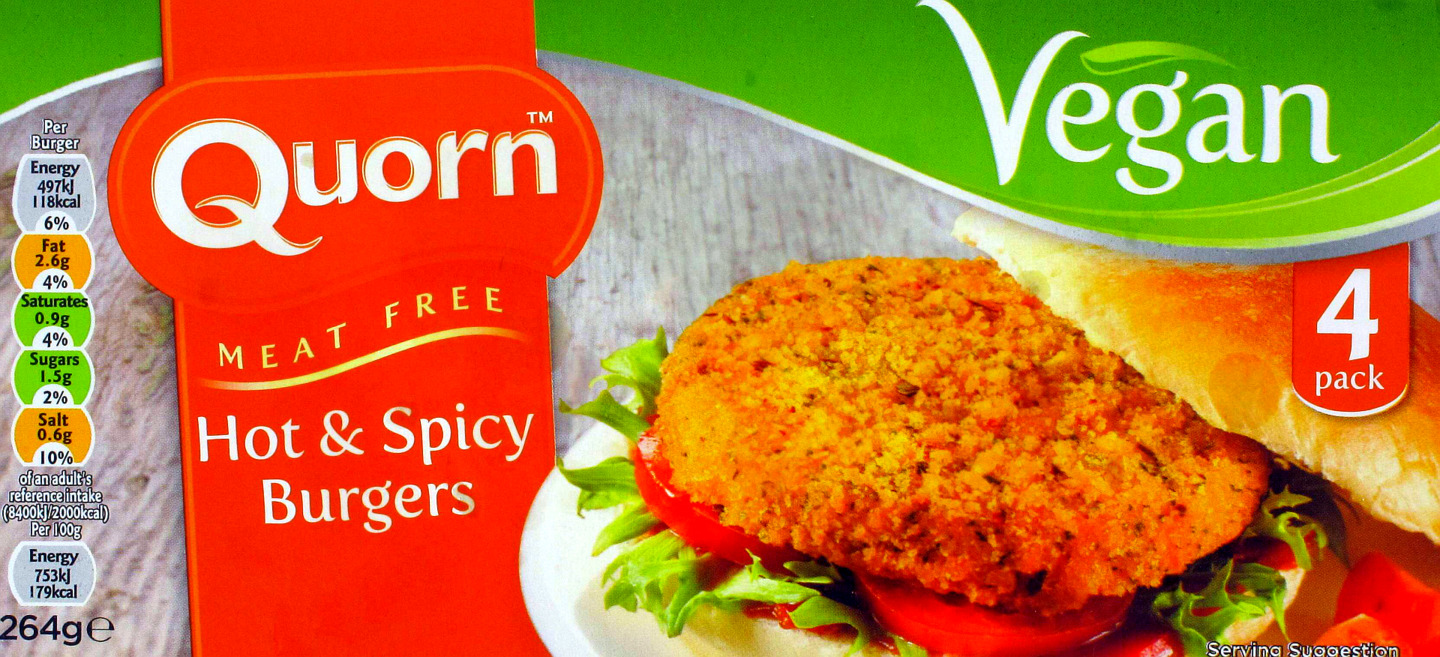
Quorn Vegan Hot & Spicy Burgers comes in a 264 g pack. It is sold under the Quorn brand. On Mamori it sits under Frozen › Patties › Burger. Its label lists 37 ingredients.
Quorn Vegan Hot & Spicy Burgers at a glance
Quorn Vegan Hot & Spicy Burgers fits Vegetarian, Pescatarian, Vegan + Dairy and Vegan + Eggs diets. It also carries the Crustaceans Free, Egg Free, Fish Free, Peanut Free, Soy Free, Dairy Free, Tree Nut Free, Celery Free, Mustard Free, Sesame Free, Lupin Free, Mollusks Free, Barley Free, Beef Free, Citrus Fruit Free, Corn Free, Fructose Free, Gelatin Free, Lactose Free, Latex Free, No Added Sugars, Oats Free, Pork Free, Poultry Free and Rye Free badges. Nutrition-wise, it's High Fiber, High Protein, Low Saturated Fat, Low Sugars, Medium in Calories, Medium Carbs and Medium Salt/Sodium. Worth knowing: it's marked Non-Vegan, Non-Low FODMAP, Contains Gluten, Contains Additives, Contains Artificial Flavourings, Contains Emulsifier, Contains Rice, Contains Seed and Contains Wheat.
Diet and allergens
Suitable for vegetarian and pescatarian diets.
Not suitable for a vegan diet.
Contains gluten.
Free from crustaceans, eggs, fish, peanuts, soy, milk, tree nuts, celery, mustard, sesame, lupin and molluscs.
Based on Mamori's check of the ingredients on the label. Recipes change, so always read the pack if you have an allergy or intolerance.
Size: 264 g
Last updated 2 November 2026
Ingredients
Mycoprotein, Wheat Flour, Wheat Flour, calcium carbonate, iron, niacin, Thiamine, Rapeseed Oil, Water, Wheat Starch, Wheat gluten, Pea protein, Potato protein, Firming Agents, Calcium Chloride, Calcium Acetate, Natural Flavourings, salt, Kibbled Chilli, parsley, garlic powder, Onion Powder, Pea Fibre, yeast, Tomato Powder, Spices, Cayenne Pepper, White Pepper, Stabilisers, Carrageenan, Sodium Alginate, Rice flour, Spice Extracts, black pepper, cayenne, Ginger, Colour: Paprika Extract
Additives & flavourings
Additives
- E170: Calcium Carbonate, Chalk: Generally safe
Calcium carbonate (E170), also known as chalk, is a naturally occurring mineral made of calcium, carbon and oxygen. For food use it is purified, and it may come from sources such as limestone or shells.
It is mainly used as a white colourant, but it can also help with acidity control, anti-caking, or as a calcium source in some foods. It may be found in confectionery, chewing gum, bakery products, decorations and some supplements or fortified foods.
It is generally considered safe at normal food amounts. It is authorised for use in the EU after safety assessment, and the sources checked raise no concern for typical dietary exposure.
- E509: Calcium Chloride (Sequestrant): Some concerns
Calcium chloride (E509) is a salt made from calcium and chloride. In food, it is used as an acidity regulator, firming agent, stabiliser, and anti-caking agent.
It can help keep fruit and vegetables firm, support cheese making, improve texture in tofu, and prevent powders or salts from clumping. It may also be used where control of acidity or mineral balance is needed.
It is allowed for use in food, but some concerns have been raised about high intakes. EFSA found that people who consume a lot of foods containing calcium chloride could exceed the safe daily amount.
- E263: Calcium Acetate (Preservative): Generally safe
Calcium acetate (E263) is the calcium salt of acetic acid, the same acid found in vinegar. It is a simple mineral salt used as a food additive, mainly as a preservative and acidity regulator.
In food, it helps control acidity and can slow the growth of some microbes, which helps protect quality and shelf life. Preservatives like this may be used in baked goods, sauces, pickled products, and other foods where acidity control is useful.
It is generally considered safe at normal food amounts. It is authorised for use in the EU after safety assessment, and the checked sources raise no specific concern for typical dietary exposure.
- E407: Carrageenan (Thickener) (Stabiliser) (Gelling Agent): Some concerns
Carrageenan, or E407, is a thickening and gelling additive made from red seaweed. It is a large carbohydrate substance used to change the texture of foods.
It helps foods become thicker, creamier or more stable, and can also help gels form. It is often used in dairy desserts, flavoured milks, ice cream, plant-based drinks, sauces and processed meats.
It is allowed in food, but some concerns have been raised. EFSA found that people who eat a lot of foods containing carrageenan could go over the safe daily amount, so high intake is the main issue.
- E401: Sodium Alginate (Thickener) (Stabiliser) (Gelling Agent): Generally safe
Sodium alginate (E401) is the sodium salt of alginic acid, a natural substance extracted from brown seaweed. It is a type of soluble fibre and is used as a thickener, stabiliser and gelling agent.
In food, it helps liquids become thicker, keeps mixtures smooth, and can form gels. It may be used in sauces, desserts, ice cream, processed cheese, fillings and other foods where texture and stability are needed.
It is generally considered safe. It is allowed in food in the EU after EFSA safety assessment, and the sources checked raise no concern at normal amounts.
- E160c: Paprika Extract, Capsanthin, Capsorubin: Generally safe
Paprika extract, capsanthin and capsorubin (E160c) is a natural red-orange food colouring made from paprika peppers. The main colouring substances are carotenoids, especially capsanthin and capsorubin.
It is used to give or strengthen orange, red or reddish-brown colour in foods. It may be found in items such as cheeses, sauces, soups, snacks, meat products and seasonings.
It is generally considered safe at normal food-use amounts. It is authorised for use in the EU after EFSA safety assessment, and the sources checked raise no concern at typical levels of consumption.
Flavourings
- Natural Flavourings: Natural flavouring (Regulation (EC) No 1334/2008 on flavourings, Article 16).
Questions and answers
Is Quorn Vegan Hot & Spicy Burgers vegan?
No. It is not suitable for a vegan diet.
Is Quorn Vegan Hot & Spicy Burgers vegetarian?
Yes. It is suitable for a vegetarian diet.
Is Quorn Vegan Hot & Spicy Burgers suitable for a pescatarian diet?
Yes. It is suitable for a pescatarian diet.
Is Quorn Vegan Hot & Spicy Burgers suitable for a Low FODMAP diet?
No. It is not suitable for a Low FODMAP diet.
Is Quorn Vegan Hot & Spicy Burgers suitable for a Vegan + Dairy diet?
Yes. It is suitable for a Vegan + Dairy diet.
Is Quorn Vegan Hot & Spicy Burgers suitable for a Vegan + Eggs diet?
Yes. It is suitable for a Vegan + Eggs diet.
Is Quorn Vegan Hot & Spicy Burgers gluten-free?
No. It contains gluten.
Does Quorn Vegan Hot & Spicy Burgers contain milk?
No. Its ingredients include no milk, and its label gives no milk warning.
Is Quorn Vegan Hot & Spicy Burgers nut-free?
Yes. Its ingredients include no peanuts or tree nuts, and its label gives no nut warning.
Does Quorn Vegan Hot & Spicy Burgers contain eggs?
No. Its ingredients include no eggs, and its label gives no egg warning.
Which allergens does Quorn Vegan Hot & Spicy Burgers contain?
It contains gluten.
More in Burger
- Proceli brioxe burge
- Amadori Great burger
- Amadori Chicken Burger
- Birds Eye Chicken Quarter Pounders
- Valsoia Cutlets with spinach
- Amadori Grand Burger
- Rustlers Quarter Pounder
- Rustlers Bbq Rib
- Ardo Cauliflo Cheese Burger
- Oumph! The Burger (vegan)
- Montana Beef Burger With Bacon
- Fry's Quinoa & Brown Rice Protein Burgers