
Protein Fitaid Strawberry Lemonade 355 ml
Protein
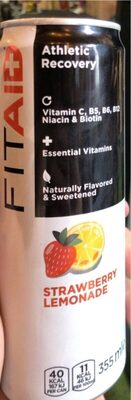
Protein Fitaid Strawberry Lemonade comes in a 355 ml pack. It is sold under the Protein brand. On Mamori it sits under Beverages › Soft Drinks › Lemonade. Its label lists 22 ingredients.
Protein Fitaid Strawberry Lemonade at a glance
Protein Fitaid Strawberry Lemonade fits a Vegan + Eggs diet. It also carries the Gluten Free, Crustaceans Free, Egg Free, Fish Free, Peanut Free, Soy Free, Dairy Free, Tree Nut Free, Celery Free, Mustard Free, Sesame Free, Lupin Free, Mollusks Free, Artificial Flavourings Free, Barley Free, Beef Free, Citrus Fruit Free, Corn Free, Gelatin Free, Lactose Free, Latex Free, Oats Free, Pork Free, Poultry Free, Rice Free, Rye Free, Seed Free and Wheat Free badges. Nutrition-wise, it's Low Calorie, Low Carbs, Low Salt/Sodium, Low Saturated Fat, Low Sugars, Low Fiber and Low Protein. Worth knowing: it's marked Non-Vegan, Non-Vegetarian, Non-Pescatarian, Non-Low FODMAP, Non-Vegan + Dairy, Contains Additives, Contains Emulsifier, Contains Fructose and Contains Added Sugars.
Diet and allergens
Not suitable for vegan, vegetarian or pescatarian diets.
Free from gluten, crustaceans, eggs, fish, peanuts, soy, milk, tree nuts, celery, mustard, sesame, lupin and molluscs.
Based on Mamori's check of the ingredients on the label. Recipes change, so always read the pack if you have an allergy or intolerance.
Size: 355 ml
Last updated 2 November 2026
Ingredients
Carbonated Water, Agave Nectar, Citric Acid, malic acid, stabilizer: gum arabic, glutamine, leucine, potassium glycerophosphate, ascorbic acid hydrate, caffeine from green tea, magnesium lactate, isoleucine acetate, Co-Enzyme Q10, nicotinic acid, D-alpha-tocopheryl acetate: Vitamin E, dha oil extracted from microalgae schizochytrium sp., pantothenate: Vitamin B5, pyridoxine: Vitamin B6, Riboflavin: Vitamin B2, thiamine mononitrate: Vitamin B1, cholecalciferol: vitamin D3, cyanocobalamin: vitamin B12
Additives
- E330: Citric Acid: Generally safe
Citric acid (E330) is a natural organic acid found in citrus fruits and many other plants. The citric acid used in food is usually made by fermentation of sugars using micro-organisms.
It is used as an acidity regulator and antioxidant. It helps give a sharp, sour taste, control pH, and slow colour or flavour changes. It is common in soft drinks, sweets, jams, sauces, canned foods, and many processed foods.
Citric acid is generally considered safe at normal food levels. It is allowed in food in the EU after safety assessment, and the sources checked raise no concern for typical dietary amounts.
- E296: Malic Acid (Acid): Generally safe
Malic acid (E296) is an acid naturally found in many fruits, especially apples. For food use, it is usually made by industrial fermentation or chemical production and is used as a food acid.
It adds a sharp, fruity sour taste and helps control acidity in foods and drinks. It may be found in sweets, soft drinks, jams, fruit products, desserts and some processed foods where a tart flavour or acidity control is needed.
It is generally considered safe at normal food amounts. It is allowed in the EU after safety assessment, and the sources checked raise no concern for typical use.
- E414: Gum Arabic (Acacia Gum): Generally safe
Gum arabic, or acacia gum, is E414. It is a natural gum obtained from the dried sap of acacia trees. It is a soluble dietary fibre made mainly of complex carbohydrates.
In food, it is used as a thickener, stabiliser and emulsifier. It helps keep mixtures even, improves texture, and can help hold flavours or colours in place. It may be found in sweets, soft drinks, icings, baked goods and flavourings.
It is generally considered safe at normal food amounts. It is authorised for use in the EU after safety assessment, and the sources checked raise no concern for typical use.
- E641: L-Leucine: Generally safe
L-leucine (E641) is an essential amino acid, one of the building blocks of protein. It occurs naturally in many protein-rich foods and can also be made for use as a food additive.
In food, it is used as a nutrient and protein-related additive, and may be added to foods where amino acids are used to adjust nutritional content or formulation. Its use is more about nutrition than flavour, colour, or preservation.
It is generally considered safe at normal food amounts. E641 is allowed in food in the EU after safety assessment, and the checked sources raise no concern for typical use.
- E301: Sodium Ascorbate: Generally safe
Sodium ascorbate (E301) is the sodium salt of ascorbic acid, better known as vitamin C. It is a water-soluble substance used as an antioxidant and acidity regulator.
In food, it helps slow oxidation, which can prevent browning and flavour changes. It is used in a range of foods where antioxidant protection is needed, such as processed meats, preserved fruit, drinks and bakery products.
It is generally considered safe. It is allowed in food in the EU after safety assessment, and EFSA’s review raised no concern at normal dietary amounts.
- E329: Magnesium Lactate: Generally safe
Magnesium lactate, sometimes linked with E329, is a magnesium salt of lactic acid. It is made by combining magnesium with lactate, a substance related to lactic acid, and is mainly used as a source of the mineral magnesium.
In foods, it may be added to increase magnesium content, for example in fortified foods or drinks. Acidity regulators help control sourness and pH, but in the EU magnesium lactate is treated as a permitted source of magnesium rather than as a food additive.
It is generally considered safe when used in foods. The main EU point is that it is listed as a form of magnesium that may be added to foods.
- E444: Sucrose Acetate Isobutyrate: Generally safe
Sucrose acetate isobutyrate, or E444, is a modified sugar-based substance made by reacting sucrose with acetic and isobutyric acids. It is a thick, oil-soluble liquid used as a stabiliser and emulsifier.
In food, it helps keep flavouring oils evenly mixed in water-based drinks, especially soft drinks and flavoured beverages. It can also help prevent separation and keep a consistent appearance.
E444 is generally considered safe at normal food levels. It is authorised for use in the EU after EFSA safety assessment, and the reviewed sources do not raise concerns at typical amounts.
- E308: Gamma-Tocopherol (Synthetic): Generally safe
Gamma-tocopherol (E308) is a form of vitamin E used as a food additive. It may be made synthetically or obtained from vegetable oils, and it belongs to the tocopherol family of fat-soluble antioxidants.
It helps protect fats and oils from oxidation, which can cause rancid flavours and loss of quality. It may be used in foods containing oils or fats, such as spreads, dressings, snacks, and some processed foods.
Gamma-tocopherol is generally considered safe at normal food-use levels. It is authorised for use in the EU after EFSA safety assessment, and the sources checked raise no particular concern at typical amounts.
- E476: Polyglycerol Polyricinoleate: Generally safe
Polyglycerol polyricinoleate (E476), often shortened to PGPR, is an emulsifier made from polyglycerol and fatty acids from castor oil. It is a specialised fat-like substance used in small amounts.
It helps mix ingredients that do not normally blend well, especially fat and water-based parts. It is commonly used in chocolate and cocoa products to improve flow, and can also be used in some spreads, sauces, and similar processed foods.
E476 is generally considered safe. It is authorised for use in food in the EU after EFSA safety assessment, and the sources checked raise no concern at normal amounts.
Questions and answers
Is Protein Fitaid Strawberry Lemonade vegan?
No. It is not suitable for a vegan diet.
Is Protein Fitaid Strawberry Lemonade vegetarian?
No. It is not suitable for a vegetarian diet.
Is Protein Fitaid Strawberry Lemonade suitable for a pescatarian diet?
No. It is not suitable for a pescatarian diet.
Is Protein Fitaid Strawberry Lemonade suitable for a Low FODMAP diet?
No. It is not suitable for a Low FODMAP diet.
Is Protein Fitaid Strawberry Lemonade suitable for a Vegan + Dairy diet?
No. It is not suitable for a Vegan + Dairy diet.
Is Protein Fitaid Strawberry Lemonade suitable for a Vegan + Eggs diet?
Yes. It is suitable for a Vegan + Eggs diet.
Is Protein Fitaid Strawberry Lemonade gluten-free?
Yes. Its ingredients include no gluten, and its label gives no gluten warning.
Does Protein Fitaid Strawberry Lemonade contain milk?
No. Its ingredients include no milk, and its label gives no milk warning.
Is Protein Fitaid Strawberry Lemonade nut-free?
Yes. Its ingredients include no peanuts or tree nuts, and its label gives no nut warning.
Does Protein Fitaid Strawberry Lemonade contain eggs?
No. Its ingredients include no eggs, and its label gives no egg warning.
More in Lemonade
- FOOD FESTIVAL LEMONADE KIWI & MINT FLAVOR
- Snapple Pretty in Pink Lemonade
- Fentimans Victorian lemonade
- Fentimans Rose Lemonade
- ROBINSONS Barley Water Lemon
- Fentimans Rose Lemonade
- Schweppes Lemonade Can
- Barr Limeade 2lt
- Barr Diet Lemonade 2lt
- Lurisia Our Lemonade
- San Pellegrino The Sparkling Lemonade
- Whole earth Organic Sparkling Lemonade Zesty