
Powerbar Deluxe Protein Banana 500 g
Powerbar
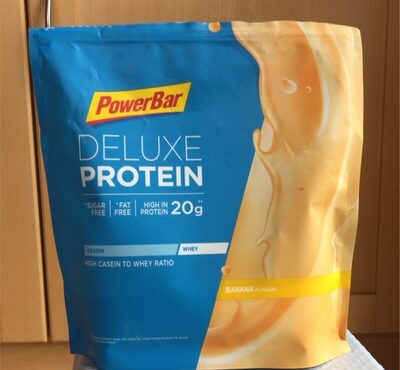
Powerbar Deluxe Protein Banana comes in a 500 g pack. It is sold under the Powerbar brand. On Mamori it sits under Chilled › Dairy › Whey Powder. Its label lists 13 ingredients.
Powerbar Deluxe Protein Banana at a glance
Powerbar Deluxe Protein Banana fits a Vegan + Dairy diet. It also carries the Gluten Free, Crustaceans Free, Egg Free, Fish Free, Peanut Free, Tree Nut Free, Celery Free, Mustard Free, Sesame Free, Lupin Free, Barley Free, Beef Free, Citrus Fruit Free, Corn Free, Fructose Free, Gelatin Free, Latex Free, No Added Sugars, Oats Free, Pork Free, Poultry Free, Rice Free, Rye Free and Wheat Free badges. Nutrition-wise, it's High Protein, Low Saturated Fat, Medium in Fiber, Medium in Calories, Medium Carbs, Medium Salt/Sodium and Medium in Sugars. Worth knowing: it's marked Non-Vegan, Non-Vegetarian, Non-Pescatarian, Non-Low FODMAP, Non-Vegan + Eggs, Contains Soy, Contains Dairy, Contains Additives, Contains Artificial Flavourings, Contains Emulsifier, Lactose and Contains Seed.
Diet and allergens
Not suitable for vegan, vegetarian or pescatarian diets.
Contains soy and milk.
Free from gluten, crustaceans, eggs, fish, peanuts, tree nuts, celery, mustard, sesame and lupin.
Based on Mamori's check of the ingredients on the label. Recipes change, so always read the pack if you have an allergy or intolerance.
Size: 500 g
Last updated 26 October 2026
Ingredients
Calciumcaseinate, Whey Protein, Low-fat cocoa powder, Protein-enriched whey powder, Flavourings, Emulsifiers, Sunflower Lecithin, Soy lecithin, Sweeteners, Sodium cyclamate, saccharin sodium, Sucralose, Anti-Caking Agent: Silicon Dioxide
Additives & flavourings
Additives
- E952: Cyclamic Acid And Its Na And Ca Salts: Generally safe
Cyclamic acid and its sodium and calcium salts, also called cyclamate, are sweeteners with the E-number E952. They are synthetic substances that taste sweet but add very little energy to food.
E952 is used to sweeten foods and drinks, often in reduced-sugar or no-added-sugar products. It may be found in soft drinks, tabletop sweeteners, desserts, confectionery and some other low-energy foods.
It is generally considered safe at normal amounts. It is allowed in food in the EU after safety assessment, and the sources checked raise no concern for typical dietary use.
- E954: Saccharin And Its Na, K And Ca Salts: Generally safe
Saccharin and its sodium, potassium and calcium salts (E954) are intense artificial sweeteners. They are not sugars, and are used in very small amounts because they taste much sweeter than sugar.
They sweeten foods and drinks without adding much energy. E954 may be found in low-sugar or sugar-free products such as soft drinks, desserts, sweets, chewing gum and tabletop sweeteners.
It is generally considered safe at normal amounts. Saccharin is allowed in food in the EU after safety assessment, and the sources checked raise no concern for typical food use.
- E955: Sucralose (Trichlorogalactosucrose): Generally safe
Sucralose (E955), also called trichlorogalactosucrose, is an artificial high-intensity sweetener. It is made by chemically modifying sugar, which makes it taste very sweet while adding little or no energy in the small amounts used.
It is used to sweeten foods and drinks without using much sugar. You may find it in low-sugar or sugar-free drinks, desserts, yoghurts, chewing gum, tabletop sweeteners, and some special diet foods.
Sucralose is generally considered safe at normal amounts. It is authorised for use in the EU after safety assessment, and the sources checked raise no concern for typical food use.
- E551: Silicon Dioxide (Silica): Generally safe
Silicon dioxide (E551), also called silica, is a naturally occurring mineral substance made of silicon and oxygen. It is found in rocks, sand and many plants, and the food additive form is a fine, inert powder.
In food, it is mainly used as an anti-caking agent to help powders and granules flow freely. It may be found in products such as powdered seasonings, salt substitutes, dried soups, instant drinks and food supplement powders.
It is generally considered safe at normal food-use levels. It is authorised for use in the EU after safety assessment, and the sources checked raise no concern at typical amounts.
Flavourings
- Flavourings: Flavouring (Regulation (EC) No 1334/2008 on flavourings, Article 16).
Questions and answers
Is Powerbar Deluxe Protein Banana vegan?
No. It contains milk, so it is not suitable for a vegan diet.
Is Powerbar Deluxe Protein Banana vegetarian?
No. It is not suitable for a vegetarian diet.
Is Powerbar Deluxe Protein Banana suitable for a pescatarian diet?
No. It is not suitable for a pescatarian diet.
Is Powerbar Deluxe Protein Banana suitable for a Low FODMAP diet?
No. It is not suitable for a Low FODMAP diet.
Is Powerbar Deluxe Protein Banana suitable for a Vegan + Dairy diet?
Yes. It is suitable for a Vegan + Dairy diet.
Is Powerbar Deluxe Protein Banana suitable for a Vegan + Eggs diet?
No. It is not suitable for a Vegan + Eggs diet.
Is Powerbar Deluxe Protein Banana gluten-free?
Yes. Its ingredients include no gluten, and its label gives no gluten warning.
Does Powerbar Deluxe Protein Banana contain milk?
Yes. It contains milk.
Is Powerbar Deluxe Protein Banana nut-free?
Yes. Its ingredients include no peanuts or tree nuts, and its label gives no nut warning.
Does Powerbar Deluxe Protein Banana contain eggs?
No. Its ingredients include no eggs, and its label gives no egg warning.
Which allergens does Powerbar Deluxe Protein Banana contain?
It contains soy and milk.