
Buitoni Stone Oven Pizza with Salami 300 g
On the pack: Pizza Buitoni Forno di Pietra Salamino
Buitoni
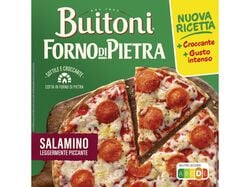
Buitoni Stone Oven Pizza with Salami comes in a 300 g pack. It is sold under the Buitoni brand. On Mamori it sits under Frozen › Pizza. Its label lists 44 ingredients.
Buitoni Stone Oven Pizza with Salami at a glance
Buitoni Stone Oven Pizza with Salami carries the Crustaceans Free, Peanut Free, Tree Nut Free, Sesame Free, Mollusks Free, Barley Free, Beef Free, Citrus Fruit Free, Gelatin Free, Latex Free, Oats Free, Poultry Free and Rye Free badges. Nutrition-wise, it's Low Sugars, Medium in Fiber, Medium in Protein, Medium in Calories, Medium Carbs, Medium Salt/Sodium and Medium Saturated Fat. Worth knowing: it's marked Non-Vegan, Non-Vegetarian, Non-Pescatarian, Non-Low FODMAP, Non-Vegan + Dairy, Non-Vegan + Eggs, Contains Gluten, Contains Dairy, Contains Additives, Contains Artificial Flavourings, Contains Corn, Contains Emulsifier, Contains Fructose, Lactose, Contains Added Sugars, Contains Pork, Contains Rice, Contains Seed and Contains Wheat.
Diet and allergens
Not suitable for vegan, vegetarian or pescatarian diets.
Contains gluten and milk.
Free from crustaceans, peanuts, tree nuts, sesame and molluscs.
May contain: EGG, FISH, LUPIN, CELERY, SOY.
Based on Mamori's check of the ingredients on the label. Recipes change, so always read the pack if you have an allergy or intolerance.
Size: 300 g
Last updated 2 November 2026
Ingredients
WHEAT flour, tomato, mozzarella CHEESE, salami, pork meat, salt, preservative: sodium nitrite, maltodextrin, dextrose, spices, antioxidants: sodium ascorbate, rosemary extract, spice extracts, smoke, mushrooms, water, rapeseed oil, cooked pork ham, pork ham, salt, preservative: sodium nitrite, dextrose, stabilizer: sodium citrates, antioxidants: sodium ascorbate, rosemary extract, spice extracts, smoke, pepperoni sausage, pork meat, pork fat, salt, preservative: sodium nitrite, spices, dextrose, antioxidants: sodium ascorbate, rosemary extract, spice extracts, sugar, smoke, yeast, sugar, dehydrated sourdough, salt, aromatic herbs and spices
Additives
- E250: Sodium Nitrite: Best avoided
Sodium nitrite (E250) is a preservative made from sodium and nitrite salts. It is closely related to potassium nitrite (E249) and is used in small amounts because it is very active.
It helps stop dangerous bacteria growing and helps cured meats keep their pink colour and flavour. It is mainly found in processed and cured meats such as bacon, ham, sausages, salami and other similar products.
This additive is best avoided. Nitrites can help form nitrosamines under some conditions, which are classed as probably causing cancer, and processed meat is classed as causing cancer; high consumers may also exceed the safe daily amount.
- E301: Sodium Ascorbate: Generally safe
Sodium ascorbate (E301) is the sodium salt of ascorbic acid, better known as vitamin C. It is a water-soluble substance used as an antioxidant and acidity regulator.
In food, it helps slow oxidation, which can prevent browning and flavour changes. It is used in a range of foods where antioxidant protection is needed, such as processed meats, preserved fruit, drinks and bakery products.
It is generally considered safe. It is allowed in food in the EU after safety assessment, and EFSA’s review raised no concern at normal dietary amounts.
- E331: Sodium Citrates (I) Monosodium Citrate (Ii) Disodium Citrate (Iii) Sodium Citrate (Trisodium Citrate): Generally safe
Sodium citrates (E331) are sodium salts of citric acid. They include monosodium, disodium and trisodium citrate, and are usually made by neutralising citric acid with a sodium compound.
They are used mainly as acidity regulators, helping control sourness and pH, and can also support antioxidant effects by binding metals. They are found in a wide range of foods, such as soft drinks, dairy products, processed cheese, desserts, jams and some meat products.
Sodium citrates are generally considered safe. They are authorised for use in food in the EU after EFSA safety assessment, and no concern is raised at normal amounts used in foods.
Questions and answers
Is Buitoni Stone Oven Pizza with Salami vegan?
No. It contains milk, so it is not suitable for a vegan diet.
Is Buitoni Stone Oven Pizza with Salami vegetarian?
No. It is not suitable for a vegetarian diet.
Is Buitoni Stone Oven Pizza with Salami suitable for a pescatarian diet?
No. It is not suitable for a pescatarian diet.
Is Buitoni Stone Oven Pizza with Salami suitable for a Low FODMAP diet?
No. It is not suitable for a Low FODMAP diet.
Is Buitoni Stone Oven Pizza with Salami suitable for a Vegan + Dairy diet?
No. It is not suitable for a Vegan + Dairy diet.
Is Buitoni Stone Oven Pizza with Salami suitable for a Vegan + Eggs diet?
No. It is not suitable for a Vegan + Eggs diet.
Is Buitoni Stone Oven Pizza with Salami gluten-free?
No. It contains gluten.
Does Buitoni Stone Oven Pizza with Salami contain milk?
Yes. It contains milk.
Is Buitoni Stone Oven Pizza with Salami nut-free?
Yes. Its ingredients include no peanuts or tree nuts, and its label gives no nut warning.
Which allergens does Buitoni Stone Oven Pizza with Salami contain?
It contains gluten and milk. Its label also says it may contain: EGG, FISH, LUPIN, CELERY, SOY.
More in Pizza
- Alfredo stonebaked pizza - Margherita
- Alberto Pizza Margherita
- Goodfella's Italian Hot Pizza
- Alnatura Salami Pizza
- Chef Select Margherita pizza
- Neapolitan Pizza Manufacturing 4 Cheeses
- Paneangeli Liev.istan Quick Pizza
- Italpizza The number one
- Goodfella's Classic Crust Takeaway Fully Loaded Pepperoni
- Goodfella's Pepperoni Stone baked Thin
- Goodfella's Goodfellas Deep Pepperoni Pizza
- Goodfella's stonebaked thin cheesy garlic bread