
Co-op Pesto with peppers and Grana Padano PDO 190 g
On the pack: Pesto con peperoni e grana padano dop
Co-op
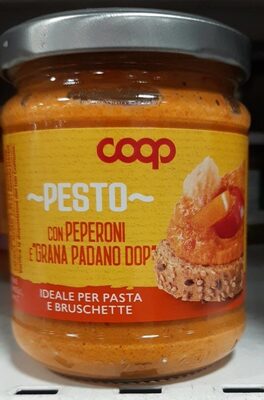
Co-op Pesto with peppers and Grana Padano PDO comes in a 190 g pack. It is sold under the Co-op brand. On Mamori it sits under Groceries › Condiments › Pesto. Its label lists 24 ingredients.
Co-op Pesto with peppers and Grana Padano PDO at a glance
Co-op Pesto with peppers and Grana Padano PDO carries the Gluten Free, Crustaceans Free, Fish Free, Peanut Free, Soy Free, Celery Free, Mustard Free, Sesame Free, Sulfite Free, Lupin Free, Mollusks Free, Artificial Flavourings Free, Barley Free, Corn Free, Emulsifier Free, Gelatin Free, Latex Free, Oats Free, Pork Free, Poultry Free, Rice Free, Rye Free and Wheat Free badges. Nutrition-wise, it's Low Protein, Medium in Fiber, Medium in Calories, Medium Carbs, Medium Salt/Sodium, Medium Saturated Fat and Medium in Sugars. Worth knowing: it's marked Non-Vegan, Non-Vegetarian, Non-Pescatarian, Non-Low FODMAP, Non-Vegan + Dairy, Non-Vegan + Eggs, Contains Egg, Contains Dairy, Contains Tree Nut, Contains Additives, Contains Beef, Contains Citrus Fruit, Contains Fructose, Lactose, Contains Added Sugars and Contains Seed.
Diet and allergens
Not suitable for vegan, vegetarian or pescatarian diets.
Contains eggs, milk and tree nuts.
Free from gluten, crustaceans, fish, peanuts, soy, celery, mustard, sesame, sulphites, lupin and molluscs.
Based on Mamori's check of the ingredients on the label. Recipes change, so always read the pack if you have an allergy or intolerance.
Size: 190 g
Last updated 2 November 2026
Ingredients
yellow tomato passata, sunflower oil, yellow peppers, red peppers, cashews, 'Grana Padano DOP' cheese, cow's milk, salt, rennet, preservative: egg lysozyme, garlic, double concentrated tomato paste, vegetable fibers, bamboo, citrus, salt, whey, sugar, potato, acidifier: lactic acid, carrot extract, white pepper, chili pepper, antioxidant: ascorbic acid
Additives
- E1105: Lysozyme: Generally safe
Lysozyme (E1105) is an enzyme, usually obtained from egg white. It is a natural protein that can break down parts of bacterial cell walls. Because it commonly comes from eggs, it may not be suitable for people avoiding animal-derived ingredients or egg allergens.
In food, lysozyme is used as a preservative to help control certain bacteria. It is most often associated with cheese and some other fermented or matured foods where bacterial control is important.
Lysozyme is generally considered safe at normal food-use levels. It is authorised for use in the EU after safety assessment, and the main practical concern is for people with egg allergy.
- E270: Lactic Acid (Preservative): Generally safe
Lactic acid (E270) is an organic acid found naturally in many foods and also made by fermenting sugars, often using bacteria. It is the same type of acid produced in foods such as yoghurt and fermented vegetables.
In food, it is used mainly as an acidity regulator and preservative, helping control pH and slow the growth of some microbes. It may be found in fermented foods, pickled products, drinks, sauces, confectionery and bakery products.
It is generally considered safe. It is allowed in food in the EU after safety assessment, and the sources checked raise no concern at normal amounts.
- E300: Ascorbic Acid (Vitamin C): Generally safe
Ascorbic acid (E300) is vitamin C, a water-soluble substance found naturally in many fruits and vegetables. As a food additive, it is usually made by controlled industrial production and used in purified form.
It helps prevent oxidation, which can stop foods from browning or developing off-flavours. It can also adjust acidity. It is used in a range of foods, especially fruit products, drinks, bakery products, meat products and foods where colour or freshness needs protecting.
It is generally considered safe at normal food amounts. It is authorised for use in the EU after safety assessment, and EFSA’s re-evaluation did not raise concern for its use as a food additive.
Questions and answers
Is Co-op Pesto with peppers and Grana Padano PDO vegan?
No. It contains eggs and milk, so it is not suitable for a vegan diet.
Is Co-op Pesto with peppers and Grana Padano PDO vegetarian?
No. It is not suitable for a vegetarian diet.
Is Co-op Pesto with peppers and Grana Padano PDO suitable for a pescatarian diet?
No. It is not suitable for a pescatarian diet.
Is Co-op Pesto with peppers and Grana Padano PDO suitable for a Low FODMAP diet?
No. It is not suitable for a Low FODMAP diet.
Is Co-op Pesto with peppers and Grana Padano PDO suitable for a Vegan + Dairy diet?
No. It is not suitable for a Vegan + Dairy diet.
Is Co-op Pesto with peppers and Grana Padano PDO suitable for a Vegan + Eggs diet?
No. It is not suitable for a Vegan + Eggs diet.
Is Co-op Pesto with peppers and Grana Padano PDO gluten-free?
Yes. Its ingredients include no gluten, and its label gives no gluten warning.
Does Co-op Pesto with peppers and Grana Padano PDO contain milk?
Yes. It contains milk.
Is Co-op Pesto with peppers and Grana Padano PDO nut-free?
No. It contains tree nuts.
Does Co-op Pesto with peppers and Grana Padano PDO contain eggs?
Yes. It contains eggs.
Which allergens does Co-op Pesto with peppers and Grana Padano PDO contain?
It contains eggs, milk and tree nuts.
More in Pesto
- Camel Brand Fine Foods Pistachio Pesto
- Delizie dal sole I pesti cremosi alla genovese
- Deluxe Lidl Pesto di pistacchio
- Saclà Arugula Pesto
- Co-op Genoese pesto
- Nonna Mia Genoese pesto
- Garofalo Genoese pesto
- Barilla Basil Pesto and Chili Pepper
- Saclà trio of peppers and eggplants
- Saclà ORGANIC GENOVESE PESTO SAUCE
- Barilla Pesto
- Baresa Red pesto