
Peppa Pig Triangle Pops Cola Freeze 496 ml
Peppa Pig
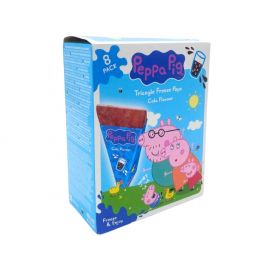
Peppa Pig Triangle Pops Cola Freeze comes in a 496 ml pack. It is sold under the Peppa Pig brand. On Mamori it sits under Beverages › Soft Drinks › Cola Flavour. Its label lists 12 ingredients.
Peppa Pig Triangle Pops Cola Freeze at a glance
Peppa Pig Triangle Pops Cola Freeze fits Vegetarian, Pescatarian and Vegan + Dairy diets. It also carries the Gluten Free, Crustaceans Free, Egg Free, Fish Free, Peanut Free, Soy Free, Dairy Free, Tree Nut Free, Celery Free, Mustard Free, Sesame Free, Lupin Free, Mollusks Free, Barley Free, Beef Free, Citrus Fruit Free, Corn Free, Emulsifier Free, Gelatin Free, Latex Free, Oats Free, Pork Free, Poultry Free, Rice Free, Rye Free, Seed Free and Wheat Free badges. Nutrition-wise, it's Low Calorie, Low Carbs, Low Salt/Sodium, Low Saturated Fat, Low Fiber, Low Protein and Medium in Sugars. Worth knowing: it's marked Non-Vegan, Non-Low FODMAP, Non-Vegan + Eggs, Contains Additives, Contains Artificial Flavourings, Contains Fructose, Lactose and Contains Added Sugars.
Diet and allergens
Suitable for vegetarian and pescatarian diets.
Not suitable for a vegan diet.
Free from gluten, crustaceans, eggs, fish, peanuts, soy, milk, tree nuts, celery, mustard, sesame, lupin and molluscs.
Based on Mamori's check of the ingredients on the label. Recipes change, so always read the pack if you have an allergy or intolerance.
Size: 496 ml
Last updated 26 October 2026
Ingredients
water, sugar, food acid: E330, natural flavouring, stabiliser: E66, sweeteners, E955, E950, preservatives, E202, E211, colour: E150C
Additives & flavourings
Additives
- E330: Citric Acid: Generally safe
Citric acid (E330) is a natural organic acid found in citrus fruits and many other plants. The citric acid used in food is usually made by fermentation of sugars using micro-organisms.
It is used as an acidity regulator and antioxidant. It helps give a sharp, sour taste, control pH, and slow colour or flavour changes. It is common in soft drinks, sweets, jams, sauces, canned foods, and many processed foods.
Citric acid is generally considered safe at normal food levels. It is allowed in food in the EU after safety assessment, and the sources checked raise no concern for typical dietary amounts.
- E966: Lactitol: Generally safe
Lactitol (E966) is a low-calorie sweetener and sugar alcohol made from lactose, the natural sugar in milk. Because it comes from lactose, it may be animal derived unless made from a verified non-animal source.
It is used to add sweetness, help retain moisture, and sometimes give a smooth texture or glossy finish. It is found in sugar-free or reduced-sugar foods such as sweets, chewing gum, desserts, baked goods and chocolate-style products.
Lactitol is generally considered safe. It is authorised for use in food in the EU after safety assessment, and standard food-use amounts do not raise concern in the sources checked.
- E955: Sucralose (Trichlorogalactosucrose): Generally safe
Sucralose (E955), also called trichlorogalactosucrose, is an artificial high-intensity sweetener. It is made by chemically modifying sugar, which makes it taste very sweet while adding little or no energy in the small amounts used.
It is used to sweeten foods and drinks without using much sugar. You may find it in low-sugar or sugar-free drinks, desserts, yoghurts, chewing gum, tabletop sweeteners, and some special diet foods.
Sucralose is generally considered safe at normal amounts. It is authorised for use in the EU after safety assessment, and the sources checked raise no concern for typical food use.
- E950: Acesulfame K: Generally safe
Acesulfame K, also called acesulfame potassium or E950, is an artificial sweetener. It is a potassium salt of a synthetic sweet-tasting compound and is much sweeter than sugar, so only small amounts are used.
It is used to sweeten foods and drinks without adding much energy. It is often found in sugar-free or reduced-sugar soft drinks, desserts, chewing gum, tabletop sweeteners and some special dietary foods.
It is generally considered safe at normal amounts. It is authorised for use in the EU after safety assessment, and the sources checked raise no concern when it is used within permitted limits.
- E202: Potassium Sorbate: Some concerns
Potassium sorbate (E202) is the potassium salt of sorbic acid. It is a preservative used to slow the growth of moulds and yeasts in food and drink.
It is often used in products where spoilage by yeasts or moulds is a concern, such as sauces, bakery fillings, cheese products, fruit preparations, drinks and some processed foods.
It is allowed in food, but some concerns have been raised. EFSA found that people who eat a lot of foods containing sorbates could go over the safe daily amount, so overall exposure is the main issue.
- E211: Sodium Benzoate: Some concerns
Sodium benzoate (E211) is the sodium salt of benzoic acid, a preservative. It is a manufactured form of a substance that also occurs naturally in small amounts in some fruits and spices.
It helps stop the growth of yeasts, moulds and some bacteria, especially in acidic foods and drinks. It is often used in soft drinks, fruit juices, pickles, sauces, dressings and some jams or preserves.
It is allowed in food, but some concerns have been raised. EFSA found that people who eat a lot of foods containing benzoates may exceed the safe daily amount, so overall intake can be an issue for high consumers.
- E150C: Ammonia Caramel (E150c): Some concerns
Ammonia caramel (E150c) is a brown food colour made by heating sugars with ammonia compounds. It is one of the caramel colours, used to give foods and drinks a darker brown appearance.
It is used in products such as soft drinks, sauces, soups, baked goods, confectionery and some processed savoury foods, where a stable brown colour is needed.
It is allowed in food, but some concerns have been raised. A by-product that can form during manufacture, 4-methylimidazole, is classed by IARC as possibly causing cancer, and EFSA has found that people with high intakes of caramel colours may exceed the safe daily amount.
Flavourings
- natural flavouring: Natural flavouring (Regulation (EC) No 1334/2008 on flavourings, Article 16).
Questions and answers
Is Peppa Pig Triangle Pops Cola Freeze vegan?
No. It is not suitable for a vegan diet.
Is Peppa Pig Triangle Pops Cola Freeze vegetarian?
Yes. It is suitable for a vegetarian diet.
Is Peppa Pig Triangle Pops Cola Freeze suitable for a pescatarian diet?
Yes. It is suitable for a pescatarian diet.
Is Peppa Pig Triangle Pops Cola Freeze suitable for a Low FODMAP diet?
No. It is not suitable for a Low FODMAP diet.
Is Peppa Pig Triangle Pops Cola Freeze suitable for a Vegan + Dairy diet?
Yes. It is suitable for a Vegan + Dairy diet.
Is Peppa Pig Triangle Pops Cola Freeze suitable for a Vegan + Eggs diet?
No. It is not suitable for a Vegan + Eggs diet.
Is Peppa Pig Triangle Pops Cola Freeze gluten-free?
Yes. Its ingredients include no gluten, and its label gives no gluten warning.
Does Peppa Pig Triangle Pops Cola Freeze contain milk?
No. Its ingredients include no milk, and its label gives no milk warning.
Is Peppa Pig Triangle Pops Cola Freeze nut-free?
Yes. Its ingredients include no peanuts or tree nuts, and its label gives no nut warning.
Does Peppa Pig Triangle Pops Cola Freeze contain eggs?
No. Its ingredients include no eggs, and its label gives no egg warning.
More in Cola Flavour
- Prozis Energy Gel Caffeine Cola Flavor
- Coca-Cola Coke Zero Caffeine Free
- Pepsi Twist
- Pepsi Strawberries N Cream Pet Zero Sugar
- Pepsi Strawberry N Cream Zero Can
- Pepsi Max Caffeine-Free Soda
- Pepsi Max
- Pepsi Can
- Pepsi Cream Soda Zero Can
- Pepsi Cream Soda Pet Zero Sugar
- Dr Pepper Cherry
- Capri Sun Cola Caffeine Free