
Olimp Whey Complex Strawberry 700 g
Olimp
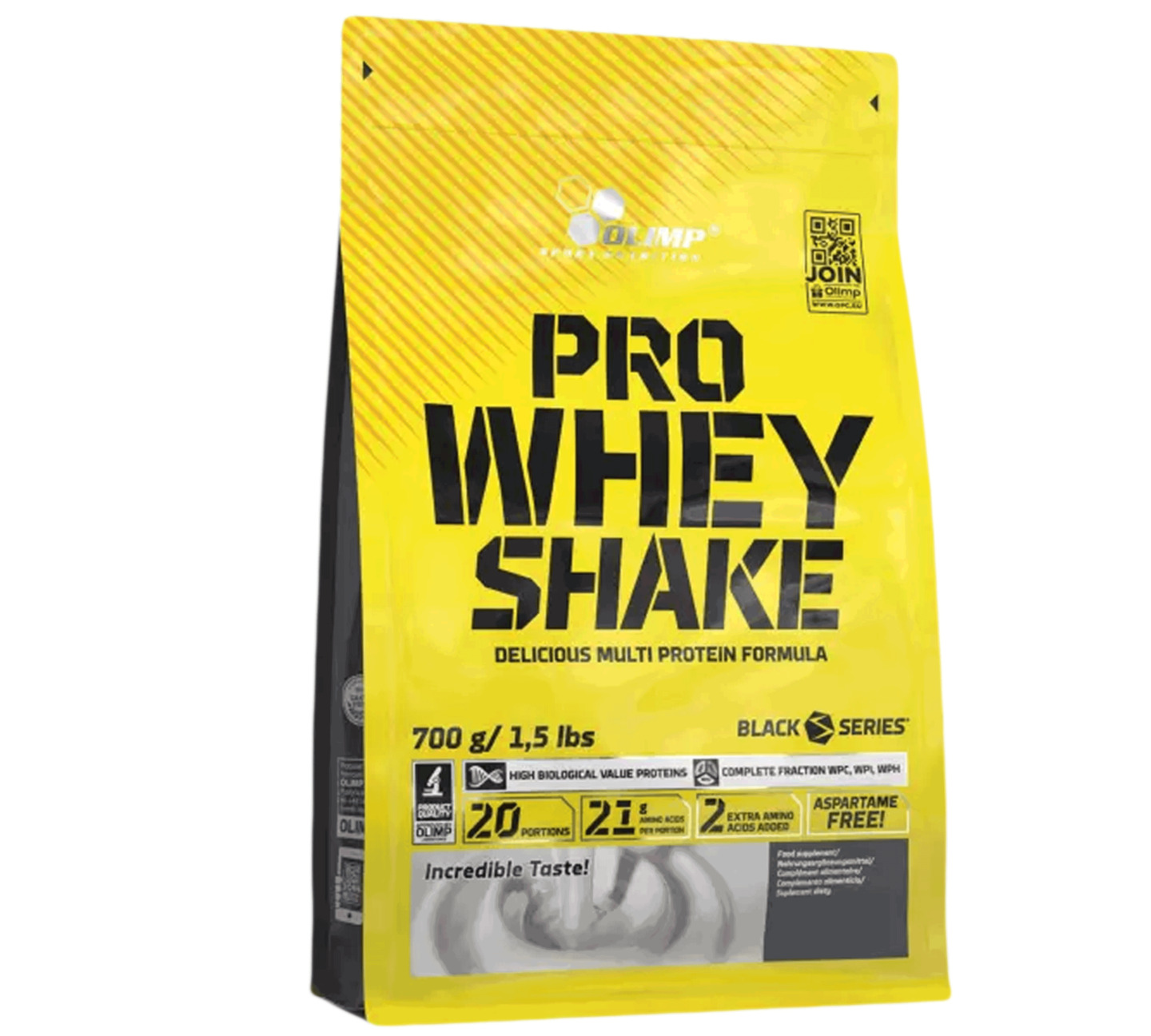
Olimp Whey Complex Strawberry comes in a 700 g pack. It is sold under the Olimp brand. On Mamori it sits under Additives › Protein Additives › Whey Protein Isolate. Its label lists 34 ingredients.
Olimp Whey Complex Strawberry at a glance
Olimp Whey Complex Strawberry carries the Gluten Free, Crustaceans Free, Egg Free, Fish Free, Tree Nut Free, Celery Free, Mustard Free, Sesame Free, Lupin Free, Mollusks Free, Barley Free, Beef Free, Citrus Fruit Free, Gelatin Free, Latex Free, Oats Free, Pork Free, Rice Free, Rye Free and Wheat Free badges. Nutrition-wise, it's Low Calorie, Low Carbs, Low Sugars, Low Fiber, Medium in Protein, Medium Salt/Sodium and Medium Saturated Fat. Worth knowing: it's marked Non-Vegan, Non-Vegetarian, Non-Pescatarian, Non-Low FODMAP, Non-Vegan + Dairy, Non-Vegan + Eggs, Contains Peanut, Contains Dairy, Contains Additives, Contains Artificial Flavourings, Contains Corn, Contains Emulsifier, Contains Fructose, Lactose, Contains Added Sugars, Contains Poultry and Contains Seed.
Diet and allergens
Not suitable for vegan, vegetarian or pescatarian diets.
Contains peanuts and milk.
Free from gluten, crustaceans, eggs, fish, tree nuts, celery, mustard, sesame, lupin and molluscs.
Based on Mamori's check of the ingredients on the label. Recipes change, so always read the pack if you have an allergy or intolerance.
Size: 700 g
Last updated 30 October 2026
Ingredients
protein preparations, ultrafiltered whey protein concentrate WPC, whey protein isolate WPI-CFM, Flavors, Peanut flour, MCT oil, Fructose, acidity regulators, Citric Acid, sodium citrates, thickening agents, Gum arabic, Xanthan Gum, Sodium carboxymethylcellulose, sweeteners, Acesulfame K, Sucralose, Emulsifier: Lecithins, salt, colorings, carotenes, Carmine, riboflavins, E 150c, E 150d, E 133, Patent blue V, indigocarmine, chlorophylls and chlorophyllins, Curcumin, anthocyanins, Paprika Extract, betanin, vegetable carbon
Additives & flavourings
Additives
- E330: Citric Acid: Generally safe
Citric acid (E330) is a natural organic acid found in citrus fruits and many other plants. The citric acid used in food is usually made by fermentation of sugars using micro-organisms.
It is used as an acidity regulator and antioxidant. It helps give a sharp, sour taste, control pH, and slow colour or flavour changes. It is common in soft drinks, sweets, jams, sauces, canned foods, and many processed foods.
Citric acid is generally considered safe at normal food levels. It is allowed in food in the EU after safety assessment, and the sources checked raise no concern for typical dietary amounts.
- E331: Sodium Citrates (I) Monosodium Citrate (Ii) Disodium Citrate (Iii) Sodium Citrate (Trisodium Citrate): Generally safe
Sodium citrates (E331) are sodium salts of citric acid. They include monosodium, disodium and trisodium citrate, and are usually made by neutralising citric acid with a sodium compound.
They are used mainly as acidity regulators, helping control sourness and pH, and can also support antioxidant effects by binding metals. They are found in a wide range of foods, such as soft drinks, dairy products, processed cheese, desserts, jams and some meat products.
Sodium citrates are generally considered safe. They are authorised for use in food in the EU after EFSA safety assessment, and no concern is raised at normal amounts used in foods.
- E414: Gum Arabic (Acacia Gum): Generally safe
Gum arabic, or acacia gum, is E414. It is a natural gum obtained from the dried sap of acacia trees. It is a soluble dietary fibre made mainly of complex carbohydrates.
In food, it is used as a thickener, stabiliser and emulsifier. It helps keep mixtures even, improves texture, and can help hold flavours or colours in place. It may be found in sweets, soft drinks, icings, baked goods and flavourings.
It is generally considered safe at normal food amounts. It is authorised for use in the EU after safety assessment, and the sources checked raise no concern for typical use.
- E415: Xanthan Gum (Thickener): Generally safe
Xanthan gum (E415) is a thickening and stabilising gum made by fermenting sugars with the bacterium Xanthomonas campestris, then purifying and drying the resulting substance.
It helps foods hold water, thicken, and keep ingredients evenly mixed. It is often used in sauces, dressings, desserts, bakery products, gluten-free foods, and drinks where a smooth or stable texture is needed.
Xanthan gum is generally considered safe. It is allowed in food in the EU after EFSA assessment, and the sources checked do not raise concerns at normal amounts used in foods.
- E469: Enzymatically Hydrolysed Carboxy Methyl Cellulose: Generally safe
Enzymatically hydrolysed carboxy methyl cellulose, or E469, is a modified cellulose gum. It is made from cellulose, the main structural fibre in plants, which is chemically changed and then broken down further using enzymes.
It is used as a thickener, stabiliser and emulsifier. This means it can help give foods a smooth texture, keep ingredients evenly mixed, and improve consistency in processed foods such as sauces, desserts, fillings and other prepared products.
E469 is generally considered safe at normal amounts used in food. It is authorised for use in the EU after safety assessment, and the sources checked raise no specific concern for typical dietary exposure.
- E950: Acesulfame K: Generally safe
Acesulfame K, also called acesulfame potassium or E950, is an artificial sweetener. It is a potassium salt of a synthetic sweet-tasting compound and is much sweeter than sugar, so only small amounts are used.
It is used to sweeten foods and drinks without adding much energy. It is often found in sugar-free or reduced-sugar soft drinks, desserts, chewing gum, tabletop sweeteners and some special dietary foods.
It is generally considered safe at normal amounts. It is authorised for use in the EU after safety assessment, and the sources checked raise no concern when it is used within permitted limits.
- E955: Sucralose (Trichlorogalactosucrose): Generally safe
Sucralose (E955), also called trichlorogalactosucrose, is an artificial high-intensity sweetener. It is made by chemically modifying sugar, which makes it taste very sweet while adding little or no energy in the small amounts used.
It is used to sweeten foods and drinks without using much sugar. You may find it in low-sugar or sugar-free drinks, desserts, yoghurts, chewing gum, tabletop sweeteners, and some special diet foods.
Sucralose is generally considered safe at normal amounts. It is authorised for use in the EU after safety assessment, and the sources checked raise no concern for typical food use.
- E322: Lecithins: Generally safe
Lecithins (E322) are a group of natural fatty substances found in plants and animals. Food-grade lecithin is usually made from soya, sunflower, rapeseed or egg, and in some cases may be animal derived.
They are mainly used as emulsifiers, helping oil and water mix and keeping textures smooth. They are found in foods such as chocolate, spreads, baked goods, sauces, margarines and instant powders.
Lecithins are generally considered safe at normal food amounts and are allowed in the EU after safety assessment. People with relevant allergies should note the source, especially soya or egg.
- E160a: Carotenes: Generally safe
Carotenes (E160a) are orange-yellow colourants, including alpha-carotene, beta-carotene and gamma-carotene. They are pigments found naturally in plants such as carrots and leafy greens, and can also be made synthetically or obtained from natural sources. Some forms may be animal derived.
They are used to add or restore yellow to orange colour in foods. They may be found in products such as margarines, dairy products, desserts, sauces, drinks and confectionery.
E160a is allowed in food in the EU after safety assessment. It is generally considered safe at normal food amounts, and the sources checked raise no concern for typical use.
- E120: Cochineal, Carminic Acid, Carmine (Natural Red 4): Generally safe
Carminic acid and carmine (E120) are red colourants made from cochineal insects. They are also known as cochineal or Natural Red 4, and are not suitable for people avoiding animal-derived ingredients.
They are used to give foods a red, pink, or purple colour. E120 may be found in products such as confectionery, desserts, drinks, yoghurts, processed meats, and sauces where a stable red colour is needed.
E120 is generally considered safe at normal food amounts. It is authorised for use in the EU after EFSA safety assessment, and the sources checked do not raise concerns for typical dietary exposure.
- E150C: Ammonia Caramel (E150c): Some concerns
Ammonia caramel (E150c) is a brown food colour made by heating sugars with ammonia compounds. It is one of the caramel colours, used to give foods and drinks a darker brown appearance.
It is used in products such as soft drinks, sauces, soups, baked goods, confectionery and some processed savoury foods, where a stable brown colour is needed.
It is allowed in food, but some concerns have been raised. A by-product that can form during manufacture, 4-methylimidazole, is classed by IARC as possibly causing cancer, and EFSA has found that people with high intakes of caramel colours may exceed the safe daily amount.
- E150D: Sulfite Ammonia Caramel (E150d): Some concerns
Sulphite ammonia caramel (E150d) is a dark brown food colour. It is a type of caramel colour made by heating sugars with sulphite and ammonia compounds, producing a stable colouring mixture rather than a flavour caramel.
It is used to give foods and drinks a brown colour and to keep colour consistent. It is commonly found in cola-style soft drinks, sauces, soups, beers, vinegars, and some processed savoury foods.
It is allowed for use, but some concerns have been raised because 4-methylimidazole, a by-product that can form when making these caramel colours, is classed by IARC as possibly causing cancer (Group 2B).
- E133: Brilliant Blue Fcf (Fd&C Blue 1): Some concerns
Brilliant Blue FCF (E133), also known as FD&C Blue 1, is a synthetic blue food colour. It is a water-soluble dye made from petroleum-derived chemical compounds.
It is used to give foods and drinks a bright blue colour, or mixed with other colours to make shades such as green or purple. It can be found in sweets, soft drinks, desserts, ice lollies, decorations and some processed snack foods.
It is allowed for use, but some concerns have been raised. EFSA found that people who eat a lot of foods containing E133 may exceed the safe daily amount, so over-exposure is the main issue.
- E131: Patent Blue V: Some concerns
Patent Blue V (E131) is a synthetic blue food colour. It is a water-soluble dye used to give foods a bright blue shade or to mix with other colours to make green or purple tones.
It is used as a colourant in some sweets, desserts, drinks, decorations and other processed foods where a strong, stable colour is wanted. Its use is regulated and only allowed in certain food categories.
Patent Blue V is allowed in food, but some concerns have been raised. EFSA found that people who eat a lot of foods containing it could go over the safe daily amount, so exposure can be an issue for high consumers.
- E132: Indigo Carmine (Indigotine, Fd&C Blue 2): Generally safe
Indigotine, also called indigo carmine or E132, is a synthetic blue food colour. It is a water-soluble dye related to the colour indigo, made for use in foods, medicines and other products.
It gives foods and drinks a blue shade, or helps make green, purple and other colours when mixed with other colours. It may be used in confectionery, desserts, drinks, bakery decorations and some processed foods where bright colour is needed.
It is generally considered safe at normal food levels. E132 is allowed in the EU after safety assessment, and EFSA’s re-evaluation found no concern about people eating too much from typical uses.
- E140: Chlorophylls And Chlorophyllins: (I) Chlorophylls (Ii) Chlorophyllins: Generally safe
Chlorophylls and chlorophyllins, E140, are green colourants. Chlorophyll is the natural green pigment found in plants and algae. Chlorophyllins are related, water-soluble forms made from chlorophyll.
They are used to give or restore a green colour in foods. They may be used in products such as sweets, desserts, sauces, soups, ice cream, and other processed foods where a green colour is wanted.
E140 is generally considered safe. It is allowed in food in the EU after safety assessment, and the sources checked raise no concern at normal amounts.
- E100: Curcumin (From Turmeric): Generally safe
Curcumin (E100) is a yellow-orange food colour made from turmeric, the spice from the root of the Curcuma longa plant. It is the main natural pigment in turmeric and may also be produced as a purified extract for food use.
It is used to give foods a yellow to orange colour. It can be found in products such as sauces, soups, snacks, confectionery, dairy products and processed foods where a warm yellow colour is wanted.
Curcumin is generally considered safe at normal food amounts. It is allowed for use in the EU after EFSA safety assessment, and the sources checked do not raise concerns for typical dietary exposure.
- E163: Anthocyanins: Generally safe
Anthocyanins (E163) are natural red, purple and blue colourants. They are pigments found in plants, especially in fruits and vegetables such as berries, grapes, red cabbage and black carrots.
In food, E163 is used to add or restore red to purple shades. It can be found in products such as sweets, drinks, desserts, jams and some processed foods where a plant-based colour is needed.
Anthocyanins are generally considered safe at normal food-use levels. They are allowed in food in the EU after EFSA safety assessment, and the sources checked raise no concern at typical amounts.
- E160c: Paprika Extract, Capsanthin, Capsorubin: Generally safe
Paprika extract, capsanthin and capsorubin (E160c) is a natural red-orange food colouring made from paprika peppers. The main colouring substances are carotenoids, especially capsanthin and capsorubin.
It is used to give or strengthen orange, red or reddish-brown colour in foods. It may be found in items such as cheeses, sauces, soups, snacks, meat products and seasonings.
It is generally considered safe at normal food-use amounts. It is authorised for use in the EU after EFSA safety assessment, and the sources checked raise no concern at typical levels of consumption.
- E162: Beetroot Red, Betanin: Generally safe
Beetroot Red, or betanin (E162), is a natural red food colour made mainly from beetroot. Its main colouring substance is betanin, a plant pigment from the betalain family.
It is used to give foods a red, pink, or purple colour. It may be found in products such as yoghurts, desserts, ice creams, sweets, sauces, and some drinks, especially where a plant-based colour is wanted.
It is generally considered safe at normal food levels. It is authorised for use in the EU after EFSA safety assessment, and the checked sources raise no concern for typical amounts in food.
- E153: Vegetable Carbon: Generally safe
Vegetable carbon (E153) is a black food colour. It is a form of carbon made by heating plant material such as wood, shells, or other vegetable matter at high temperature, then processing it for use in food.
It is used to give foods a deep grey or black colour. It may be found in some confectionery, decorations, bakery products, cheeses, or coatings where a dark colour is wanted.
It is generally considered safe at normal food amounts. It is authorised for use in the EU after safety assessment, and EFSA’s review did not raise concerns for typical uses.
Flavourings
- Flavors: Flavouring (Regulation (EC) No 1334/2008 on flavourings, Article 16).
Questions and answers
Is Olimp Whey Complex Strawberry vegan?
No. It contains milk, so it is not suitable for a vegan diet.
Is Olimp Whey Complex Strawberry vegetarian?
No. It is not suitable for a vegetarian diet.
Is Olimp Whey Complex Strawberry suitable for a pescatarian diet?
No. It is not suitable for a pescatarian diet.
Is Olimp Whey Complex Strawberry suitable for a Low FODMAP diet?
No. It is not suitable for a Low FODMAP diet.
Is Olimp Whey Complex Strawberry suitable for a Vegan + Dairy diet?
No. It is not suitable for a Vegan + Dairy diet.
Is Olimp Whey Complex Strawberry suitable for a Vegan + Eggs diet?
No. It is not suitable for a Vegan + Eggs diet.
Is Olimp Whey Complex Strawberry gluten-free?
Yes. Its ingredients include no gluten, and its label gives no gluten warning.
Does Olimp Whey Complex Strawberry contain milk?
Yes. It contains milk.
Is Olimp Whey Complex Strawberry nut-free?
No. It contains peanuts.
Does Olimp Whey Complex Strawberry contain eggs?
No. Its ingredients include no eggs, and its label gives no egg warning.
Which allergens does Olimp Whey Complex Strawberry contain?
It contains peanuts and milk.
More in Whey Protein Isolate
- Prime Qnt Whey Cookies N' Cream
- Prime Qnt Whey Strawberry
- Usn Bluelab Whey Salted Caramel
- Usn Bluelab Whey Caramel Popcorn
- Usn Dynamic Whey Vanilla
- Usn Bluelab Whey Strawberry
- Usn Blue Lab Chocolate Caramel Whey
- Qnt Light Digest Whey Protein Lemon Macaroon
- Qnt Light Digest Whey Protein Banana
- Qnt Light Digest Whey Protein Sweet Popcorn
- Purasana Organic Whey Powder
- Optimum nutrition Gold Standard Whey Double Rich Chocolate