
Nutrend After Training Vanilla 540 g
Nutrend
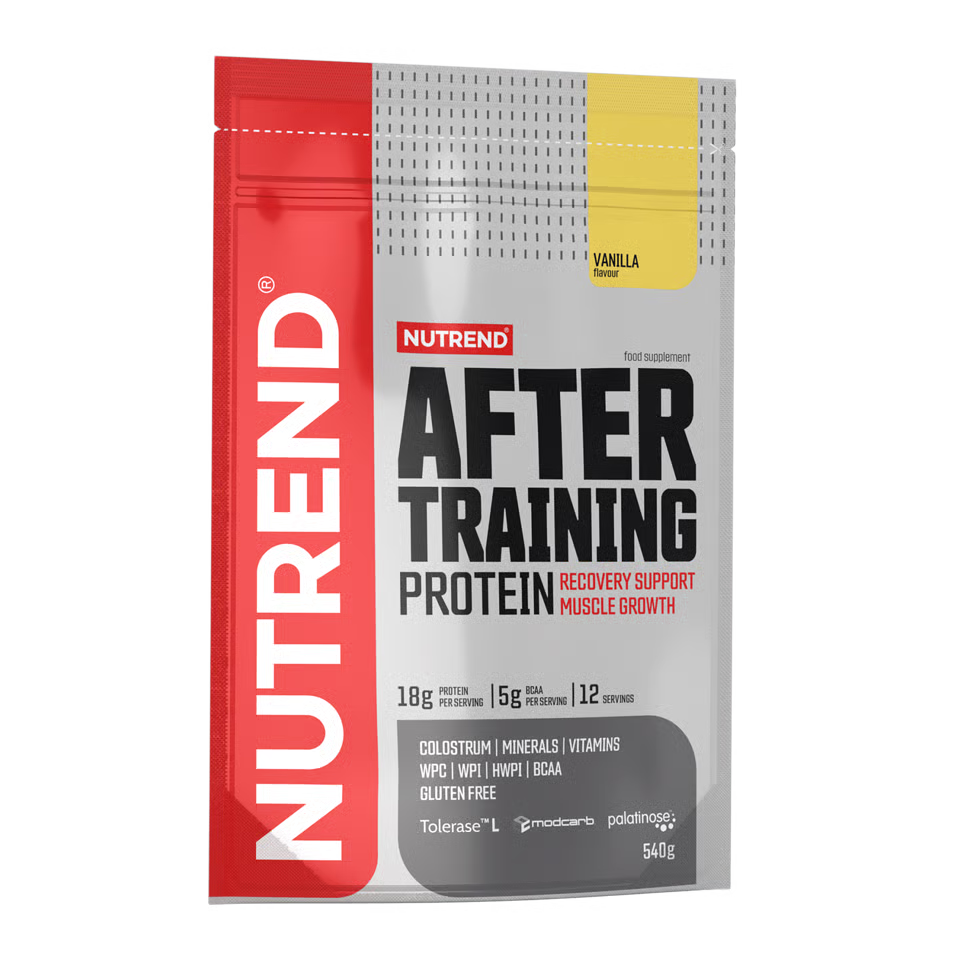
Nutrend After Training Vanilla comes in a 540 g pack. It is sold under the Nutrend brand. On Mamori it sits under Groceries › Health Foods › Protein Powder. Its label lists 45 ingredients.
Nutrend After Training Vanilla at a glance
Nutrend After Training Vanilla fits Vegetarian and Pescatarian diets. It also carries the Crustaceans Free, Fish Free, Peanut Free, Tree Nut Free, Celery Free, Mustard Free, Sesame Free, Lupin Free, Mollusks Free, Beef Free, Citrus Fruit Free, Gelatin Free, Latex Free, Pork Free, Poultry Free and Rye Free badges. Nutrition-wise, it's High Protein, Low Saturated Fat, High Carbs, Medium in Fiber, Medium in Calories, Medium Salt/Sodium and Medium in Sugars. Worth knowing: it's marked Non-Vegan, Non-Low FODMAP, Non-Vegan + Dairy, Non-Vegan + Eggs, Contains Gluten, Contains Soy, Contains Dairy, Contains Additives, Contains Artificial Flavourings, Contains Barley, Contains Corn, Contains Emulsifier, Contains Fructose, Lactose, Contains Added Sugars, Contains Oats, Contains Rice, Contains Seed and Contains Wheat.
Diet and allergens
Suitable for vegetarian and pescatarian diets.
Not suitable for a vegan diet.
Contains gluten, soy and milk.
Free from crustaceans, fish, peanuts, tree nuts, celery, mustard, sesame, lupin and molluscs.
Based on Mamori's check of the ingredients on the label. Recipes change, so always read the pack if you have an allergy or intolerance.
Size: 540 g
Last updated 30 October 2026
Ingredients
whey protein concentrate: sunflower lecithin, Maltodextrin, whey protein isolate, dextrose, whey protein hydrolyzate: HydrovonTM, isomaltulose, PalatinoseTM, Fructose, Glucose, potassium gluconate, gluten free grain carbohydrate complex, Oats, Quinoa, amaranth, Buckwheat, millet, ModCarbTM, L-Glutamine, L-Alanine, Acacia gum, Wheat fibre, magnesium bisglycinate, flavouring, L-Leucine, Emulsifier: soy lecithin, colostrum: immunoglobulins, L-Isoleucine, L-Valine, Thickener: xanthan gum, magnesium oxide, anti-caking agents, silicon dioxide, calcium phosphate, sweeteners, Sucralose, steviol glycosides, mono-L-methionine zinc sulphate: L-OptiZinc®, digestive enzyme, lactase, ToleraseTM L, Ginkgo biloba extract: flavones, D-calcium pantothenate, pyridoxine hydrochloride, colouring agent: β-carotene, cyanocobalamin
Additives & flavourings
Additives
- E577: Potassium Gluconate: Generally safe
Potassium gluconate (E577) is the potassium salt of gluconic acid, a mild organic acid made when glucose is oxidised. It is a mineral salt used as a food additive.
In food, it can help control acidity and may also help keep powdered products free-flowing. It may be used where acidity regulators or anti-caking agents are needed, rather than for flavour on its own.
It is generally considered safe at normal food-use levels. It is authorised for use in the EU after safety assessment, and the sources checked raise no concern for typical amounts in food.
- E123: Amaranth (Fd&C Red 2): Generally safe
Amaranth (E123), also called FD&C Red 2 in some places, is a synthetic red azo dye. It is a colourant used to give foods a red to purple-red shade.
It is used where a strong red colour is needed, such as in some drinks, confectionery, desserts, decorations, and processed foods, depending on local rules.
It is generally considered safe at normal food amounts. It is authorised for use in the EU after EFSA assessment, and EFSA’s re-evaluation found no risk of eating too much from typical dietary exposure.
- E414: Gum Arabic (Acacia Gum): Generally safe
Gum arabic, or acacia gum, is E414. It is a natural gum obtained from the dried sap of acacia trees. It is a soluble dietary fibre made mainly of complex carbohydrates.
In food, it is used as a thickener, stabiliser and emulsifier. It helps keep mixtures even, improves texture, and can help hold flavours or colours in place. It may be found in sweets, soft drinks, icings, baked goods and flavourings.
It is generally considered safe at normal food amounts. It is authorised for use in the EU after safety assessment, and the sources checked raise no concern for typical use.
- E641: L-Leucine: Generally safe
L-leucine (E641) is an essential amino acid, one of the building blocks of protein. It occurs naturally in many protein-rich foods and can also be made for use as a food additive.
In food, it is used as a nutrient and protein-related additive, and may be added to foods where amino acids are used to adjust nutritional content or formulation. Its use is more about nutrition than flavour, colour, or preservation.
It is generally considered safe at normal food amounts. E641 is allowed in food in the EU after safety assessment, and the checked sources raise no concern for typical use.
- E415: Xanthan Gum (Thickener): Generally safe
Xanthan gum (E415) is a thickening and stabilising gum made by fermenting sugars with the bacterium Xanthomonas campestris, then purifying and drying the resulting substance.
It helps foods hold water, thicken, and keep ingredients evenly mixed. It is often used in sauces, dressings, desserts, bakery products, gluten-free foods, and drinks where a smooth or stable texture is needed.
Xanthan gum is generally considered safe. It is allowed in food in the EU after EFSA assessment, and the sources checked do not raise concerns at normal amounts used in foods.
- E530: Magnesium Oxide (Acidity Regulator): Generally safe
Magnesium oxide (E530) is a mineral compound made from magnesium and oxygen. It is a white, powdery substance and is used in food as an acidity regulator and anti-caking agent.
It helps control acidity and keeps powders free-flowing by reducing clumping. It may be used in powdered foods and ingredients where moisture can cause caking, such as dry mixes or seasonings.
Magnesium oxide is generally considered safe at normal food-use amounts. It is authorised for use in the EU after safety assessment, and the sources checked raise no specific concern for typical dietary exposure.
- E551: Silicon Dioxide (Silica): Generally safe
Silicon dioxide (E551), also called silica, is a naturally occurring mineral substance made of silicon and oxygen. It is found in rocks, sand and many plants, and the food additive form is a fine, inert powder.
In food, it is mainly used as an anti-caking agent to help powders and granules flow freely. It may be found in products such as powdered seasonings, salt substitutes, dried soups, instant drinks and food supplement powders.
It is generally considered safe at normal food-use levels. It is authorised for use in the EU after safety assessment, and the sources checked raise no concern at typical amounts.
- E341: Calcium Phosphates (I) Monocalcium Phosphate (Ii) Dicalcium Phosphate (Iii) Tricalcium Phosphate: Some concerns
Calcium phosphates (E341) are mineral salts of calcium and phosphate. The group includes monocalcium phosphate, dicalcium phosphate and tricalcium phosphate, and they are forms of the same nutrients found naturally in bones and teeth.
They are used to control acidity, help powders flow, support raising agents, and sometimes add calcium. They can be found in foods such as flour mixes, baked goods, powdered drinks, processed cheese, and some supplements or fortified foods.
They are allowed in food, but there are some concerns. EFSA found that people who eat a lot of foods containing phosphate additives can exceed the safe daily amount, and people with kidney disease are often advised to limit phosphate intake.
- E955: Sucralose (Trichlorogalactosucrose): Generally safe
Sucralose (E955), also called trichlorogalactosucrose, is an artificial high-intensity sweetener. It is made by chemically modifying sugar, which makes it taste very sweet while adding little or no energy in the small amounts used.
It is used to sweeten foods and drinks without using much sugar. You may find it in low-sugar or sugar-free drinks, desserts, yoghurts, chewing gum, tabletop sweeteners, and some special diet foods.
Sucralose is generally considered safe at normal amounts. It is authorised for use in the EU after safety assessment, and the sources checked raise no concern for typical food use.
- E960: Steviol Glycosides: Some concerns
Steviol glycosides, E960, are intensely sweet substances extracted from the leaves of the stevia plant. They are used as low-calorie sweeteners and are much sweeter than sugar, so only small amounts are needed.
They are found in foods and drinks such as soft drinks, flavoured dairy products, desserts, confectionery, tabletop sweeteners and some reduced-sugar products. Their main role is to add sweetness without adding much energy.
E960 is allowed in food, but some concerns have been raised. EFSA found that people who consume a lot of products sweetened with steviol glycosides could exceed the safe daily amount.
- E472D: Tartaric Acid Esters Of Mono- And Diglycerides Of Fatty Acids (E472d): Generally safe
Tartaric acid esters of mono- and diglycerides of fatty acids (E472d) are emulsifiers made by combining tartaric acid with mono- and diglycerides of fatty acids. The fatty acids can come from vegetable or animal sources.
They help oil and water mix, improve texture, and keep foods stable. They may be used in baked goods, desserts, processed fats, sauces, and other foods where a smooth, stable mixture is needed.
E472d is generally considered safe at normal amounts used in food. It is authorised for use in the EU after safety assessment, and the sources checked raise no particular concern for typical dietary exposure.
Flavourings
- flavouring: Flavouring (Regulation (EC) No 1334/2008 on flavourings, Article 16).
Questions and answers
Is Nutrend After Training Vanilla vegan?
No. It contains milk, so it is not suitable for a vegan diet.
Is Nutrend After Training Vanilla vegetarian?
Yes. It is suitable for a vegetarian diet.
Is Nutrend After Training Vanilla suitable for a pescatarian diet?
Yes. It is suitable for a pescatarian diet.
Is Nutrend After Training Vanilla suitable for a Low FODMAP diet?
No. It is not suitable for a Low FODMAP diet.
Is Nutrend After Training Vanilla suitable for a Vegan + Dairy diet?
No. It is not suitable for a Vegan + Dairy diet.
Is Nutrend After Training Vanilla suitable for a Vegan + Eggs diet?
No. It is not suitable for a Vegan + Eggs diet.
Is Nutrend After Training Vanilla gluten-free?
No. It contains gluten.
Does Nutrend After Training Vanilla contain milk?
Yes. It contains milk.
Is Nutrend After Training Vanilla nut-free?
Yes. Its ingredients include no peanuts or tree nuts, and its label gives no nut warning.
Which allergens does Nutrend After Training Vanilla contain?
It contains gluten, soy and milk.