
Nestle Nan 3 400 g
Nestle
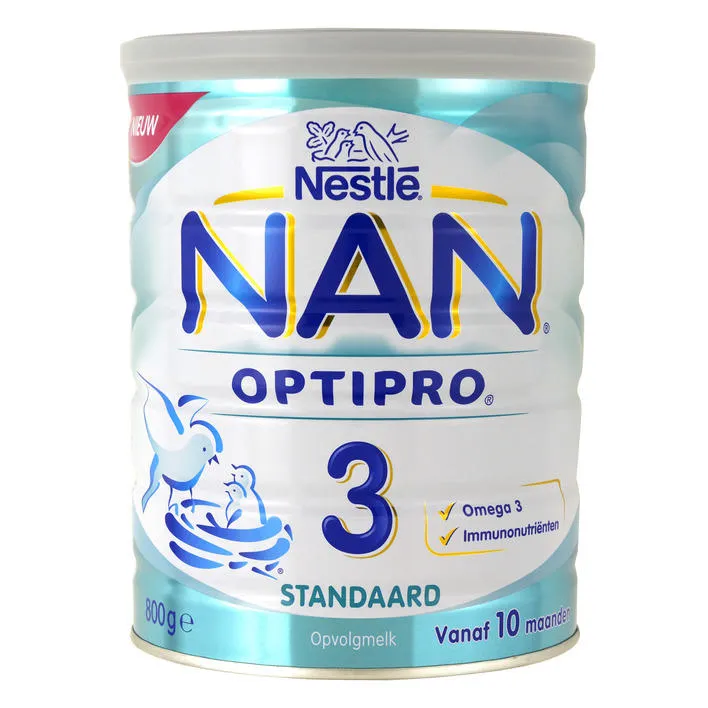
Nestle Nan 3 comes in a 400 g pack. It is sold under the Nestle brand. On Mamori it sits under Chilled › Dairy › Whole Milk Powder. Its label lists 30 ingredients.
Nestle Nan 3 at a glance
Nestle Nan 3 carries the Gluten Free, Crustaceans Free, Egg Free, Fish Free, Peanut Free, Tree Nut Free, Celery Free, Mustard Free, Sesame Free, Sulfite Free, Lupin Free, Mollusks Free, Barley Free, Beef Free, Citrus Fruit Free, Fructose Free, Gelatin Free, Latex Free, Oats Free, Pork Free, Poultry Free and Rye Free badges. Nutrition-wise, it's Low Salt/Sodium, Low Saturated Fat, Low Fiber, Low Protein, Medium in Calories, Medium Carbs and Medium in Sugars. Worth knowing: it's marked Non-Vegan, Non-Vegetarian, Non-Pescatarian, Non-Low FODMAP, Non-Vegan + Dairy, Non-Vegan + Eggs, Contains Soy, Contains Dairy, Contains Additives, Contains Artificial Flavourings, Contains Corn, Contains Emulsifier, Lactose, Contains Added Sugars, Contains Rice, Contains Seed and Contains Wheat.
Diet and allergens
Not suitable for vegan, vegetarian or pescatarian diets.
Contains soy and milk.
Free from gluten, crustaceans, eggs, fish, peanuts, tree nuts, celery, mustard, sesame, sulphites, lupin and molluscs.
Based on Mamori's check of the ingredients on the label. Recipes change, so always read the pack if you have an allergy or intolerance.
Size: 400 g
Last updated 2 November 2026
Ingredients
whole milk, Skimmed Milk, Lactose, Maltodextrin, vegetable oils, low erucic acid rapeseed oil, High Oleic Sunflower Oil, Sunflower oil, demineralized whey permeate, minerals, calcium citrates, calcium carbonate, ferrous sulfate, zinc sulfate, Potassium Iodide, acidity regulator potassium phosphates, emulsifier soy lecithin, 2'-fucosyllactose/ difucosyllactose blend: 2'-FL/DFL, vitamins, vitamin C: sodium L-ascorbate, Vitamin B2: Riboflavin, Vitamin B1: Thiamine Mononitrate, vitamin A: retinyl acetate, D-biotin, vitamin D: cholecalciferol, Vitamin B12: cyanocobalamin, lacto-N-tetraose: LNT, Limosilactobacillus reuteri cultures, sodium salt 6'-sialyllactose: 6'-SL, sodium salt 3'-sialyllactose: 3'-SL
Additives
- E333: Calcium Citrates (I) Monocalcium Citrate (Ii) Dicalcium Citrate (Iii) Calcium Citrate (Tricalcium Citrate): Generally safe
Calcium citrates (E333) are calcium salts of citric acid. They include mono-, di- and tricalcium citrate, and are made by combining citric acid with calcium compounds.
They are used as acidity regulators, to help control sourness and pH, and can also support antioxidant effects by binding minerals that speed up spoilage. They may be used in drinks, dairy products, jams, confectionery and other processed foods where acidity control is needed.
Calcium citrates are generally considered safe at normal food amounts. They are authorised for use in the EU after safety assessment, and the sources checked raise no concern for typical dietary exposure.
- E170: Calcium Carbonate, Chalk: Generally safe
Calcium carbonate (E170), also known as chalk, is a naturally occurring mineral made of calcium, carbon and oxygen. For food use it is purified, and it may come from sources such as limestone or shells.
It is mainly used as a white colourant, but it can also help with acidity control, anti-caking, or as a calcium source in some foods. It may be found in confectionery, chewing gum, bakery products, decorations and some supplements or fortified foods.
It is generally considered safe at normal food amounts. It is authorised for use in the EU after safety assessment, and the sources checked raise no concern for typical dietary exposure.
- E340: Potassium Phosphates (I) Monopotassium Phosphate (Ii) Dipotassium Phosphate (Iii) Tripotassium Phosphate: Some concerns
Potassium phosphates (E340) are potassium salts of phosphoric acid. The group includes monopotassium phosphate, dipotassium phosphate and tripotassium phosphate. They are mineral-based phosphates used as acidity regulators and antioxidant-related stabilisers.
In food, E340 helps control acidity, stabilise mixtures, bind water and support texture. It may be used in processed meats, processed cheese, bakery products, powdered drinks, desserts and other processed foods where phosphate salts are useful.
E340 is allowed in food, but some concerns have been raised. EFSA found that people who eat many foods containing added phosphates can exceed the safe daily amount, and phosphate intake is a particular concern for people with kidney disease.
- E301: Sodium Ascorbate: Generally safe
Sodium ascorbate (E301) is the sodium salt of ascorbic acid, better known as vitamin C. It is a water-soluble substance used as an antioxidant and acidity regulator.
In food, it helps slow oxidation, which can prevent browning and flavour changes. It is used in a range of foods where antioxidant protection is needed, such as processed meats, preserved fruit, drinks and bakery products.
It is generally considered safe. It is allowed in food in the EU after safety assessment, and EFSA’s review raised no concern at normal dietary amounts.
- E640: Glycine And Its Sodium Salt: Generally safe
Glycine and its sodium salt (E640) are forms of glycine, a simple amino acid found naturally in proteins. The sodium salt is a form made by combining glycine with sodium. Glycine can be produced from plant, animal, or synthetic sources, so its origin can vary.
In food, E640 is used as a nutrient additive and can also help modify flavour, especially by adding a mildly sweet taste. It may be used in foods where amino acids or flavour adjustment are needed.
E640 is generally considered safe at normal amounts. It is allowed in food in the EU after safety assessment, and the sources checked raise no particular concern for typical food use.
Questions and answers
Is Nestle Nan 3 vegan?
No. It contains milk, so it is not suitable for a vegan diet.
Is Nestle Nan 3 vegetarian?
No. It is not suitable for a vegetarian diet.
Is Nestle Nan 3 suitable for a pescatarian diet?
No. It is not suitable for a pescatarian diet.
Is Nestle Nan 3 suitable for a Low FODMAP diet?
No. It is not suitable for a Low FODMAP diet.
Is Nestle Nan 3 suitable for a Vegan + Dairy diet?
No. It is not suitable for a Vegan + Dairy diet.
Is Nestle Nan 3 suitable for a Vegan + Eggs diet?
No. It is not suitable for a Vegan + Eggs diet.
Is Nestle Nan 3 gluten-free?
Yes. Its ingredients include no gluten, and its label gives no gluten warning.
Does Nestle Nan 3 contain milk?
Yes. It contains milk.
Is Nestle Nan 3 nut-free?
Yes. Its ingredients include no peanuts or tree nuts, and its label gives no nut warning.
Does Nestle Nan 3 contain eggs?
No. Its ingredients include no eggs, and its label gives no egg warning.
Which allergens does Nestle Nan 3 contain?
It contains soy and milk.