
Mr. Noodles Cup Spicy Chick 64 g
Mr Noodles
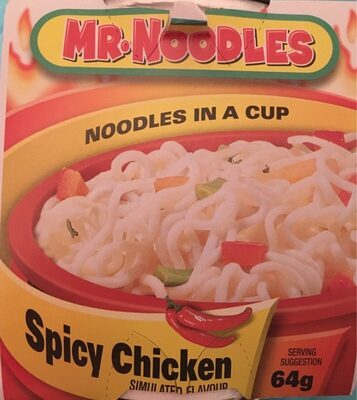
Mr. Noodles Cup Spicy Chick comes in a 64 g pack. It is sold under the Mr Noodles brand. On Mamori it sits under Groceries › Pasta, Rice & Noodles › Noodles. Its label lists 34 ingredients.
Mr. Noodles Cup Spicy Chick at a glance
Mr. Noodles Cup Spicy Chick carries the Mustard Free, Barley Free, Beef Free, Citrus Fruit Free, Gelatin Free, Latex Free, Oats Free, Pork Free and Rice Free badges. Nutrition-wise, it's Low Sugars, High Calorie, High Carbs, High Salt/Sodium, High Saturated Fat, Medium in Fiber and Medium in Protein. Worth knowing: it's marked Non-Vegan, Non-Vegetarian, Non-Pescatarian, Non-Low FODMAP, Non-Vegan + Dairy, Non-Vegan + Eggs, Contains Gluten, Contains Soy, Contains Additives, Contains Artificial Flavourings, Contains Corn, Contains Emulsifier, Contains Fructose, Lactose, Contains Added Sugars, Contains Poultry, Contains Rye, Contains Seed and Contains Wheat.
Diet and allergens
Not suitable for vegan, vegetarian or pescatarian diets.
Contains gluten and soy.
Free from mustard.
May contain: crustaceans, egg, fish, milk, peanuts, tree nuts, celery, sesame seeds, sulfites.
Based on Mamori's check of the ingredients on the label. Recipes change, so always read the pack if you have an allergy or intolerance.
Size: 64 g
Last updated 2 November 2026
Ingredients
noodles, wheat flour, palm fat, modified starch, sugar, salt, thickener: E 412, garlic powder, spicy chicken flavor seasoning mix, chicken flavor, salt, flavor enhancer: E 621, sugar, soy sauce powder, soybeans, salt, wheat, yeast extract powder, baker's yeast, water, flavor enhancers, E 631, E 627, coloring: E 160c, white pepper powder, dehydrated chives, coloring: E 150a, vegetables, dehydrated textured soy protein, dehydrated cabbage, dehydrated chives, dehydrated carrot, freeze-dried corn, freeze-dried peas
Additives & flavourings
Additives
- E1401: Modified Starch ((Acid-Treated Starch) Stabiliser): Generally safe
Acid-treated starch, often labelled E1401 in some systems, is a modified starch. It is made by treating ordinary starch from plants such as maize, potato or wheat with acid to change how it behaves in food.
It helps thicken, stabilise or improve texture, especially where a smooth, consistent result is needed. Modified starches are used in foods such as sauces, soups, desserts, fillings and processed meals.
It is generally considered safe. Under EU law, acid-treated starch is not classed as a food additive; it is treated as a food ingredient instead.
- E412: Guar Gum (Thickener): Generally safe
Guar gum (E412) is a thickening fibre made from the seeds of the guar plant, a type of legume. It is a natural polysaccharide, meaning a long-chain carbohydrate that absorbs water easily.
It is used to thicken, stabilise or improve texture in foods such as sauces, dressings, dairy products, ice cream, gluten-free baked goods and processed foods. It can also help stop ingredients from separating.
Guar gum is generally considered safe at normal food amounts. It is allowed in food in the EU after safety assessment, and the sources checked raise no concern for typical use.
- E621: monosodium glutamate: Some concerns
Monosodium glutamate, or MSG (E621), is the sodium salt of glutamic acid, an amino acid found naturally in many foods. It is made as a purified flavour enhancer.
It boosts savoury “umami” taste and is used in foods such as soups, sauces, seasonings, savoury snacks, ready meals and processed meat or vegetable dishes.
It is allowed in food, but some concerns have been raised. EFSA found that people who eat a lot of foods containing glutamates can go over the safe daily amount, so exposure may be high for frequent consumers.
- E631: Disodium Inosinate: Generally safe
Disodium inosinate, or E631, is a flavour enhancer. It is the sodium salt of inosinic acid, a substance related to naturally occurring compounds found in some foods. It can be made from animal or microbial sources, so it may not always be suitable for vegetarian or vegan diets.
It is used to boost savoury, “umami” flavours, often together with glutamates such as MSG. It may be found in snack foods, seasoning mixes, instant noodles, soups, sauces and processed savoury foods.
It is allowed in food in the EU after safety assessment, and is generally considered safe at normal amounts used in foods. The sources checked raise no specific concern for typical dietary exposure.
- E627: Disodium Guanylate: Generally safe
Disodium guanylate (E627) is a flavour enhancer made from guanylic acid, a substance related to natural nucleotides found in living cells. It can be produced by fermentation or extracted from natural sources, and may sometimes be animal derived.
It is used to boost savoury, meaty or “umami” flavours, often together with monosodium glutamate (MSG). It may be found in foods such as soups, sauces, seasonings, savoury snacks, instant noodles and processed meat products.
E627 is generally considered safe at normal amounts used in food. It is authorised for use in the EU after safety assessment, and the sources checked raise no concern for typical dietary exposure.
- E160c: Paprika Extract, Capsanthin, Capsorubin: Generally safe
Paprika extract, capsanthin and capsorubin (E160c) is a natural red-orange food colouring made from paprika peppers. The main colouring substances are carotenoids, especially capsanthin and capsorubin.
It is used to give or strengthen orange, red or reddish-brown colour in foods. It may be found in items such as cheeses, sauces, soups, snacks, meat products and seasonings.
It is generally considered safe at normal food-use amounts. It is authorised for use in the EU after EFSA safety assessment, and the sources checked raise no concern at typical levels of consumption.
- E150A: Plain Caramel (E150a): Generally safe
Plain caramel, or E150a, is a brown food colour made by heating sugars under controlled conditions. It is the simplest type of caramel colour and is not the same as caramel flavour or caramel used as a sweet.
It is used to give foods and drinks a brown colour or to make colour more consistent. It can be found in products such as soft drinks, sauces, bakery products, confectionery and some processed foods.
Plain caramel is generally considered safe. It is allowed in food in the EU after safety assessment, and EFSA found no risk of people eating too much from normal dietary exposure.
Flavourings
- chicken flavor: Flavouring (Regulation (EC) No 1334/2008 on flavourings, Article 16).
Questions and answers
Is Mr. Noodles Cup Spicy Chick vegan?
No. It is not suitable for a vegan diet.
Is Mr. Noodles Cup Spicy Chick vegetarian?
No. It is not suitable for a vegetarian diet.
Is Mr. Noodles Cup Spicy Chick suitable for a pescatarian diet?
No. It is not suitable for a pescatarian diet.
Is Mr. Noodles Cup Spicy Chick suitable for a Low FODMAP diet?
No. It is not suitable for a Low FODMAP diet.
Is Mr. Noodles Cup Spicy Chick suitable for a Vegan + Dairy diet?
No. It is not suitable for a Vegan + Dairy diet.
Is Mr. Noodles Cup Spicy Chick suitable for a Vegan + Eggs diet?
No. It is not suitable for a Vegan + Eggs diet.
Is Mr. Noodles Cup Spicy Chick gluten-free?
No. It contains gluten.
Which allergens does Mr. Noodles Cup Spicy Chick contain?
It contains gluten and soy. Its label also says it may contain: crustaceans, egg, fish, milk, peanuts, tree nuts, celery, sesame seeds, sulfites.
More in Noodles
- Vitasia Glass Noodles
- Khan Easy Instant Noodles, Vegetable Flavour
- INDOMIE Mi Goreng Stir-Fry Noodles
- Mr Noodles Instant Noodles Chicken Flavor
- Nongshim Shin Cup Gourmet Spicy Noodle Soup
- Acecook Instant noodles chicken
- Vitasia Wok noodles curry
- SUN HEE UDON NOODLE BOWL Sesame Teriyaki
- Vitasia Rice Noodles
- Lidl Thai noodles Pad Thai
- Lidl Noodles Sweet and Sour
- Kania Thai Style Instant Noodles Beef Flavour