
Mr Kipling Chocolate Slices
On the pack: Mr Kipling Chocolate Slices X6
Mr Kipling
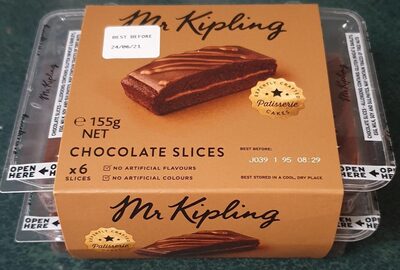
Mr Kipling Chocolate Slices is listed on Mamori. It is sold under the Mr Kipling brand. On Mamori it sits under Confectionery › Chocolates › Chocolate. Its label lists 45 ingredients.
Mr Kipling Chocolate Slices at a glance
Mr Kipling Chocolate Slices fits Vegetarian and Pescatarian diets. It also carries the Crustaceans Free, Fish Free, Peanut Free, Tree Nut Free, Celery Free, Mustard Free, Sesame Free, Lupin Free, Mollusks Free, Beef Free, Citrus Fruit Free, Gelatin Free, Latex Free, Oats Free, Pork Free, Rice Free and Rye Free badges. Nutrition-wise, it's Low Salt/Sodium, Low Saturated Fat, Low Sugars, Low Protein, High Calorie, High Carbs and Medium in Fiber. Worth knowing: it's marked Non-Vegan, Non-Low FODMAP, Non-Vegan + Dairy, Non-Vegan + Eggs, Contains Gluten, Contains Egg, Contains Soy, Contains Dairy, Contains Additives, Contains Artificial Flavourings, Contains Barley, Contains Corn, Contains Emulsifier, Contains Fructose, Lactose, Contains Added Sugars, Contains Poultry, Contains Seed and Contains Wheat.
Diet and allergens
Suitable for vegetarian and pescatarian diets.
Not suitable for a vegan diet.
Contains gluten, eggs, soy and milk.
Free from crustaceans, fish, peanuts, tree nuts, celery, mustard, sesame, lupin and molluscs.
Based on Mamori's check of the ingredients on the label. Recipes change, so always read the pack if you have an allergy or intolerance.
Last updated 2 November 2026
Ingredients
Water, Sugar, Wheat Flour, Calcium, Iron, Niacin, Thiamin, Vegetable Oils, Rapeseed Oil, Palm Oil, Vegetable Fibres, Humectant: Vegetable Glycerine, Sweetener: Maltitol, Fat Reduced Cocoa Powder, Tapioca Starch, Glucose Syrup, Dried Egg White, Invert Sugar Syrup, Whey Powder, Maize Starch, Raising Agents, Disodium Diphosphate, Potassium Bicarbonate, Colour: Calcium Carbonate, Vegetable Fats, Palm Oil, Rapeseed Oil, Shea Butter, Sunflower Oil in varying proportions, Emulsifiers, Mono- and Diglycerides of Fatty Acids, Sorbitan Monostearate, Soya Lecithin, Polysorbate 60, Preservative: Potassium Sorbate, Skimmed Milk Powder, Stabilisers, Xanthan Gum, Sorbitan Tristearate, Barley Malt Extract, Gelling Agents, Sodium Alginate, Tetrasodium Diphosphate, Calcium Sulphate, Flavourings
Additives & flavourings
Additives
- E422: Glycerol (Emulsifier): Generally safe
Glycerol, or E422, is a clear, sweet-tasting liquid also known as glycerine. It is a type of sugar alcohol and can be made from vegetable oils, animal fats, or produced synthetically.
In food, it helps keep moisture in, thickens texture, stabilises mixtures, and can help emulsions stay smooth. It is used in a range of foods where softness, moisture retention, or smooth texture is needed, such as confectionery, baked goods, icings, and some drinks.
Glycerol is generally considered safe at normal food amounts. It is allowed in food in the EU after safety assessment, and the sources checked raise no concern for typical use.
- E965: Maltitol (I) Maltitol (Ii) Maltitol Syrup (Sweetener) (Stabiliser): Generally safe
Maltitols (E965) are sugar alcohol sweeteners. They include maltitol and maltitol syrup, made from starch sugars such as maltose, usually from maize or wheat starch.
They are used to sweeten foods with less sugar, add bulk, help keep moisture, and sometimes give a smooth texture or glossy coating. They are common in sugar-free sweets, chewing gum, chocolate, desserts, baked goods and low-sugar products.
Maltitols are generally considered safe at normal amounts and are authorised for use in the EU after safety assessment. Like other sugar alcohols, larger amounts can cause bloating or a laxative effect in some people.
- E450: Diphosphates (I) Disodium Diphosphate (Ii) Trisodium Diphosphate (Iii) Tetrasodium Diphosphate (Iv) Dipotassium Diphosphate (V) Tetrapotassium Diphosphate (Vi) Dicalcium Diphosphate (Vii) Calcium Dihydrogen Diphosphate: Some concerns
Diphosphates (E450) are phosphate salts, including sodium, potassium and calcium diphosphates. They are mineral-based food additives used in several forms, such as disodium diphosphate and dicalcium diphosphate.
They help control acidity, improve texture, hold moisture, stabilise mixtures and support raising in baked goods. They may be found in processed meats, bakery products, cheese products, desserts, sauces and some powdered mixes.
They are allowed in food, but some concerns have been raised. EFSA found that people who eat a lot of foods containing phosphates can go over the safe daily amount, so high intake from many processed foods is the main issue.
- E501: Potassium Carbonates: (I) Potassium Carbonate (Ii) Potassium Bicarbonate (Potassium Hydrogen Carbonate): Generally safe
Potassium carbonate and potassium bicarbonate are potassium salts, listed as E501. They are alkaline mineral compounds used to adjust acidity in foods.
They help control pH, act as raising agents, and can help prevent powders from clumping. They may be used in baked goods, cocoa and chocolate products, powdered mixes, and other foods where acidity control or anti-caking is needed.
E501 is generally considered safe at normal food-use levels. It is allowed in food in the EU after safety assessment, and the sources checked raise no concern at typical amounts.
- E170: Calcium Carbonate, Chalk: Generally safe
Calcium carbonate (E170), also known as chalk, is a naturally occurring mineral made of calcium, carbon and oxygen. For food use it is purified, and it may come from sources such as limestone or shells.
It is mainly used as a white colourant, but it can also help with acidity control, anti-caking, or as a calcium source in some foods. It may be found in confectionery, chewing gum, bakery products, decorations and some supplements or fortified foods.
It is generally considered safe at normal food amounts. It is authorised for use in the EU after safety assessment, and the sources checked raise no concern for typical dietary exposure.
- E471: Mono- And Diglycerides Of Fatty Acids (Glyceryl Monostearate, Glyceryl Distearate): Generally safe
Mono- and diglycerides of fatty acids, or E471, are emulsifiers made from glycerol and fatty acids. The fatty acids can come from vegetable oils or animal fats, so the source is not always clear unless stated by the producer.
They help oil and water mix, improve texture, and keep foods stable. They are often used in baked goods, spreads, desserts, ice cream, sauces, and processed foods where a smooth or consistent texture is needed.
E471 is generally considered safe. It is allowed in food in the EU after safety assessment, and the sources we check raise no concern at normal amounts.
- E491: Sorbitan Monostearate: Some concerns
Sorbitan monostearate (E491) is an emulsifier and stabiliser made from sorbitol and stearic acid. The stearic acid may come from vegetable or animal fats, depending on the manufacturer.
It helps oil and water mix, improves texture, and helps keep foods stable. It may be used in products such as cakes, desserts, confectionery, emulsified sauces, and some fat-based or aerated foods.
It is allowed in food, but some concerns have been raised. EFSA found that people who eat a lot of foods containing sorbitan esters, including E491, can go over the safe daily amount.
- E435: Polyoxyethylene Sorbitan Monostearate (Polysorbate 60): Some concerns
Polyoxyethylene sorbitan monostearate, or polysorbate 60, is E435. It is an emulsifier made by reacting sorbitan from sorbitol with stearic acid, then adding polyoxyethylene chains. The stearic acid may come from plant or animal fats.
It helps oil and water mix, improves texture, and helps keep foods stable. It is used in products such as baked goods, desserts, toppings, sauces, and other foods where emulsifying or stabilising is needed.
It is allowed in food, but some concerns have been raised. EFSA found that people who eat a lot of polysorbates can exceed the safe daily amount, so exposure can be a concern for high consumers.
- E202: Potassium Sorbate: Some concerns
Potassium sorbate (E202) is the potassium salt of sorbic acid. It is a preservative used to slow the growth of moulds and yeasts in food and drink.
It is often used in products where spoilage by yeasts or moulds is a concern, such as sauces, bakery fillings, cheese products, fruit preparations, drinks and some processed foods.
It is allowed in food, but some concerns have been raised. EFSA found that people who eat a lot of foods containing sorbates could go over the safe daily amount, so overall exposure is the main issue.
- E415: Xanthan Gum (Thickener): Generally safe
Xanthan gum (E415) is a thickening and stabilising gum made by fermenting sugars with the bacterium Xanthomonas campestris, then purifying and drying the resulting substance.
It helps foods hold water, thicken, and keep ingredients evenly mixed. It is often used in sauces, dressings, desserts, bakery products, gluten-free foods, and drinks where a smooth or stable texture is needed.
Xanthan gum is generally considered safe. It is allowed in food in the EU after EFSA assessment, and the sources checked do not raise concerns at normal amounts used in foods.
- E492: Sorbitan Tristearate: Some concerns
Sorbitan tristearate (E492) is an emulsifier and stabiliser. It is made by combining sorbitol-derived sorbitan with stearic acid, a fatty acid that can come from vegetable or animal fats.
It helps keep fat and water mixed, improves texture, and can support stable foams or coatings. It may be used in products such as confectionery, desserts, fine bakery wares, emulsified sauces, and fat-based foods.
It is allowed in food, but some concerns have been raised. EFSA found that people who eat a lot of foods containing sorbitan esters, including E492, could go over the safe daily amount.
- E401: Sodium Alginate (Thickener) (Stabiliser) (Gelling Agent): Generally safe
Sodium alginate (E401) is the sodium salt of alginic acid, a natural substance extracted from brown seaweed. It is a type of soluble fibre and is used as a thickener, stabiliser and gelling agent.
In food, it helps liquids become thicker, keeps mixtures smooth, and can form gels. It may be used in sauces, desserts, ice cream, processed cheese, fillings and other foods where texture and stability are needed.
It is generally considered safe. It is allowed in food in the EU after EFSA safety assessment, and the sources checked raise no concern at normal amounts.
- E516: Calcium Sulfate: Generally safe
Calcium sulphate (E516) is a mineral salt made from calcium and sulphate. It occurs naturally as gypsum and can also be produced for food use. It is used as an acidity regulator, firming agent and anti-caking agent.
In food, it can help control acidity, improve texture, or stop powders from clumping. It may be found in products such as tofu, baked goods, flour-based mixes, desserts and some processed foods.
Calcium sulphate is generally considered safe at normal food-use levels. It is authorised for use in the EU after safety assessment, and the sources checked raise no concern for typical amounts in food.
Flavourings
- Flavourings: Flavouring (Regulation (EC) No 1334/2008 on flavourings, Article 16).
Questions and answers
Is Mr Kipling Chocolate Slices vegan?
No. It contains eggs and milk, so it is not suitable for a vegan diet.
Is Mr Kipling Chocolate Slices vegetarian?
Yes. It is suitable for a vegetarian diet.
Is Mr Kipling Chocolate Slices suitable for a pescatarian diet?
Yes. It is suitable for a pescatarian diet.
Is Mr Kipling Chocolate Slices suitable for a Low FODMAP diet?
No. It is not suitable for a Low FODMAP diet.
Is Mr Kipling Chocolate Slices suitable for a Vegan + Dairy diet?
No. It is not suitable for a Vegan + Dairy diet.
Is Mr Kipling Chocolate Slices suitable for a Vegan + Eggs diet?
No. It is not suitable for a Vegan + Eggs diet.
Is Mr Kipling Chocolate Slices gluten-free?
No. It contains gluten.
Does Mr Kipling Chocolate Slices contain milk?
Yes. It contains milk.
Is Mr Kipling Chocolate Slices nut-free?
Yes. Its ingredients include no peanuts or tree nuts, and its label gives no nut warning.
Does Mr Kipling Chocolate Slices contain eggs?
Yes. It contains eggs.
Which allergens does Mr Kipling Chocolate Slices contain?
It contains gluten, eggs, soy and milk.