
Golden Harvest Mini Choco Buns 100 g
Golden Harvest
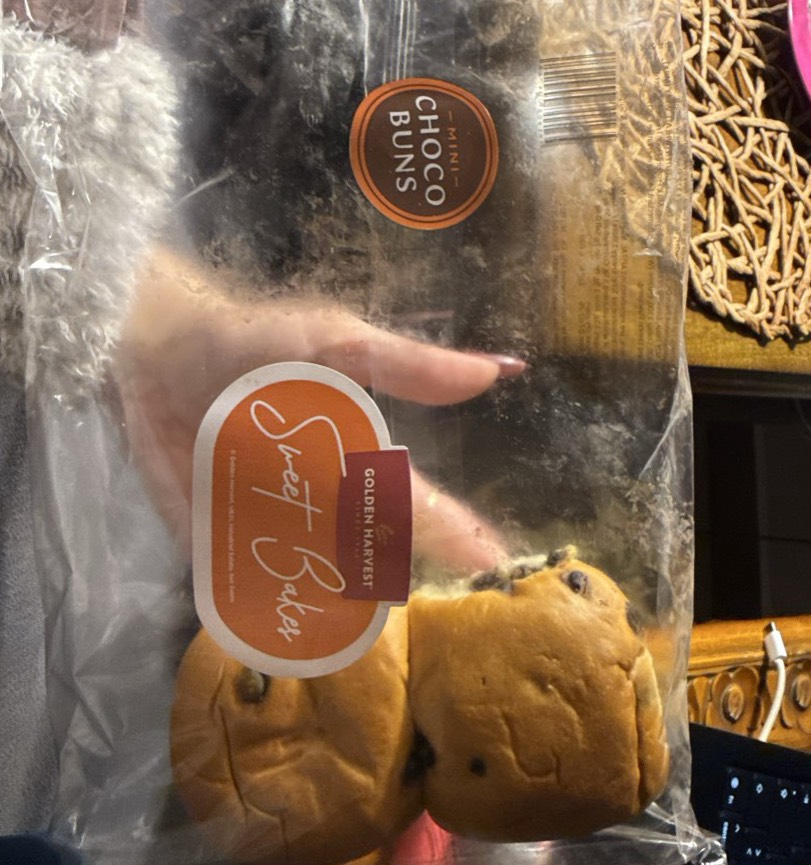
Golden Harvest Mini Choco Buns comes in a 100 g pack. It is sold under the Golden Harvest brand. On Mamori it sits under Confectionery › Chocolates › Other Chocolate. Its label lists 26 ingredients.
Golden Harvest Mini Choco Buns at a glance
Golden Harvest Mini Choco Buns carries the Crustaceans Free, Celery Free, Mustard Free, Lupin Free, Mollusks Free, Latex Free and Oats Free badges. Nutrition-wise, it's High Carbs, Medium in Fiber, Medium in Protein, Medium in Calories, Medium Salt/Sodium, Medium Saturated Fat and Medium in Sugars. Worth knowing: it's marked Non-Vegan, Non-Vegetarian, Non-Pescatarian, Non-Low FODMAP, Non-Vegan + Dairy, Non-Vegan + Eggs, Contains Gluten, Contains Egg, Contains Fish, Contains Soy, Contains Dairy, Contains Additives, Contains Artificial Flavourings, Contains Barley, Contains Beef, Contains Citrus Fruit, Contains Corn, Contains Emulsifier, Contains Fructose, Contains Gelatin, Lactose, Contains Added Sugars, Contains Pork, Contains Poultry, Contains Rice, Contains Rye, Contains Seed and Contains Wheat.
Diet and allergens
Not suitable for vegan, vegetarian or pescatarian diets.
Contains gluten, eggs, fish, soy and milk.
Free from crustaceans, celery, mustard, lupin and molluscs.
May contain: nuts, sesame seeds, sulphites.
Based on Mamori's check of the ingredients on the label. Recipes change, so always read the pack if you have an allergy or intolerance.
Size: 100 g
Last updated 2 November 2026
Ingredients
palm partly kernel, hydrogenated fat, reduced cod emulsifier E322, flavouring: vanillin, table fats, drops, sugar, fully hydrogenated vegetable powder, E300, E920, soy flour, emulsifier palm oil, E471, eggs, glucose yeast, salt, syrup, dextrose, milk gluten wheat, whey sugar, agent, orange colour, enzyme, humectant E422, protein, preservative flour treatment E281
Additives & flavourings
Additives
- E322: Lecithins: Generally safe
Lecithins (E322) are a group of natural fatty substances found in plants and animals. Food-grade lecithin is usually made from soya, sunflower, rapeseed or egg, and in some cases may be animal derived.
They are mainly used as emulsifiers, helping oil and water mix and keeping textures smooth. They are found in foods such as chocolate, spreads, baked goods, sauces, margarines and instant powders.
Lecithins are generally considered safe at normal food amounts and are allowed in the EU after safety assessment. People with relevant allergies should note the source, especially soya or egg.
- E300: Ascorbic Acid (Vitamin C): Generally safe
Ascorbic acid (E300) is vitamin C, a water-soluble substance found naturally in many fruits and vegetables. As a food additive, it is usually made by controlled industrial production and used in purified form.
It helps prevent oxidation, which can stop foods from browning or developing off-flavours. It can also adjust acidity. It is used in a range of foods, especially fruit products, drinks, bakery products, meat products and foods where colour or freshness needs protecting.
It is generally considered safe at normal food amounts. It is authorised for use in the EU after safety assessment, and EFSA’s re-evaluation did not raise concern for its use as a food additive.
- E920: L-Cysteine: Generally safe
L-cysteine (E920) is an amino acid, a building block of protein. It can be made by fermentation or extracted from protein-rich materials, and in some cases may be animal derived.
In food, it is mainly used as a flour treatment agent. It helps make dough easier to handle and is most often associated with bread, rolls and other baked goods.
It is generally considered safe at normal food amounts. It is allowed in food in the EU after safety assessment, and the sources checked raise no concern for typical use.
- E471: Mono- And Diglycerides Of Fatty Acids (Glyceryl Monostearate, Glyceryl Distearate): Generally safe
Mono- and diglycerides of fatty acids, or E471, are emulsifiers made from glycerol and fatty acids. The fatty acids can come from vegetable oils or animal fats, so the source is not always clear unless stated by the producer.
They help oil and water mix, improve texture, and keep foods stable. They are often used in baked goods, spreads, desserts, ice cream, sauces, and processed foods where a smooth or consistent texture is needed.
E471 is generally considered safe. It is allowed in food in the EU after safety assessment, and the sources we check raise no concern at normal amounts.
- E440: Pectins (I) Pectin (Ii) Amidated Pectin: Generally safe
Pectins (E440) are natural gelling fibres found in the cell walls of fruits and vegetables, especially apples and citrus peel. E440 includes ordinary pectin and amidated pectin, a modified form that gels more easily in some foods.
They are used as thickeners, stabilisers and gelling agents. You may find them in jams, jellies, fruit spreads, desserts, confectionery, yoghurts and some drinks or sauces where a thicker texture is needed.
Pectins are generally considered safe. They are authorised for use in food in the EU after safety assessment, and the sources checked raise no concern at normal food amounts.
- E422: Glycerol (Emulsifier): Generally safe
Glycerol, or E422, is a clear, sweet-tasting liquid also known as glycerine. It is a type of sugar alcohol and can be made from vegetable oils, animal fats, or produced synthetically.
In food, it helps keep moisture in, thickens texture, stabilises mixtures, and can help emulsions stay smooth. It is used in a range of foods where softness, moisture retention, or smooth texture is needed, such as confectionery, baked goods, icings, and some drinks.
Glycerol is generally considered safe at normal food amounts. It is allowed in food in the EU after safety assessment, and the sources checked raise no concern for typical use.
- E281: Sodium Propionate: Generally safe
Sodium propionate (E281) is the sodium salt of propionic acid, a simple organic acid. It belongs to the propionate preservatives, alongside calcium and potassium propionate.
It helps stop mould and some bacteria from growing, especially in bakery foods. It is commonly used in bread, rolls, cakes and other baked goods where it helps extend shelf life.
It is generally considered safe at normal food amounts. It is authorised for use in the EU after EFSA safety assessment, and the sources checked raise no concern for typical dietary exposure.
Flavourings
- flavouring: vanillin: Flavouring (EU Union list of flavouring substances: Vanillin). Vanillin is a flavouring substance on the EU Union list.
Questions and answers
Is Golden Harvest Mini Choco Buns vegan?
No. It contains eggs, fish and milk, so it is not suitable for a vegan diet.
Is Golden Harvest Mini Choco Buns vegetarian?
No. It is not suitable for a vegetarian diet.
Is Golden Harvest Mini Choco Buns suitable for a pescatarian diet?
No. It is not suitable for a pescatarian diet.
Is Golden Harvest Mini Choco Buns suitable for a Low FODMAP diet?
No. It is not suitable for a Low FODMAP diet.
Is Golden Harvest Mini Choco Buns suitable for a Vegan + Dairy diet?
No. It is not suitable for a Vegan + Dairy diet.
Is Golden Harvest Mini Choco Buns suitable for a Vegan + Eggs diet?
No. It is not suitable for a Vegan + Eggs diet.
Is Golden Harvest Mini Choco Buns gluten-free?
No. It contains gluten.
Does Golden Harvest Mini Choco Buns contain milk?
Yes. It contains milk.
Does Golden Harvest Mini Choco Buns contain eggs?
Yes. It contains eggs.
Which allergens does Golden Harvest Mini Choco Buns contain?
It contains gluten, eggs, fish, soy and milk. Its label also says it may contain: nuts, sesame seeds, sulphites.
More in Other Chocolate
- Sorini Happy bunny
- Štark Bananica
- Novi Nero Nero 70% Dark Chocolate Mint
- Jouy&co Jouyco Spongiez Choco Covered 5pk
- Jouy&co Jouyco Donuts Cocoa 5pk
- Jouy & Co Jouyco Choqopy
- Hersheys Cookies N Cream Flat White
- Hershey's Cookies N Creme Bar
- Hersheys Hershey's Milk Chocolate Chips
- Hersheys Hershey's Cookies N Creme
- Galaxy Salted Caramel
- Galaxy Ripple