
Heidrun Mexifoods Nachos Cheese Flavor 200 g
On the pack: Mexifoods Nachos Sabor Queso
Heidrun
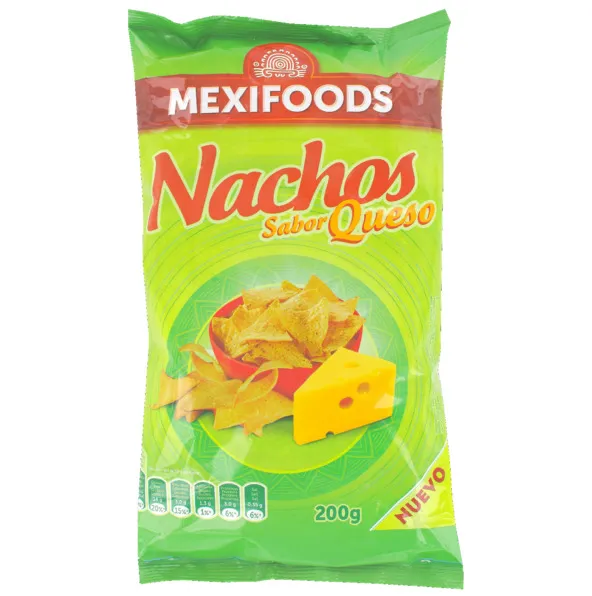
Heidrun Mexifoods Nachos Cheese Flavor comes in a 200 g pack. It is sold under the Heidrun brand. On Mamori it sits under Groceries › World Food › Taco Sheel. Its label lists 16 ingredients.
Heidrun Mexifoods Nachos Cheese Flavor at a glance
Heidrun Mexifoods Nachos Cheese Flavor fits Vegetarian, Pescatarian and Vegan + Dairy diets. It also carries the Gluten Free, Crustaceans Free, Egg Free, Fish Free, Peanut Free, Soy Free, Tree Nut Free, Celery Free, Mustard Free, Sesame Free, Sulfite Free, Lupin Free, Mollusks Free, Barley Free, Beef Free, Citrus Fruit Free, Gelatin Free, Latex Free, Oats Free, Pork Free, Poultry Free and Rye Free badges. Nutrition-wise, it's Low Sugars, High Calorie, High Carbs, High Saturated Fat, Medium in Fiber, Medium in Protein and Medium Salt/Sodium. Worth knowing: it's marked Non-Vegan, Non-Low FODMAP, Non-Vegan + Eggs, Contains Dairy, Contains Additives, Contains Artificial Flavourings, Contains Corn, Contains Emulsifier, Contains Fructose, Lactose, Contains Added Sugars, Contains Rice, Contains Seed and Contains Wheat.
Diet and allergens
Suitable for vegetarian and pescatarian diets.
Not suitable for a vegan diet.
Contains milk.
Free from gluten, crustaceans, eggs, fish, peanuts, soy, tree nuts, celery, mustard, sesame, sulphites, lupin and molluscs.
Based on Mamori's check of the ingredients on the label. Recipes change, so always read the pack if you have an allergy or intolerance.
Size: 200 g
Last updated 26 October 2026
Ingredients
nixtamalized corn flour, vegetable oil: sunflower, cheese-flavored seasoning, Lactose, salt, Cheese powder, Maltodextrin, Sucrose, coloring: E 160c, acidity regulator: E 330, antioxidants, E 304, E 307, E 392, emulsifier: E 472, Flavors
Additives & flavourings
Additives
- E160c: Paprika Extract, Capsanthin, Capsorubin: Generally safe
Paprika extract, capsanthin and capsorubin (E160c) is a natural red-orange food colouring made from paprika peppers. The main colouring substances are carotenoids, especially capsanthin and capsorubin.
It is used to give or strengthen orange, red or reddish-brown colour in foods. It may be found in items such as cheeses, sauces, soups, snacks, meat products and seasonings.
It is generally considered safe at normal food-use amounts. It is authorised for use in the EU after EFSA safety assessment, and the sources checked raise no concern at typical levels of consumption.
- E330: Citric Acid: Generally safe
Citric acid (E330) is a natural organic acid found in citrus fruits and many other plants. The citric acid used in food is usually made by fermentation of sugars using micro-organisms.
It is used as an acidity regulator and antioxidant. It helps give a sharp, sour taste, control pH, and slow colour or flavour changes. It is common in soft drinks, sweets, jams, sauces, canned foods, and many processed foods.
Citric acid is generally considered safe at normal food levels. It is allowed in food in the EU after safety assessment, and the sources checked raise no concern for typical dietary amounts.
- E304: Fatty Acid Esters Of Ascorbic Acid (Ascorbyl Palmitate): Generally safe
Fatty acid esters of ascorbic acid (E304) are antioxidants made by combining vitamin C, also called ascorbic acid, with fatty acids such as palmitic or stearic acid. The fatty acids can come from plant or animal sources.
They help protect fats and oils from oxidation, which can cause rancid flavours and colour changes. They are used in foods where fat stability matters, such as oils, fat spreads, snacks, bakery products and some processed foods.
E304 is generally considered safe at normal food amounts. It is authorised for use in the EU after safety assessment, and the sources checked raise no specific concern for typical dietary exposure.
- E307: Alpha-Tocopherol (Synthetic): Generally safe
Alpha-tocopherol (E307) is a form of vitamin E used as a food additive. It can be made synthetically or obtained from vegetable oils, and belongs to a group of fat-soluble antioxidant substances called tocopherols.
It helps protect fats and oils from oxidation, which can cause rancid flavours and loss of quality. It may be used in foods containing oils or fats, such as spreads, dressings, snacks, baked goods and some processed foods.
E307 is generally considered safe at normal amounts used in food. It is authorised for use in the EU after EFSA safety assessment, and the sources checked raise no concern for typical dietary exposure.
- E392: Extracts Of Rosemary: Generally safe
Extracts of rosemary (E392) are antioxidant extracts made from the rosemary plant. They contain natural compounds such as carnosic acid and carnosol, which help slow oxidation.
They are used to protect fats and oils from going rancid and to help preserve flavour and colour. You may find them in foods containing fat, such as oils, spreads, meat products, snacks, and sauces.
E392 is generally considered safe at normal food levels. It is authorised for use in the EU after EFSA safety assessment, and the checked sources raise no concern for typical dietary amounts.
- E472E: Mono- And Diacetyl Tartaric Acid Esters Of Mono- And Diglycerides Of Fatty Acids (E472e): Generally safe
Mono and diacetyl tartaric acid esters of mono- and diglycerides of fatty acids (E472e) are emulsifiers made by reacting fats or oils with tartaric acid and acetic acid. The fatty acids can come from plant or animal sources.
They help oil and water mix, improve dough strength, and stabilise texture. They are commonly used in bread, rolls, pastries, cakes, and other baked goods, especially where a consistent crumb and volume are needed.
E472e is generally considered safe at normal food levels. It is allowed in food in the EU after EFSA safety assessment, and the sources checked raise no concern for usual dietary amounts.
Flavourings
- Flavors: Flavouring (Regulation (EC) No 1334/2008 on flavourings, Article 16).
Questions and answers
Is Heidrun Mexifoods Nachos Cheese Flavor vegan?
No. It contains milk, so it is not suitable for a vegan diet.
Is Heidrun Mexifoods Nachos Cheese Flavor vegetarian?
Yes. It is suitable for a vegetarian diet.
Is Heidrun Mexifoods Nachos Cheese Flavor suitable for a pescatarian diet?
Yes. It is suitable for a pescatarian diet.
Is Heidrun Mexifoods Nachos Cheese Flavor suitable for a Low FODMAP diet?
No. It is not suitable for a Low FODMAP diet.
Is Heidrun Mexifoods Nachos Cheese Flavor suitable for a Vegan + Dairy diet?
Yes. It is suitable for a Vegan + Dairy diet.
Is Heidrun Mexifoods Nachos Cheese Flavor suitable for a Vegan + Eggs diet?
No. It is not suitable for a Vegan + Eggs diet.
Is Heidrun Mexifoods Nachos Cheese Flavor gluten-free?
Yes. Its ingredients include no gluten, and its label gives no gluten warning.
Does Heidrun Mexifoods Nachos Cheese Flavor contain milk?
Yes. It contains milk.
Is Heidrun Mexifoods Nachos Cheese Flavor nut-free?
Yes. Its ingredients include no peanuts or tree nuts, and its label gives no nut warning.
Does Heidrun Mexifoods Nachos Cheese Flavor contain eggs?
No. Its ingredients include no eggs, and its label gives no egg warning.
Which allergens does Heidrun Mexifoods Nachos Cheese Flavor contain?
It contains milk.
More in Taco Sheel
- Casa De Mexico Taco shells imp
- El Tequito Taco shells
- El Tequito Taco Dinner Kit
- Mexifoods 8 Fajita 20Cm
- Mexifoods Whole Wheat Fajitas 8x20cm
- Santa Maria Discovery Taco Shells
- Old Elpaso Old El Paso Taco Shells Save c Off
- Old Elpaso Old El Paso Soft Tortilla Boats
- Heidrun Poco Loco Taco Spice Mix
- La Fiesta Casa Fiesta Mild Taco Sauce
- Old Elpaso Taco Dinner Kit
- Old El Paso Bbq Fajita Kit