
McCain 4 Cheese Buns 400 g
On the pack: Mccain Buns 4 Fromages 6X400G
McCain
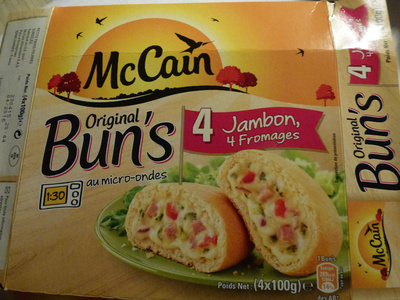
McCain 4 Cheese Buns comes in a 400 g pack. It is sold under the McCain brand. On Mamori it sits under Frozen › Pizza. Its label lists 72 ingredients.
McCain 4 Cheese Buns at a glance
McCain 4 Cheese Buns carries the Crustaceans Free, Fish Free, Peanut Free, Soy Free, Tree Nut Free, Mustard Free, Sesame Free, Lupin Free, Mollusks Free, Beef Free, Citrus Fruit Free, Gelatin Free, Latex Free, Poultry Free and Rice Free badges. Nutrition-wise, it's High Protein, High Salt/Sodium, High Saturated Fat, Medium in Fiber, Medium in Calories, Medium Carbs and Medium in Sugars. Worth knowing: it's marked Non-Vegan, Non-Vegetarian, Non-Pescatarian, Non-Low FODMAP, Non-Vegan + Dairy, Non-Vegan + Eggs, Contains Gluten, Contains Egg, Contains Dairy, Contains Celery, Contains Additives, Contains Artificial Flavourings, Contains Barley, Contains Corn, Contains Emulsifier, Contains Fructose, Lactose, Contains Added Sugars, Contains Oats, Contains Pork, Contains Rye, Contains Seed and Contains Wheat.
Diet and allergens
Not suitable for vegan, vegetarian or pescatarian diets.
Contains gluten, eggs, milk and celery.
Free from crustaceans, fish, peanuts, soy, tree nuts, mustard, sesame, lupin and molluscs.
Based on Mamori's check of the ingredients on the label. Recipes change, so always read the pack if you have an allergy or intolerance.
Size: 400 g
Last updated 2 November 2026
Ingredients
Wheat Flour, cheeses, mozzarella, EMMENTAL, gouda: color, Cheese, Water, margarine, oils, Palm Oil, Rapeseed Oil, salt, color: beta-carotene, cream, sour cream, tomatoes, red onions, spring onions, Eggs, ham, pork meat, Water, salt, Glucose Syrup, Natural Flavor, stabilizers, E451, Locust Bean Gum, antioxidants, E301, Rosemary Extract, Preservative: E250, Modified Starches, Oat Flour, sugar, Lactose, Milk Powder, yeasts, vegetable broth, salt, potato starch, corn maltodextrin, sugar, yeast extract, Natural flavors, Corn oil, vegetables, Onions, Leeks, spices and herbs, Celery, turmeric, Mace, Pepper, oregano, Rosemary, Dill, thyme, Caramelized sugar, lovage extract, Natural Flavor, yeast extract, salt, stabilizer: E461, Malt Extract, fermented wheat flour, Emulsifier: E471, Thickener: xanthan gum, Cayenne Pepper, Pepper, flour treatment agent: cysteine, antioxidant: ascorbic acid
Additives & flavourings
Additives
- E160a: Carotenes: Generally safe
Carotenes (E160a) are orange-yellow colourants, including alpha-carotene, beta-carotene and gamma-carotene. They are pigments found naturally in plants such as carrots and leafy greens, and can also be made synthetically or obtained from natural sources. Some forms may be animal derived.
They are used to add or restore yellow to orange colour in foods. They may be found in products such as margarines, dairy products, desserts, sauces, drinks and confectionery.
E160a is allowed in food in the EU after safety assessment. It is generally considered safe at normal food amounts, and the sources checked raise no concern for typical use.
- E451: Triphosphates (I) Sodium Triphosphate (Pentasodium Triphosphate) (Ii) Pentapotassium Triphosphate: Some concerns
Triphosphates (E451) are phosphate salts, mainly sodium triphosphate and potassium triphosphate. They are made from phosphoric acid compounds and are part of the wider group of phosphate additives.
They help foods hold water, keep texture stable, and improve emulsions. They are used in some processed meats, seafood, processed cheese, sauces, and other foods where moisture retention, stability, or thickening is needed.
E451 is allowed in food, but some concerns have been raised. EFSA found that people who eat a lot of foods containing phosphate additives can go over the safe daily amount, and people with kidney disease are often advised to limit phosphate intake.
- E410: Locust Bean Gum (Carob Gum) (Thickener) (Stabiliser) (Gelling Agent): Generally safe
Locust bean gum, or E410, is a natural gum made from the seeds of the carob tree. It is a type of soluble fibre and is also known as carob gum.
It is used to thicken, stabilise, and help give foods a smooth or gel-like texture. You may find it in products such as ice cream, dairy desserts, sauces, dressings, bakery fillings, and some processed foods.
It is generally considered safe at normal food-use amounts. It is allowed in the EU after EFSA safety assessment, and the sources checked raise no specific concern for typical dietary exposure.
- E301: Sodium Ascorbate: Generally safe
Sodium ascorbate (E301) is the sodium salt of ascorbic acid, better known as vitamin C. It is a water-soluble substance used as an antioxidant and acidity regulator.
In food, it helps slow oxidation, which can prevent browning and flavour changes. It is used in a range of foods where antioxidant protection is needed, such as processed meats, preserved fruit, drinks and bakery products.
It is generally considered safe. It is allowed in food in the EU after safety assessment, and EFSA’s review raised no concern at normal dietary amounts.
- E250: Sodium Nitrite: Best avoided
Sodium nitrite (E250) is a preservative made from sodium and nitrite salts. It is closely related to potassium nitrite (E249) and is used in small amounts because it is very active.
It helps stop dangerous bacteria growing and helps cured meats keep their pink colour and flavour. It is mainly found in processed and cured meats such as bacon, ham, sausages, salami and other similar products.
This additive is best avoided. Nitrites can help form nitrosamines under some conditions, which are classed as probably causing cancer, and processed meat is classed as causing cancer; high consumers may also exceed the safe daily amount.
- E1401: Modified Starch ((Acid-Treated Starch) Stabiliser): Generally safe
Acid-treated starch, often labelled E1401 in some systems, is a modified starch. It is made by treating ordinary starch from plants such as maize, potato or wheat with acid to change how it behaves in food.
It helps thicken, stabilise or improve texture, especially where a smooth, consistent result is needed. Modified starches are used in foods such as sauces, soups, desserts, fillings and processed meals.
It is generally considered safe. Under EU law, acid-treated starch is not classed as a food additive; it is treated as a food ingredient instead.
- E461: Methyl Cellulose: Generally safe
Methyl cellulose (E461) is a modified form of cellulose, the natural fibre found in plant cell walls. It is made by chemically changing cellulose so it can dissolve or swell in water and form gels.
In food, it works as a thickener, stabiliser and emulsifier. It helps improve texture, hold water, and keep ingredients evenly mixed. It may be used in sauces, bakery fillings, processed foods, and products where a thicker or more stable texture is needed.
It is generally considered safe at normal amounts. Methyl cellulose is allowed in food in the EU after EFSA safety assessment, and the sources checked raise no concern for typical food use.
- E471: Mono- And Diglycerides Of Fatty Acids (Glyceryl Monostearate, Glyceryl Distearate): Generally safe
Mono- and diglycerides of fatty acids, or E471, are emulsifiers made from glycerol and fatty acids. The fatty acids can come from vegetable oils or animal fats, so the source is not always clear unless stated by the producer.
They help oil and water mix, improve texture, and keep foods stable. They are often used in baked goods, spreads, desserts, ice cream, sauces, and processed foods where a smooth or consistent texture is needed.
E471 is generally considered safe. It is allowed in food in the EU after safety assessment, and the sources we check raise no concern at normal amounts.
- E415: Xanthan Gum (Thickener): Generally safe
Xanthan gum (E415) is a thickening and stabilising gum made by fermenting sugars with the bacterium Xanthomonas campestris, then purifying and drying the resulting substance.
It helps foods hold water, thicken, and keep ingredients evenly mixed. It is often used in sauces, dressings, desserts, bakery products, gluten-free foods, and drinks where a smooth or stable texture is needed.
Xanthan gum is generally considered safe. It is allowed in food in the EU after EFSA assessment, and the sources checked do not raise concerns at normal amounts used in foods.
- E920: L-Cysteine: Generally safe
L-cysteine (E920) is an amino acid, a building block of protein. It can be made by fermentation or extracted from protein-rich materials, and in some cases may be animal derived.
In food, it is mainly used as a flour treatment agent. It helps make dough easier to handle and is most often associated with bread, rolls and other baked goods.
It is generally considered safe at normal food amounts. It is allowed in food in the EU after safety assessment, and the sources checked raise no concern for typical use.
- E300: Ascorbic Acid (Vitamin C): Generally safe
Ascorbic acid (E300) is vitamin C, a water-soluble substance found naturally in many fruits and vegetables. As a food additive, it is usually made by controlled industrial production and used in purified form.
It helps prevent oxidation, which can stop foods from browning or developing off-flavours. It can also adjust acidity. It is used in a range of foods, especially fruit products, drinks, bakery products, meat products and foods where colour or freshness needs protecting.
It is generally considered safe at normal food amounts. It is authorised for use in the EU after safety assessment, and EFSA’s re-evaluation did not raise concern for its use as a food additive.
Flavourings
- Natural Flavor: Natural flavouring (Regulation (EC) No 1334/2008 on flavourings, Article 16).
- Natural flavors: Natural flavouring (Regulation (EC) No 1334/2008 on flavourings, Article 16).
- Natural Flavor: Natural flavouring (Regulation (EC) No 1334/2008 on flavourings, Article 16).
Questions and answers
Is McCain 4 Cheese Buns vegan?
No. It contains eggs and milk, so it is not suitable for a vegan diet.
Is McCain 4 Cheese Buns vegetarian?
No. It is not suitable for a vegetarian diet.
Is McCain 4 Cheese Buns suitable for a pescatarian diet?
No. It is not suitable for a pescatarian diet.
Is McCain 4 Cheese Buns suitable for a Low FODMAP diet?
No. It is not suitable for a Low FODMAP diet.
Is McCain 4 Cheese Buns suitable for a Vegan + Dairy diet?
No. It is not suitable for a Vegan + Dairy diet.
Is McCain 4 Cheese Buns suitable for a Vegan + Eggs diet?
No. It is not suitable for a Vegan + Eggs diet.
Is McCain 4 Cheese Buns gluten-free?
No. It contains gluten.
Does McCain 4 Cheese Buns contain milk?
Yes. It contains milk.
Is McCain 4 Cheese Buns nut-free?
Yes. Its ingredients include no peanuts or tree nuts, and its label gives no nut warning.
Does McCain 4 Cheese Buns contain eggs?
Yes. It contains eggs.
Which allergens does McCain 4 Cheese Buns contain?
It contains gluten, eggs, milk and celery.
More in Pizza
- Alfredo stonebaked pizza - Margherita
- Alberto Pizza Margherita
- Goodfella's Italian Hot Pizza
- Alnatura Salami Pizza
- Chef Select Margherita pizza
- Neapolitan Pizza Manufacturing 4 Cheeses
- Paneangeli Liev.istan Quick Pizza
- Italpizza The number one
- Goodfella's Classic Crust Takeaway Fully Loaded Pepperoni
- Goodfella's Pepperoni Stone baked Thin
- Goodfella's Goodfellas Deep Pepperoni Pizza
- Goodfella's stonebaked thin cheesy garlic bread